Last updated: July 2026
SEO Strategy in 2026: A Practical Playbook That Still Works starts with one reality. Search is broader, faster, and more assisted by AI than before. Winning teams are not abandoning SEO. They are tightening technical foundations, publishing pages with stronger information gain, and measuring visibility beyond clicks alone. If your content can rank, get cited, and earn the next branded search, your strategy is still built for growth.
TL;DR
- SEO is evolving, not dying—search intent still drives results.
- Modern strategy blends content, technical health, and authority.
- AI-assisted search rewards clarity, structure, and originality.
- Measure impact with rankings, clicks, conversions, and content ROI.
What an SEO strategy means in 2026
An SEO strategy is a prioritization system, not a list of random tasks. It decides which audiences matter, which problems deserve pages, and which pages should rank first based on business value. That is different from publishing 40 articles and hoping one sticks.
Good strategy now spans classic search and AI-assisted discovery. Google still crawls pages, evaluates relevance, and rewards strong signals of usefulness. At the same time, structured answers, entity clarity, and content depth matter more because AI systems summarize pages before users click. If you need the broader shift mapped out, this content planning guide pairs well with SEO planning.
Why SEO is evolving, not dead
Search behavior changed. People ask longer questions, compare tools inside AI interfaces, and often see summaries before blue links. That reduces some clicks, especially for simple informational queries. It does not remove demand. It shifts value toward pages with original data, strong point of view, and better commercial intent alignment.
A software site ranking position 4 for “crm migration checklist” may lose top-funnel clicks to AI answers. The same site can still win pipeline if it owns “salesforce to hubspot migration cost” and supports it with proof, pricing logic, and case details. Google AI Mode changes the SERP shape, but intent still decides who gets traffic that matters.
Build the foundation: audience, intent, and topic clusters
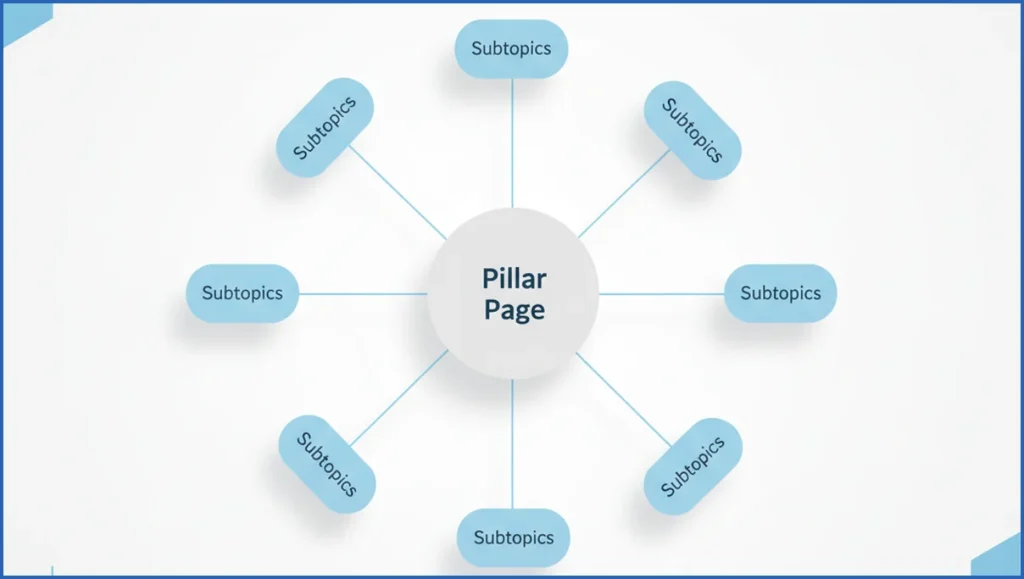
Start with customer questions, not keyword volume. Pull sales call notes, support tickets, CRM objections, and on-site search terms. Group them by intent: learn, compare, buy, fix, or validate. Then map those groups to pages. One pillar page should target the broad term, while supporting pages answer narrower questions with enough depth to stand alone.
A B2B analytics company might build one pillar on “marketing attribution software,” then cluster pages around setup, pricing models, implementation risks, and channel-specific attribution. This is where topical coverage becomes visible to both crawlers and humans. Topical authority grows from connected coverage, not from stuffing every synonym into one page.
Run a keyword and content gap analysis
Next, compare your site against three true search competitors, not just business rivals. Look for terms where competitors rank in positions 3-15 and you do not appear. In Search Console, isolate queries where you rank 8-20 with high impressions. Those are often faster wins than net-new topics. This GSC analysis playbook shows a practical way to pull that list.
A simple scoring model helps: opportunity score = monthly impressions x business intent x content fit. If a query has 4,400 impressions, medium difficulty, and high product fit, it beats a 12,000-impression term with weak buyer intent. Teams using the Google Search Console MCP tools can speed this up by asking Claude to cluster queries, flag cannibalization, and suggest page-level fixes.
Priority = (Impressions * IntentScore * FitScore) / Effort

Example:
"seo reporting template"
Impressions: 3200
IntentScore: 4
FitScore: 5
Effort: 2
Priority: 6400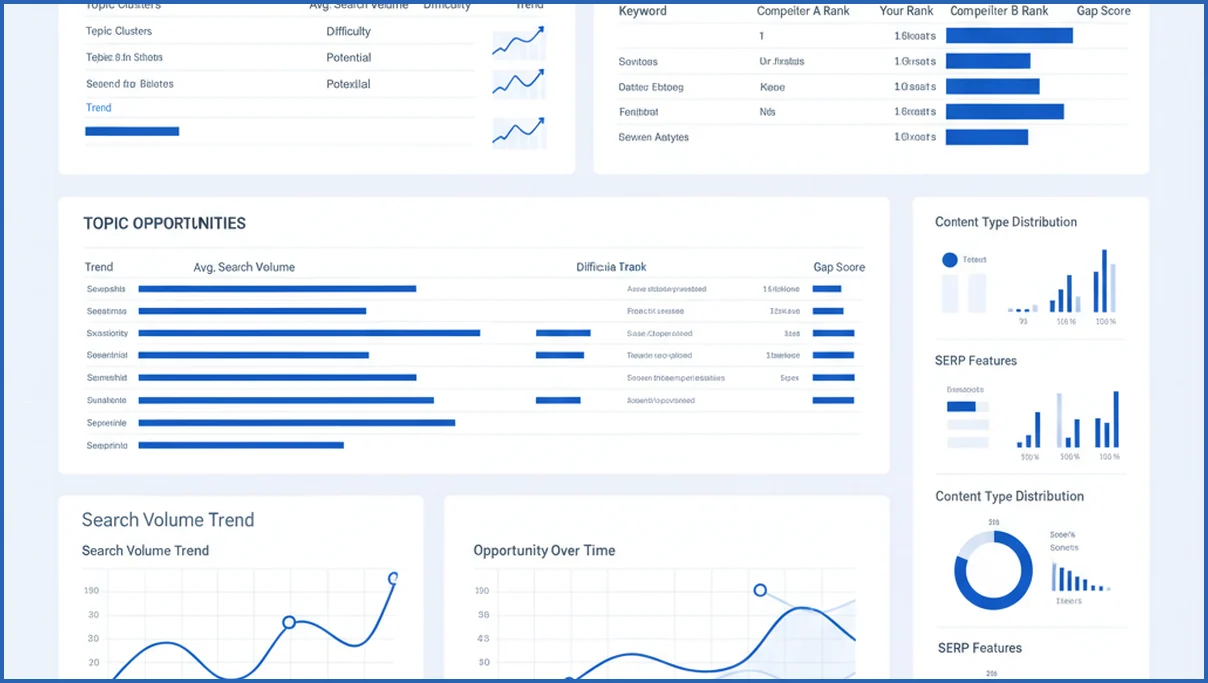
Strengthen technical SEO and page experience
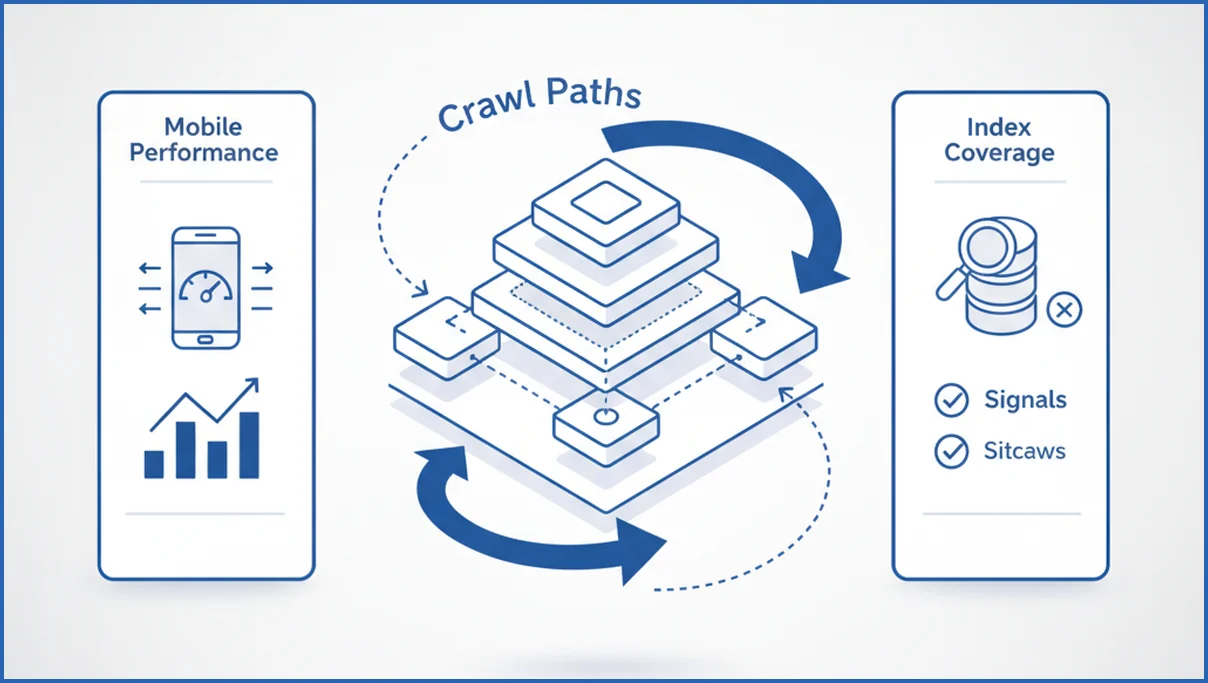
Technical SEO still sets the floor. If key pages are slow, duplicated, blocked, or weakly linked, better content will not rescue them. Audit index coverage, canonicals, internal link depth, Core Web Vitals, XML sitemaps, and structured data. Most sites do not need exotic fixes. They need fewer crawl traps and cleaner architecture.
One real workflow is simple. Export indexed URLs, compare them against your sitemap, then check which high-value templates sit more than three clicks from the homepage. Fix orphan pages, trim parameter noise, and improve links from relevant hubs. Technical basics still matter, especially when search systems need clear signals about which version of a page deserves trust.
- Check index coverage for missing money pages.
- Resolve duplicate or near-duplicate URLs.
- Improve internal links to pages stuck beyond click depth 3.
- Review mobile speed on top landing pages.
Publish, optimize, and earn authority
Publishing is where many plans fall apart. Each page needs one main intent, a clear title, useful subheads, and original details that another site cannot copy in five minutes. Add examples, screenshots, pricing logic, quotes from internal experts, or first-party data. Those details help both rankings and AI summaries. Internal linking strategy also matters here because it distributes context and authority across the cluster.
Authority comes from relevance, not random backlinks. Digital PR, partner mentions, expert contributions, and tool pages can all earn links if they add something worth citing. If your team is adapting for AI answer surfaces too, answer engine optimization principles fit naturally into on-page work.
Measure SEO performance and refine monthly
Monthly review should answer four questions. Which pages gained impressions. Which queries moved into positions 3-10. Which landing pages drove conversions. Which content underperformed despite indexation. Rank tracking alone misses business impact, while conversions alone miss leading indicators.
A tight review stack often includes Search Console, GA4, and a content sheet with publish dates, updates, and target intent. Watch query classes, not just single keywords. If “comparison” pages gain impressions but lose clicks, rewrite titles and intros. If visits rise but demos do not, the issue is probably offer fit, not SEO.
Optimize for AI Overviews and zero-click discovery
AI Overviews reward pages that answer a question quickly, then back the answer with specifics. Start with a short definition or recommendation in the first paragraph. Follow with scannable subheads, comparison tables, numbered steps, and clear examples. This structure helps both readers and search systems identify the best excerpt for summary results. Google documentation has long emphasized helpful, reliable, people-first content, and that standard matters even more when answers are synthesized.
Zero-click does not mean zero value. Many searches now end on the results page, but discovery still shapes branded searches, return visits, and assisted conversions. Your goal is to win the mention, the citation, or the next click. Create assets that are easy to quote, such as original definitions, concise frameworks, and product-specific pros and cons. FAQs can help, but only when they add information instead of restating the page title.
Technical basics still matter. Use descriptive titles, strong internal linking, valid schema where appropriate, and images with useful alt text. Then measure which queries earn impressions but lose clicks after an Overview appears. That gap often reveals pages that need stronger openings or better information gain. If you need a fuller framework, review AI search optimization for examples and workflow ideas.
How AI Mode changes SEO strategy in 2026
Google AI Mode changes SEO by expanding search from ten blue links into a blended answer experience. Users can ask follow-up questions, compare options, and refine intent without restarting the query. That means pages must do more than rank. They must supply clear facts, original framing, and strong evidence that can be cited or summarized. Google has positioned AI Mode as a conversational layer over Search, with deeper reasoning and query fan-out capabilities (Google I/O 2025).
For most teams, the practical shift is simple. Build pages that answer the core query fast, then support deeper exploration with sections, examples, and next steps. Strong formatting helps machines parse the page, but usefulness still drives results. If your strategy still depends on thin listicles and vague category pages, visibility will erode across AI Mode, AI Overviews, and classic results. For a deeper primer, see Google AI Mode explained.
- Lead with direct answers, then expand with proof, examples, and comparisons.
- Strengthen entity clarity with schema, author signals, and consistent brand details.
- Track impressions, citations, and assisted conversions, not only last-click traffic.
Frequently Asked Questions
Is SEO dead or evolving in 2026?
SEO is evolving. Search engines still need pages to crawl, rank, and cite, but the click path is less direct. AI summaries absorb some informational demand, so weak content loses faster. Strong pages still win when they answer specific intent, show expertise, and support a real business outcome. The work shifted from volume and tricks toward better structure, evidence, and topical coverage.
How long does an SEO strategy take to work?
Most sites see early movement in 6 to 12 weeks if they fix obvious technical issues and improve existing pages. Competitive topics and new domains usually take longer, often 4 to 9 months. The timeline depends on crawl frequency, site authority, publishing consistency, and how close your current rankings already are to page one. Faster gains usually come from content refreshes and internal link improvements.
What should a small business prioritize first?
Start with pages tied to revenue. That usually means service pages, local landing pages, product categories, and comparison or pricing content. Then fix indexation, titles, and internal links before expanding into a large blog. A small business rarely needs 100 articles first. It needs a few pages that match high-intent searches and clearly explain why the business is credible and worth contacting.
How do AI search results affect SEO traffic?
AI results can reduce clicks on broad informational searches because users get a summary without visiting a site. They can also increase exposure for brands that publish structured, quotable, original content. Expect less value from shallow “what is” posts. Expect more value from pages with examples, data, clear comparisons, and commercial context that AI interfaces cannot fully compress into one short answer.
What metrics best prove SEO success?
The best proof mixes visibility and business outcomes. Track non-brand clicks, rankings by intent group, conversions from organic landing pages, and assisted revenue where possible. For content teams, include update rate, content decay, and page-level ROI. A page that moves from position 11 to 5 but drives no qualified actions is less useful than a lower-traffic page that consistently produces leads.
How often should I update my SEO plan?
Review the plan monthly and adjust larger priorities every quarter. Monthly reviews catch drops, new query trends, and pages that need better titles, links, or intent alignment. Quarterly planning helps you re-score clusters, retire weak ideas, and add topics shaped by sales conversations or product changes. If your market changes fast, such as SaaS or ecommerce, you may need shorter feedback loops.
Your next step is simple. Pick one revenue-critical cluster, audit its rankings, fix technical blockers, and refresh the weakest three supporting pages. That gives you a cleaner signal than launching twenty new posts and guessing what worked.
How do I optimize pages for AI Overviews in 2026?
Start with a direct answer near the top of the page, then expand with specifics, examples, and proof. Use clear headings, concise definitions, tables, and schema when relevant. Focus on original information gain, not recycled summaries. Review impression and click gaps in Search Console to find pages affected by overview-style results. This approach aligns well with Google Search Console analysis workflows.
What still works now
The core playbook has not disappeared. Understand intent, publish useful pages, strengthen technical clarity, and measure what matters. What changed is the surface area of search. AI Mode, AI Overviews, and zero-click discovery reward brands that are clear, credible, and easy to summarize. Treat every strong page as both a destination and a source, and your SEO system stays resilient as search keeps evolving.