Last updated: August 2026
Link Building SEO in the AI Era: A Practical Playbook starts with a simple reality. AI search did not erase links. It made lazy link acquisition easier to ignore. If your backlinks come from thin guest posts, recycled listicles, or irrelevant directories, expect less return. If they come from trusted sources with real audiences, they still support rankings, discovery, and citations. That is why modern outreach now overlaps with answer engine optimization and stronger editorial strategy.
TL;DR
- Link quality matters more than raw volume.
- AI speeds prospecting, outreach, and content research.
- Relevance and placement can change backlink value.
- A repeatable workflow beats one-off link tricks.
- Measure links by impact, not just count.
What link building SEO means today
Link building means getting other sites to point to your page. Search engines still use links as a trust and discovery signal, even as AI summaries reduce some clicks. A backlink from an industry publication can still move a page from position 11 to 6 for a commercial query set. That matters.
Fundamentals have not changed much. Relevance, editorial judgment, and page quality still decide whether a link is worth chasing. What changed is the workflow. Teams now use AI for prospect research, angle generation, and outreach drafts. That fits the broader shift described in modern SEO strategy and AI search optimization.
Good link building also supports visibility beyond blue links. Journalists, bloggers, and AI systems need citations they can trust. If your page is the original source for a data point, template, or comparison, you improve your odds of getting referenced at both the search result and answer layer.
How to judge backlink quality before you pitch
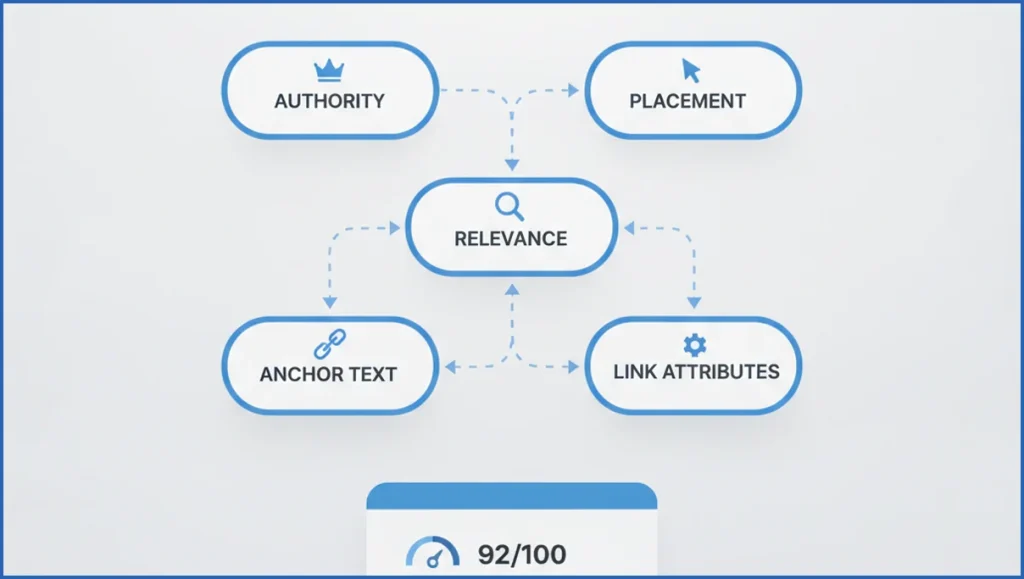
Start with relevance. A DR 35 niche SaaS blog that covers your exact topic can beat a DR 75 general site with no audience fit. Then check authority, but do it at page and site level. Look at organic traffic trends, indexing, and whether the site ranks for real queries.
Placement matters more than many link reports show. A contextual link inside the main body usually beats a footer, author bio, or partner page. Anchor text should fit the sentence. Branded, descriptive anchors age better than exact-match stuffing. Also check rel attributes. Nofollow, sponsored, and UGC links can still send qualified traffic, but they usually pass less ranking value.
A simple filter works well: reject sites with obvious paid link pages, spun content, or irrelevant outbound patterns. If a prospect links to casinos, essay mills, and random crypto pages, move on. That same discipline helps when auditing sources with a tighter Search Console workflow.
Build a linkable asset that deserves citations
Most outreach fails before the email gets sent. The real problem is the asset. People link when your page makes their article stronger, faster, or more credible. Original data, side-by-side comparisons, calculators, templates, and clean visuals still work because they save another publisher work.
One practical example: publish a study of 1,200 product pages and show that pages with unique comparison tables earned 2.4 times more referring domains than thin specs pages. Even if the number is modest, the specificity gives writers something to cite. That is stronger than a generic opinion post.
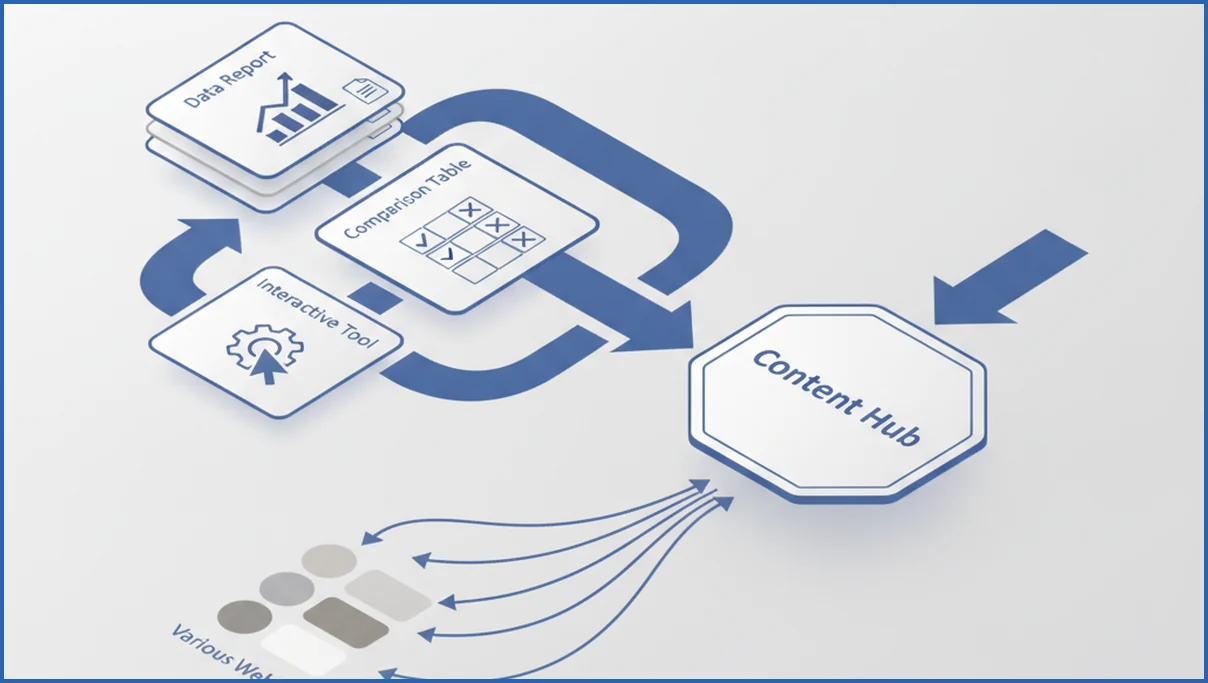
Make the asset easy to quote. Put the key stat near the top, add a usable chart, and include a short methodology. If your team already plans content systematically, borrow the structure from a content marketing planning process instead of inventing one asset at a time.
Use AI to find prospects and personalize outreach
AI helps most in the boring middle. Feed it competitor backlink exports, SERP results, and your target page. Ask it to group prospects into journalists, resource pages, partners, and niche blogs. Then score each by topical match, estimated effort, and likely angle. This cuts list-building time without lowering standards.
A practical workflow looks like this:
- Export competitor links from Ahrefs or Semrush.
- Pull your landing page query data from GSC.
- Use AI to map missing topics and likely link targets.
- Draft outreach notes from the target page, not from a template.
- Review every message by hand before sending.
If you run Claude with MCP, you can connect query data and engagement data directly. The GSC MCP setup is useful for spotting pages that rank in positions 8 to 15 and deserve link support. Add GA4 data to see whether similar pages attract assisted conversions. That keeps outreach tied to business value, not vanity metrics.
Prompt:
Analyze these 150 referring domains from competitors.
Group by topic, likely intent, and outreach angle.
Flag any site with irrelevant outbound links or obvious sponsored-post footprints.
Draft one email opener per prospect using a specific page detail.
Choose link building tactics that still work
Digital PR works when you have a real angle, not just a press release. Guest posting still works on selective, relevant sites with editorial standards. Broken link building can work in old, citation-heavy niches. Competitor backlink analysis stays useful because it shows proven linking patterns.
| Feature | Digital PR | Guest Posting | Verdict |
|---|---|---|---|
| Speed | Slow setup, fast upside | Steady but manual | Guest posts are easier to forecast |
| Link quality | Often strongest | Highly variable | PR wins when the angle is real |
| Control | Low | Higher | Guest posts give more message control |
| Trade-off | Hard to repeat weekly | Can drift into low-value placements | Use both, but with strict filters |
One honest trade-off. Guest posting is better when you need precise anchor placement and topical coverage. Digital PR is better when you need stronger authority signals. For most teams, a mixed system beats ideology. Use tactics that match the asset and the market.
Measure results and avoid common link building mistakes
Count links, but do not stop there. Track referring domains, rankings for target clusters, assisted conversions, and pages moved into the top 10. If a page gains 12 links and stays flat, inspect the page itself. Weak search intent alignment can cancel out decent links. On-page improvements often unlock the gains people expected from outreach alone.
Common mistakes are repetitive anchors, irrelevant prospects, and buying placements on sites built for selling placements. Another mistake is chasing homepage links when the real opportunity is a commercial page stuck in positions 9 to 12. Link building works best when it supports pages with clear intent, decent content, and measurable revenue paths.
Your next step is simple. Pick one page that already ranks on page two, build one cite-worthy asset around it, and pitch 30 tightly matched prospects. If that page does not move in 6 to 10 weeks, fix the page before you scale the outreach.
How Google AI Mode changes link building SEO
Google AI Mode changes link building SEO by raising the value of links that support clear expertise, original evidence, and trusted brand mentions. When AI-generated search experiences summarize answers, weak links matter less because they add little confidence. Strong editorial links still help Google discover pages, assess reputation, and find sources worth citing. Google has framed AI Mode as a more advanced search experience built on its ranking and information systems, which aligns with that shift (Google I/O 2025).
That means your link targets should change. Instead of chasing any site with domain metrics, prioritize pages that rank, get cited, and attract real readers. A product benchmark on G2, original data on Statista, or expert commentary quoted by industry publishers can outperform dozens of low-value placements. If you need a broader view of AI search behavior, read Google AI Mode explained.
- Earn links to pages with original data, unique methods, or strong product comparisons.
- Favor relevant publications, communities, and resource pages with visible editorial standards.
- Measure assisted value through branded searches, referral visits, and cited-page impressions.
Frequently Asked Questions
What is link building in SEO?
Link building in SEO is the process of earning backlinks from other websites to your pages. Those links help search engines discover content and judge trust, relevance, and authority. Good link building focuses on editorial mentions from sites that actually cover your topic. It is not just a numbers game. The goal is better visibility and better qualified traffic.
Is link building part of SEO?
Yes. Link building is one part of SEO, alongside technical SEO, content, internal linking, and on-page work. It matters most when several pages in a SERP have similar intent coverage and content quality. In that case, stronger external references can help one page pull ahead. It is rarely the only factor, but it is often the missing one.
How many backlinks do I need to rank?
There is no useful universal number. A page may rank with five strong referring domains in a narrow niche, while another needs 50 because the SERP is crowded with established brands. Compare your page against the top-ranking results. Look at referring domains to the exact page, not just the homepage, and judge topical fit before raw count.
Are nofollow links useful for SEO?
They can be. Nofollow links may send relevant traffic, expose your brand to journalists, and lead to secondary followed links later. Search engines have also treated some link attributes as hints rather than hard directives for years, though outcomes vary. Treat nofollow links as useful when they place your brand in front of the right audience, not as useless by default.
What makes a backlink high quality?
A high-quality backlink usually comes from a relevant site, appears in the main content, uses natural anchor text, and sits on a page that gets indexed and earns traffic. Editorial judgment matters too. If the linking page exists only to publish outbound links, quality drops fast. Strong backlinks make sense for readers before they help algorithms.
Can AI help with link building outreach?
Yes, if you use it for research, segmentation, and first-draft writing. AI is good at sorting prospect lists, summarizing articles, and suggesting angles from competitor patterns. It is not good enough to replace judgment on relevance or tone. The best use is saving time on preparation so a human can send fewer, sharper emails with real context.
How long does link building take to work?
Expect weeks, not days. A new link may get crawled quickly, but ranking movement often shows up over 4 to 12 weeks depending on page quality, competition, and how many useful links land. Some effects are indirect. Better links can increase discovery, improve trust, and support future content performance before you see a clear position jump.
Will AI search reduce the need for backlinks?
No. AI search may reduce the impact of weak backlinks, but it does not remove the need for trusted mentions and citations. Strong backlinks still help discovery, authority, and source validation. In many cases, they matter more because AI systems favor pages that look reliable enough to summarize or reference. A practical approach blends digital PR, expert content, and measurement through Google Search Console analysis.
Next steps for a stronger link strategy
Link building still works, but the bar is higher. Focus on pages worth citing, publishers with standards, and assets that add new information. Use AI to speed research, qualification, and first drafts, not to mass-produce forgettable outreach. If you want a broader operating model for the year ahead, pair this playbook with SEO strategy in 2026 and build links that reinforce genuine authority.