
Last updated: June 2026
SEO for Ecommerce with AI Tools: A Practical Playbook matters more when your catalog must serve humans and AI summaries at once. Stores rarely lose visibility because they lack pages. They lose because key facts are buried, duplicated, or inconsistent across templates. AI helps teams research questions, draft scalable copy, and spot gaps faster. The advantage comes from better systems, not faster publishing alone.
TL;DR
- Use AI to speed ecommerce keyword and content research.
- Optimize category and product pages with repeatable workflows.
- Fix technical issues that block crawlability and conversions.
- Measure rankings, clicks, revenue, and page-level impact.
Why AI changes seo for ecommerce workflows
Ecommerce sites create SEO sprawl fast. A store with 42 categories, 1,800 SKUs, and 6 color variants per SKU can produce thousands of URLs. AI shortens the slow parts: query grouping, title drafting, duplicate detection, FAQ extraction, and internal link suggestions. That matters when one merchandiser and one SEO lead own the whole catalog.
Good teams use AI as a system, not a writing toy. Pull queries from Search Console, group them by page type, then send only page-specific tasks into your workflow. the Search Console MCP setup makes this easier because Claude can inspect page and query data directly. For bigger catalogs, the same logic looks a lot like large-scale SEO operations, just with stronger commercial intent.
Consistency is the real win. If AI can apply the same naming rules, heading structure, and internal linking logic to 300 pages, your output gets tighter. That usually beats a few polished pages surrounded by thin, neglected templates.
Map keyword intent to categories, products, and content
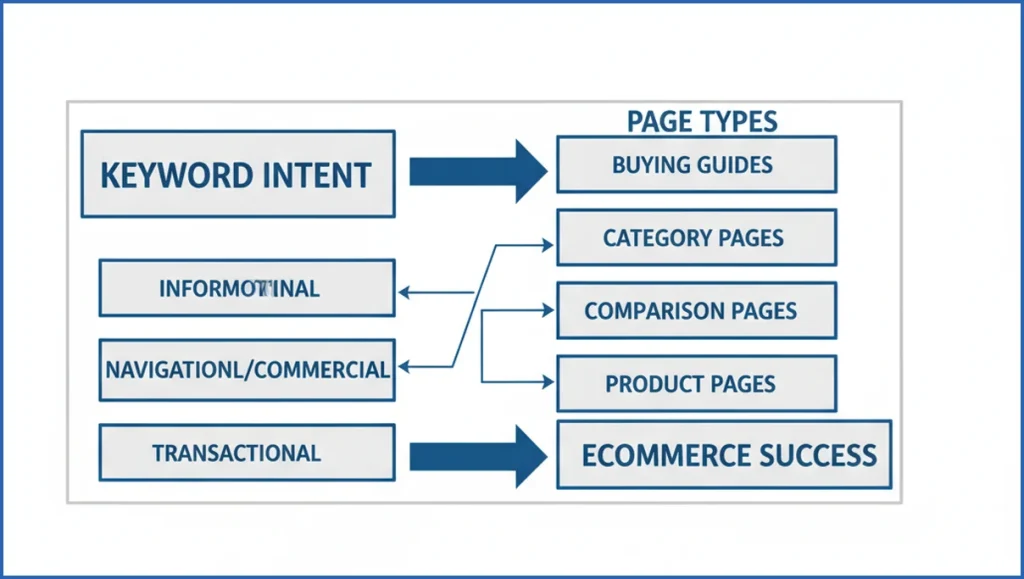
Start with intent, not volume. “Running shoes” belongs on a category page. “Nike Pegasus 41 women’s size 8” belongs on a product page. “Best running shoes for flat feet” needs an editorial guide or comparison page. When stores mismatch the query and page type, rankings stall even with strong authority.
A simple clustering pass works well. Export queries with impressions, clicks, and average position. Group terms by modifiers such as “best,” “vs,” “under $100,” brand, model, and use case. If a category page ranks in positions 8 to 12 for 47 “best + use case” terms, that is often a content gap, not a title problem. Keyword clustering methods help you sort this quickly.
Use a page map your team can review in ten minutes. One sheet should show keyword cluster, intent, target URL, supporting URL, and expected conversion action. That keeps merchandising, SEO, and content aligned.
Use AI to optimize category and product pages
Category pages need commercial breadth. Product pages need specific proof. AI can help with both if you give it constraints. Feed the model the top queries, product attributes, brand rules, and a short list of terms to avoid. That prevents the usual vague copy.
For titles and headings, use a fixed template first. If you sell office chairs, a category formula might be “Ergonomic Office Chairs for Home and Work.” Then let AI create three variants based on query modifiers and SERP gaps. Title optimization principles still matter because rewrite-heavy snippets often come from weak matching, not low creativity.
For product pages, run a numbered workflow.
- Pull the product feed fields: brand, model, dimensions, materials, price, stock status.
- Extract top non-brand queries from Search Console or PPC search term reports.
- Draft a product intro, feature bullets, and FAQ based only on verified attributes.
- Add 2 to 4 internal links to the parent category, a comparison page, and one related guide.
- Review for duplication across variants before publishing.
Here is a workable prompt skeleton for a product page update:
Rewrite this product page for SEO and conversion.
Inputs:
- Product: "TrailPro 28L Hiking Backpack"
- Attributes: waterproof nylon, 28L, 920g, laptop sleeve, rain cover
- Target queries: hiking backpack 28l, waterproof daypack, lightweight hiking backpack
Rules:
- Keep claims factual
- Write 1 title tag under 60 chars
- Write 1 H1
- Write 90-word intro
- Write 4 FAQ questions
- Suggest 3 internal links by page type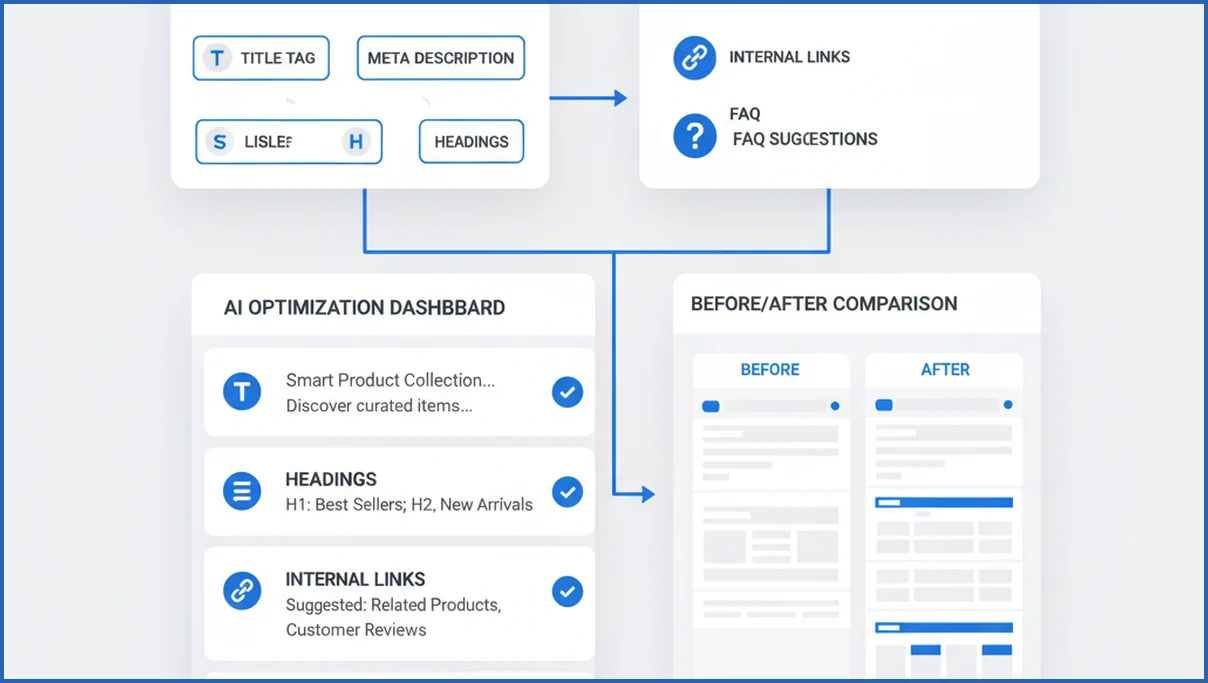
Automate technical audits and site health checks
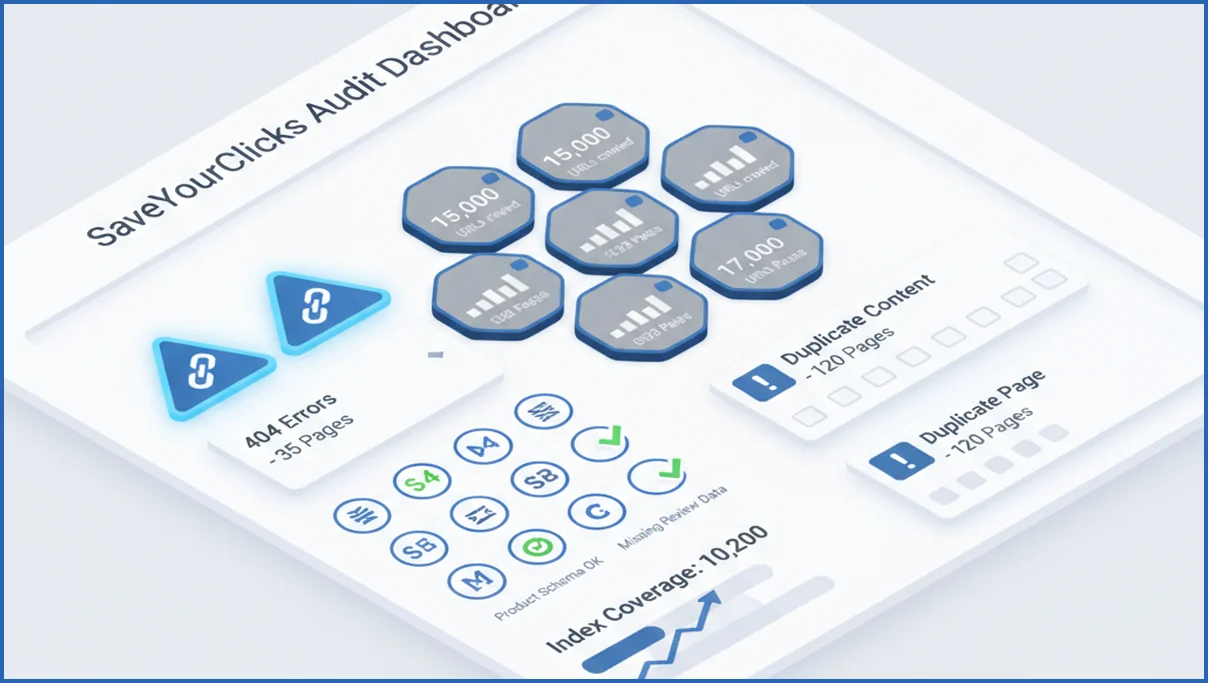
Technical issues compound on ecommerce sites because templates repeat mistakes at scale. One canonicals bug can affect 900 URLs by morning. AI helps triage crawl exports, log anomalies, redirect chains, thin pages, and schema gaps faster than manual review. Technical SEO basics still apply. AI just speeds the sorting.
Use it to classify pages into fix groups: duplicate near-match descriptions, parameter URLs getting indexed, products with zero internal links, and pages returning soft 404 patterns. A strong workflow pairs a crawler export with page performance data, then scores each issue by traffic risk and revenue risk.
GA4 adds the missing business context. the GA4 MCP connection can surface low-conversion category pages, high-exit product templates, and pages that get traffic but no assisted revenue. Fix those before you chase minor warnings.
Build content that supports ecommerce buying decisions
Not every buyer starts on a category page. Many start with comparison, sizing, compatibility, or “best for” questions. That is where editorial content earns its keep. A guide on “best standing desks for small apartments” can rank earlier in the journey, then pass visitors into the right category or product set.
Keep support content tightly linked to commercial pages. Each article should answer one buying problem, include first-hand product facts, and send users toward a useful next page. Internal link planning matters here because random “related posts” widgets rarely support rankings or revenue. If AI search surfaces summaries instead of blue links, generative engine optimization also becomes part of the job.
Track the metrics that prove SEO revenue impact
Ecommerce SEO reporting should start with page groups, not total sessions. Track clicks, average position, and indexed URL count for categories, products, and editorial hubs separately. Then layer in conversion rate, assisted revenue, and revenue per organic landing page. That shows whether your work changed a business outcome or just moved impressions.
One practical dashboard uses four weekly views: queries entering positions 4 to 10, categories with rising clicks but flat conversion, product pages with impressions and no clicks, and guides that assist category revenue. If you need the tooling layer, the MCP tool stack is built for this kind of analysis across Search Console and GA4.
Answer engine optimization: write for extraction
Ecommerce copy should help machines lift the right answer fast. That usually means placing the clearest response near the top of the page, then supporting it with detail below. On a product page, answer the main buying question in two or three sentences. State who the item is for, what problem it solves, and the most important specification. After that, expand with dimensions, materials, use cases, shipping, and returns.
This format works well because answer engines often prefer concise language with stable facts. A mattress page, for example, can open with firmness, sleeper type, height, and trial length before the longer brand story. A category page can summarize differences between options before showing filters. FAQ blocks help when they reflect real customer questions from support logs, site search, and Search Console. Answer engine optimization is less about clever phrasing and more about making answers easy to quote correctly.
Use headings that mirror buying language such as “Is this waterproof?” or “What size room does this cover?” Keep each answer direct, then add proof like certifications, wattage, ingredients, or warranty length. Avoid vague claims like “premium quality” unless you define them. If your page can answer a follow-up question without rewriting the whole page, it is usually on the right track for extraction.
How AI Mode changes ecommerce SEO workflows
AI Mode pushes ecommerce SEO beyond ranking a blue link. Your pages now compete to supply facts, comparisons, and product details that search systems can summarize. Google presented AI Mode as a more conversational search experience that can ask follow-up questions and synthesize results (Google I/O 2025). That means category pages, product pages, and help content need cleaner signals, tighter copy, and stronger factual coverage.
For teams, the workflow shift is practical. Research now starts with the questions shoppers ask before they buy, not only the short keyword. Content briefs should include product specs, return terms, compatibility notes, and price context. QA should test whether a page answers obvious follow-up questions without forcing another click. Reporting should track impressions, clicks, and assisted conversions from informational and commercial pages together. If you need a broader overview, see Google AI Mode explained.
- Map product, category, and support content to pre-purchase questions.
- Write short answer blocks that can be quoted without losing accuracy.
- Validate schema, inventory details, and merchant information on key templates.
Frequently Asked Questions
How do AI tools help ecommerce SEO teams?
They cut time on repetitive work and make large sites easier to manage. AI can cluster keywords, draft page copy from product data, spot duplicates, suggest FAQs, and summarize audit exports. The gain is speed plus consistency. You still need an SEO lead to set rules, review outputs, and decide which fixes matter for revenue.
Which pages should I optimize first on an ecommerce site?
Start with pages that sit near page one and can drive revenue quickly. That usually means high-margin categories, top-selling products, and pages ranking in positions 5 to 15 for commercial terms. After that, fix templates that affect many URLs, such as category intro modules, title formats, faceted navigation rules, and internal link blocks.
Can AI write product descriptions safely for SEO?
Yes, if you constrain it to verified facts and review the output. Give the model product attributes, approved claims, brand tone, and banned phrases. Avoid asking it to invent benefits or specs. The safest use is rewriting or structuring existing data into clearer copy, then adding unique use cases, FAQs, and internal links by hand.
How do I avoid duplicate content on product variants?
Write one strong parent description, then add variant-specific content where differences matter. Mention size, color, material, fit, compatibility, or intended use only when those details change the shopper decision. Use canonical tags carefully, and do not index thin parameter pages unless they meet real search demand. AI can flag near-duplicates before they spread across the catalog.
What metrics matter most for ecommerce SEO performance?
Revenue-focused metrics beat vanity metrics. Watch organic clicks, rankings for commercial terms, conversion rate by landing page type, assisted revenue, and revenue per organic session. Also track index coverage, thin page count, and internal link depth for key templates. Those operational metrics help explain why revenue moved, not just whether traffic went up.
Does SEO for ecommerce work for small stores too?
Yes. Small stores often have an advantage because they can move faster and specialize harder. A niche catalog can win with better intent mapping, cleaner product pages, and sharper supporting content. You do not need 10,000 pages. You need a clear site structure, distinct product copy, and a process that improves the pages already close to ranking.
Your next step is simple: pick one category with at least 20 products and review its query-to-page fit, template copy, internal links, and conversion data in one sitting. If that section improves, repeat the same workflow across the next five revenue-driving categories.
How should ecommerce pages be written for AI Mode and answer engines?
Write pages so the main answer appears early, with facts that can stand alone if quoted. Lead with product type, use case, top specs, price context, and trust details like shipping or returns. Then expand with comparisons, compatibility, and FAQs. Keep claims specific, align visible copy with schema, and review performance in Google Search Console analysis workflows to spot missing questions and weak answer blocks.
Next steps for ecommerce teams
AI Mode rewards stores that publish clear answers, reliable product facts, and page structures machines can parse quickly. Start with your top revenue templates, then tighten intros, FAQs, and schema on those pages first. Once that system works, expand it across categories and products. For teams planning a wider search workflow update, AI search optimization offers a useful framework for the next round of testing.