
Last updated: September 2026
How to Humanize AI Content for SEO That Readers Trust starts with a simple shift: stop editing only for style and start editing for proof. Readers can spot filler fast, and newer search experiences make that weakness more obvious. A useful draft needs clear intent, concrete examples, and real judgment. If you want a wider view of where this fits, our SEO strategy in 2026 guide shows how trust signals support visibility.
TL;DR
- Start with human intent, not just AI output.
- Add voice, examples, and proof to reduce generic wording.
- Use a repeatable edit process to improve clarity and SEO.
- Check for trust signals before publishing anything AI-assisted.
Why Humanized AI Content Performs Better
Generic AI copy usually fails in the same ways. It restates the obvious, avoids decisions, and pads simple ideas with soft language. That hurts engagement and weakens search value. A humanized draft gives readers a reason to stay because it answers a real question in a way that sounds considered, not assembled.
Search performance follows the same pattern. Google does not need your page to sound human for sentimental reasons. It needs the page to be useful, original, and satisfying. That is especially true for AI-shaped search results, where concise answers and strong evidence matter more. The shift is clearer if you follow AI search optimization changes and how answer-style results compress weak content.
Editors also trust specifics. “Use shorter intros” is forgettable. “Cut the first 80 words and move the example above the fold” sounds like someone actually reviewed the page. That is the difference. Humanized content reflects judgment, and judgment is what generic prompts rarely produce on their own.
Start With Search Intent and Reader Pain Points
The easiest way to miss the mark is to treat a keyword like a topic instead of a problem. “Humanize AI content” is not just informational. The reader likely has a draft that feels flat, fears rankings or brand damage, and wants an editing method that does not triple production time.
Map the keyword to a reader, a friction point, and a desired outcome. For example: audience is a content marketer, pain point is generic AI phrasing, outcome is a publishable article with stronger trust signals. This is the same planning discipline behind a solid content strategy for 2026.
A practical workflow helps. Pull queries from Search Console, group them by task, then write the article around the highest-friction need. If you use Claude with the Google Search Console MCP tools, you can inspect queries in positions 6-15 and spot where a more helpful angle could lift clicks.
Give the Draft a Clear Point of View
Neutrality often reads like vagueness. Good content does not need fake hot takes, but it does need prioritization. Tell the reader what matters most, what to ignore, and what trade-off they are making. That is how AI-assisted writing starts sounding informed.
For this topic, a strong point of view might be: do not try to hide AI use. Instead, edit for specificity and proof. That stance is useful because it guides decisions. It also keeps the article from becoming a list of bland suggestions.
You can build this into your prompt and brief. Ask the model to state one recommendation it would defend, one mistake it sees often, and one scenario where the advice changes. Teams that already have an AI copywriting workflow usually improve fast once they require that layer of judgment.
Rewrite for Voice, Specificity, and Flow
Line editing is where most humanization happens. Cut filler first. Phrases like “in the ever-evolving landscape” or “it is important to note” waste space and signal low effort. Then replace generic claims with concrete ones. “Many brands benefit” becomes “B2B SaaS teams often use AI for first drafts, then add product examples and support tickets.”
Next, fix rhythm and transitions. AI drafts often stack similar sentence shapes and repeat nouns too often. Read the piece out loud. If three sentences in a row sound interchangeable, rewrite two. Shorter sentences usually help, but varied pacing matters more than blunt trimming.
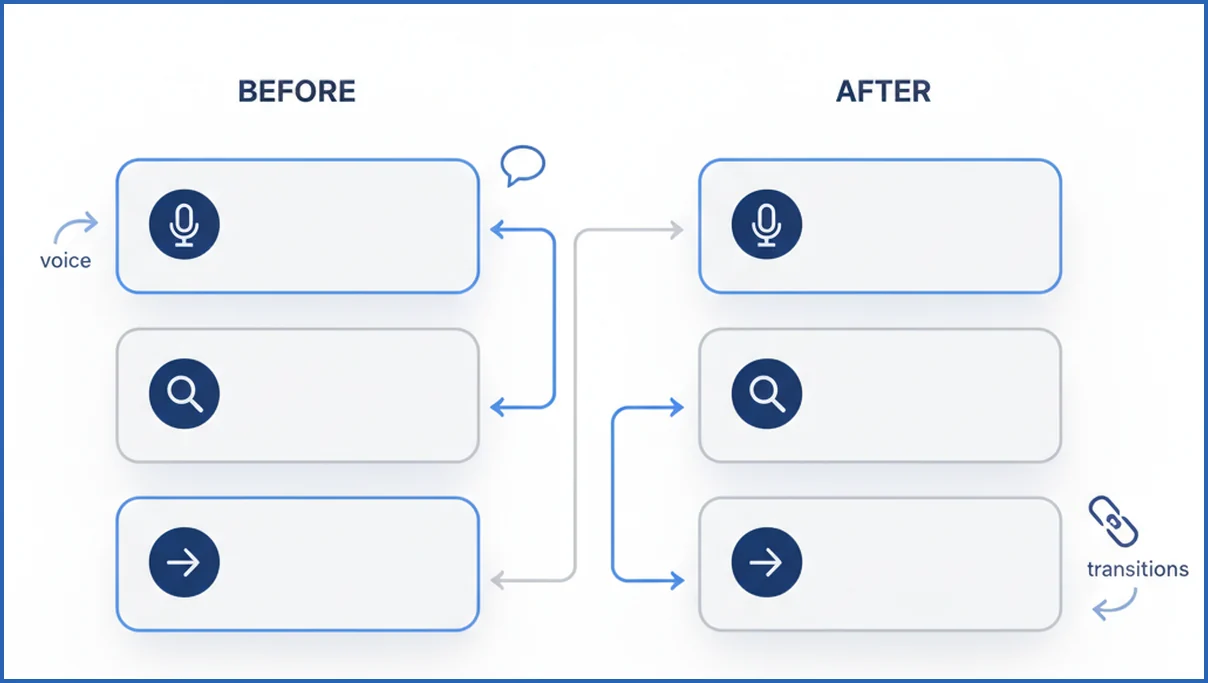
Use a repeatable pass:
- Delete filler and throat-clearing.
- Add a sharper claim to each section.
- Swap broad nouns for real tools, roles, or metrics.
- Check transitions between paragraphs.
- Read aloud and smooth awkward lines.
Here is a simple prompt block for revision:
Rewrite this section for a senior SEO audience.
Rules:
- keep claims concrete
- remove filler
- add one opinionated recommendation
- add one practical example
- keep sentences under 24 words
Add Proof, Examples, and Helpful Details
Proof is what turns readable content into trusted content. Add screenshots, internal data, product details, or small case notes. Even one grounded example can rescue a thin section. If a page says “improve intros,” show the before and after, not just the advice.
Example: a publisher finds 47 queries sitting in positions 8-12. The drafts answer the keyword but lack examples and internal links. After adding a comparison table, first-hand examples, and tighter intros, click-through rate improves over the next month. That kind of detail is stronger than generic talk about quality.

Helpful details can be small. Name the report, the endpoint, the tool, the timeframe. If you build briefs or audits with Claude, automating content briefs with Claude Code is useful because it structures evidence before drafting starts.
Run a Humanization QA Checklist Before Publishing
Final review should be systematic, not vibes-based. Check originality first. Does the draft add anything beyond the top five ranking pages? Then check accuracy. AI still invents features, dates, and citations. If a claim matters, verify it or cut it.
After that, review usefulness and SEO alignment. The title should match intent. The intro should define the problem fast. Each section should move the reader toward an outcome. Internal links should support the task, not pad the page. A solid process looks a lot like the workflows in on-page SEO with AI.
A short checklist works well:
- One clear audience and outcome.
- At least three specific details or examples.
- No filler phrases or repeated claims.
- All facts checked against source material.
- Meta, headings, and links match search intent.
How Google AI Mode Changes Humanized SEO Content
Google AI Mode raises the bar for content that feels genuinely useful, not just readable. If your page only smooths out AI wording, that is no longer enough. Humanized SEO content now needs sharper intent, original framing, and stronger evidence. Google has positioned AI Mode around more advanced reasoning and follow-up exploration, which means shallow summaries are easier to bypass in favor of richer sources (Google I/O 2025). For a broader primer, see Google AI Mode explained.
That shift changes what “humanized” should mean in practice. Your page should answer the first question fast, then support the next question a reader is likely to ask. Add specifics an LLM draft usually misses: test results, edge cases, constraints, pricing ranges, or product comparisons. A sentence like “use a clear tone” is weak. A better edit names the audience, the decision, and the tradeoff. Human voice matters, but usefulness matters more.
- Lead with a direct answer, then expand with context and proof.
- Add first-hand details, examples, and judgments that generic drafts rarely include.
- Edit for query chains, because AI Mode often encourages deeper follow-up searches.
Frequently Asked Questions
What does it mean to humanize AI content?
It means editing AI output so it reflects real judgment, real audience needs, and real proof. The goal is not to sound quirky for its own sake. The goal is to make the content clearer, more specific, and more trustworthy. That usually involves stronger examples, sharper opinions, cleaner transitions, and fact-checking that AI cannot do reliably on its own.
Can AI content rank if it sounds natural?
Yes, if it is genuinely helpful and matches intent. Natural tone alone is not enough. Pages still need original value, accurate claims, good structure, and evidence that the writer understands the topic. Many AI-assisted pages rank because a human editor shaped the angle and tightened the details. Weak drafts fail when teams publish them with little review.
How do I make AI writing sound less generic?
Start by deleting filler and broad statements. Then add specifics the model would not invent well, such as customer objections, tool names, timeframes, or examples from your own workflow. Read the piece aloud to catch repetitive phrasing. Finally, force a point of view. A draft becomes less generic when it makes choices instead of listing safe, obvious advice.
What edits matter most for humanizing a draft?
The biggest gains usually come from four edits: cut padding, sharpen claims, add examples, and improve flow between paragraphs. Those changes affect both trust and readability. Tone tweaks matter, but they are secondary. If the article still feels vague after editing, the issue is often missing evidence or weak intent mapping, not word choice alone.
Should I disclose when content is AI-assisted?
It depends on your brand, industry, and editorial standards. For most marketing content, a blanket disclosure is not always necessary. Accuracy and accountability matter more. If AI helped draft or structure the piece, a human should still own the final claims and review. In regulated or sensitive topics, clearer disclosure is often the safer and more credible choice.
How can I keep SEO benefits while improving voice?
Do not rewrite away the intent signals. Keep the core topic, query language, and structure aligned with the search task. Improve voice inside that frame by adding point of view, stronger examples, and tighter phrasing. Good humanization does not fight SEO. It usually improves it because the page becomes easier to understand, more useful, and less interchangeable.
If your team uses AI for first drafts, pick one live article and run a strict edit pass on it this week. Measure changes in time on page, clicks, and assisted conversions after 30 days. That will tell you more than any style guide. Humanized content is not a writing trick. It is an editorial standard with measurable output.
Does AI Mode change how I should humanize SEO content?
Yes. AI Mode makes basic polishing less valuable on its own. You should still improve tone, rhythm, and clarity, but also add specific insights, examples, and evidence. Think beyond sounding natural. Write so your page answers the main query and the likely follow-up questions. That approach improves trust with readers and fits broader answer engine optimization habits.
Final thoughts
Humanizing AI content now means making it more accountable, specific, and decision-ready. Better phrasing helps, but stronger examples and clearer reasoning do more. As search shifts toward synthesized answers, pages that add original value should hold up better than pages that merely sound pleasant. If you want to pressure-test your process, book an SEO consultation and review where your content still feels generic.