
Last updated: August 2026
Publishing new URLs feels productive. Refreshing existing winners usually pays faster. If a page already ranks in positions 4-15, small improvements can lift clicks without starting from zero. Good content refresh SEO protects the authority you have, fixes what searchers now expect, and turns aging pages into current assets instead of traffic leaks.
TL;DR
- Find pages with traffic drop, ranking decay, or outdated intent.
- Refresh content around relevance, clarity, and stronger search signals.
- Protect URLs, improve titles, and tighten internal links before publishing.
- Measure gains with clicks, rankings, and conversions after the update.
Why content refresh SEO beats constant new publishing
Refreshing beats net-new content when the page already has links, impressions, and topic authority. A post ranking for 47 queries in positions 8-12 is often one rewrite away from a real lift. A new page has none of that history. It needs crawling, indexing, and trust first.
Search intent also drifts. A 2023 guide may still be accurate, but the SERP now favors templates, comparisons, or quick-answer sections. That is why many teams pair refresh cycles with content planning discipline instead of publishing every idea they can brainstorm.
For AI-shaped SERPs, freshness matters even more on tactical queries. If Google now rewards concise answers and stronger entities, old pages lose ground quietly. That shift shows up clearly in AI search optimization work, where strong pages often need restructuring more than expansion.
Choose the right pages to refresh first
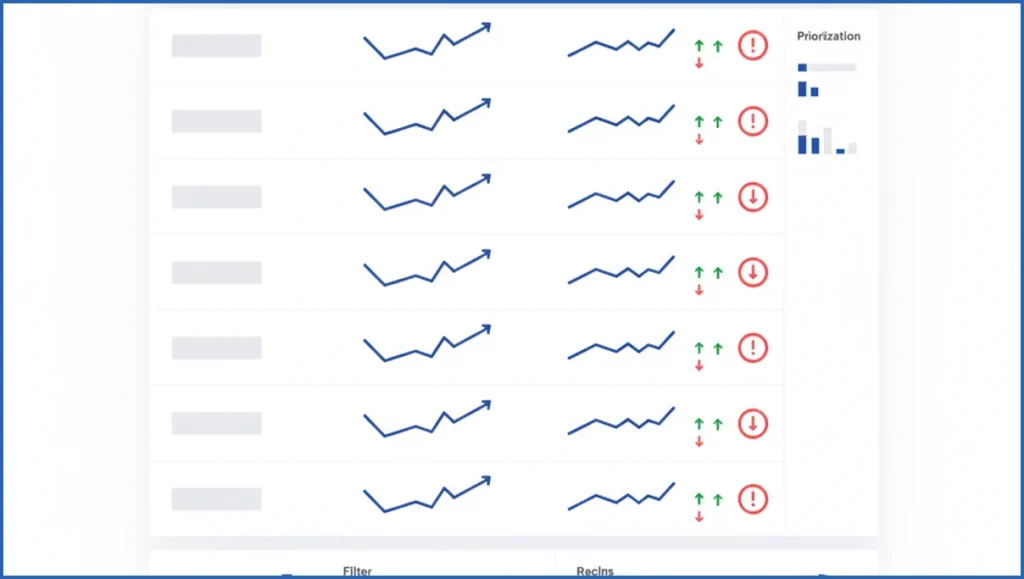
Start with pages that already prove demand. Look for three patterns in Search Console: clicks down 20% or more over 90 days, average position slipping from page one to two, or CTR below site average despite solid impressions. Those are easier wins than dead pages with no visibility.
A simple triage sheet helps. Score each URL on traffic loss, business value, and ranking proximity. A page with 12,000 impressions, position 9.4, and a 1.8% CTR should outrank a page sitting at position 43. If you use Claude with the Search Console MCP tools, you can pull that shortlist quickly and sort by opportunity.
Check intent mismatch before rewriting. If the query set has shifted from “what is” to “best tools,” a minor edit will not be enough. Pages trapped between intents usually need a structural refresh, not a sentence-level cleanup.
Audit the page: intent, structure, and search signals
Audit the live SERP first. Review the top 10 results and note format, depth, and recurring subtopics. If every ranking page covers pricing, examples, and FAQs, your thin how-to article is incomplete. This is the same logic behind structured GSC analysis workflows.
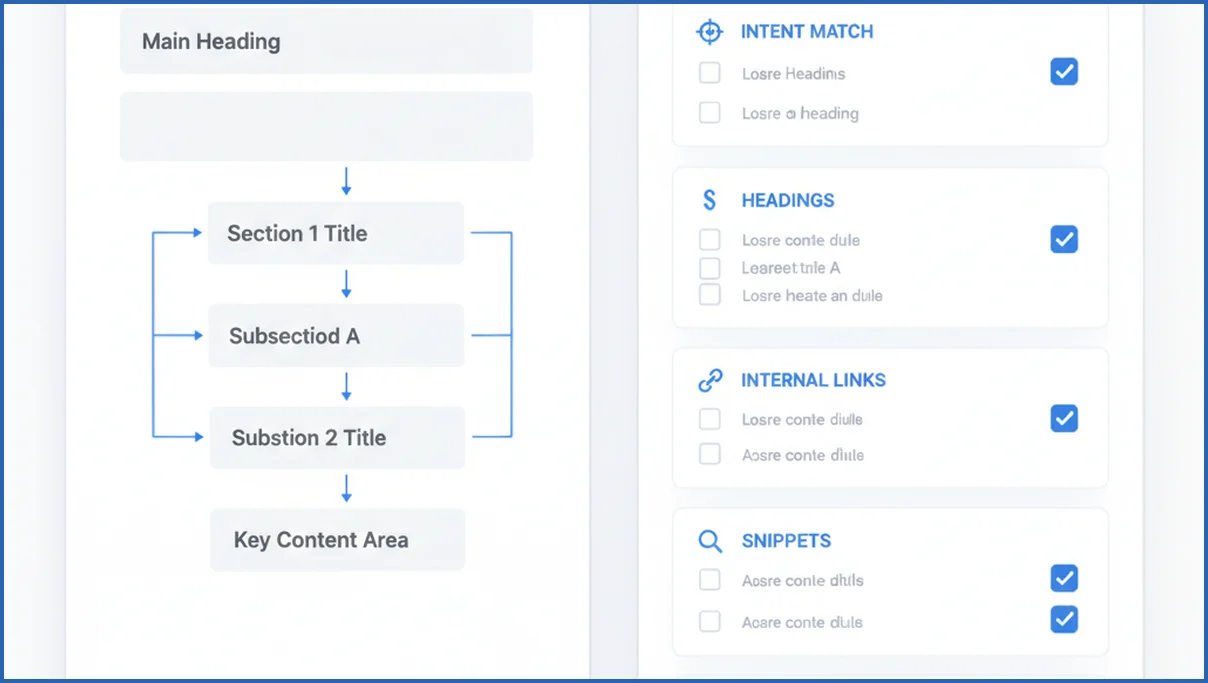
Then inspect the page itself. Check the title tag, H1, H2s, intro, internal links, schema, and featured-snippet blocks. A strong audit asks one blunt question: does this page answer the query better than it did six months ago?
Refresh audit checklist
1. Current top queries and landing intent
2. Missing subtopics from top 5 results
3. Weak headings or buried answers
4. Outdated stats, screenshots, tools, or dates
5. Internal links in and out
6. CTR gap versus impressions
Use examples, not vague notes. “Missing comparison table for five tools” is useful. “Needs more depth” is not. If your team works with connected AI workflows, this Claude MCP guide gives the right mental model for pulling data and rewriting against evidence.
Rewrite for relevance without losing what already ranks
Do not wipe the page and start over. Preserve sections that rank, especially definitions, examples, and phrasing tied to high-impression queries. Expand around them. If one subsection drives 38% of clicks, keep its core meaning intact while improving clarity and depth.
Rewrite where intent changed or the copy feels stale. Add missing examples, fresher product references, and direct answers near the top. For a workflow post, insert a short process list, then support it with detail. This is where a disciplined AI copywriting workflow helps more than freeform prompting.
- Keep the URL and core topic stable.
- Map winning queries to the sections they should land on.
- Add new subheads for uncovered intent.
- Replace outdated facts, screenshots, and dates.
- Trim filler that slows the answer.
Optimize metadata, links, and page experience
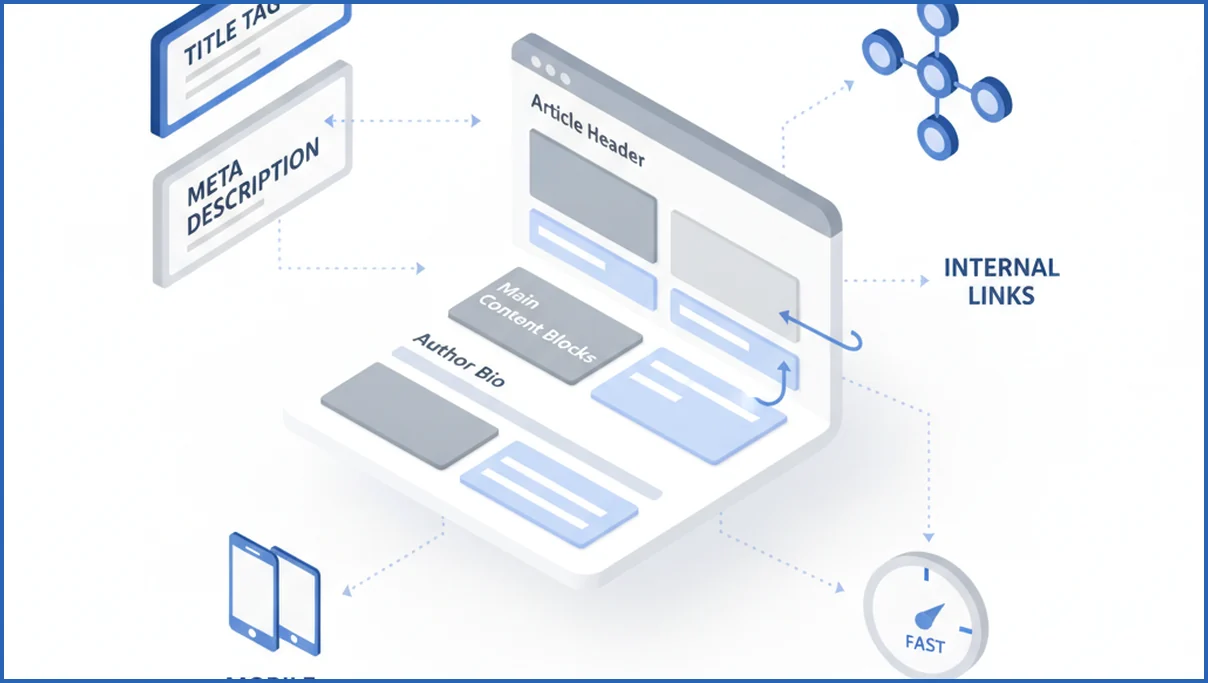
Metadata can unlock the refresh. Tighten the title tag around the main query and a clear promise. Improve the meta description for specificity, not cleverness. If the URL is messy, leave it alone unless it is truly broken. Redirect risk rarely justifies a cosmetic change.
Internal linking matters more than teams admit. Add 3-5 contextual links from related pages and update anchor text to match the refreshed topic. Also improve page speed, mobile layout, and intrusive UX elements. Those fixes support crawl efficiency and user satisfaction, even when they do not move rankings alone. For deeper process detail, see on-page SEO with AI.
Publish, monitor, and iterate after the refresh
After publishing, request indexing, annotate the date, and monitor for 14-28 days. Track clicks, impressions, average position, CTR, and conversions. GA4 helps you see whether better rankings also improved scroll depth, assisted conversions, or demo requests. GA4 MCP reporting makes that easier if you want one view across content and outcomes.
Not every refresh wins on the first pass. If impressions rise but CTR stays flat, the title may still miss intent. If rankings improve and conversions drop, the rewrite may attract the wrong audience. Refreshing content is not a one-time task. It is a controlled loop.
Frequently Asked Questions
How often should you refresh content for SEO?
Most sites do well with a quarterly review of important pages and a monthly check on top traffic URLs. Frequency depends on query volatility. Tool lists, pricing pages, and AI topics age fast. Evergreen definitions can wait longer. Set refresh rules by page type, not one fixed schedule for the whole site.
Does updating old content help rankings faster than new posts?
Often, yes. An existing page already has crawl history, links, impressions, and some trust. That means Google can reassess it faster than a brand-new URL. The catch is that the page needs real improvement. Changing dates or swapping a few lines rarely moves rankings on its own.
Should I change the URL when refreshing a page?
Usually no. Keep the URL if the topic stays the same. Changing it throws away history and adds redirect risk. Only update the URL when the current slug is misleading, broken, or the page has shifted to a different topic entirely. Even then, map redirects carefully and update internal links immediately.
What metrics show a content refresh worked?
Start with clicks, impressions, average position, and CTR in Search Console. Then check conversions, engagement, and assisted revenue in GA4. A useful refresh often improves more than one metric. For example, rankings may climb first, then clicks follow after title updates, then conversions improve once the page better matches buyer intent.
How much should I rewrite versus keep during a refresh?
Keep whatever already earns impressions, links, or featured snippets, unless it is wrong or off-intent. Rewrite aggressively where the SERP changed, examples got old, or the page buries the answer. In practice, many strong refreshes replace 30-60% of the copy while preserving the URL, core topic, and best-performing sections.
Can content refresh SEO improve conversions too?
Yes, especially when the old page ranks but speaks to the wrong stage of the funnel. Better examples, clearer offers, updated proof, and stronger internal paths can raise conversion rate alongside organic traffic. The key is matching the page to current intent. More clicks help, but better-fit clicks usually matter more.
Pick 20 URLs, score them by decline and upside, and refresh the top five first. That small batch will tell you whether your issue is intent drift, weak CTR, or thin coverage. Then build the rest of the program around evidence, not publishing volume.