Last updated: August 2026
LLM SEO Guide: How to Rank in AI Search now means earning visibility inside summaries, citations, and follow-up answers, not only blue links. Google, ChatGPT, Claude, and Perplexity all compress pages into short responses, so weak structure gets ignored fast. The winning pages make claims easy to extract, verify, and trust. If you are adapting your broader plan, our SEO strategy in 2026 guide shows how classic SEO and AI search work together.
TL;DR
- LLM SEO helps content surface in AI search answers.
- Traditional SEO still matters, but entity clarity matters more.
- Structure, citations, and freshness improve machine understanding.
- Use a repeatable checklist to earn mentions and AI visibility.
What LLM SEO Means and Why It Matters
LLM SEO is search optimization for systems that synthesize answers, not just rank blue links. Google AI Mode, AI Overviews, ChatGPT, Perplexity, and Claude all compress many sources into one response. If your page is vague, buried, or hard to parse, it gets skipped.
That makes LLM SEO an extension of classic SEO, not a replacement. Strong pages still need crawlability, internal links, and topical depth. What changes is the output format. If you already work on answer engine optimization, you are already close to the right model.
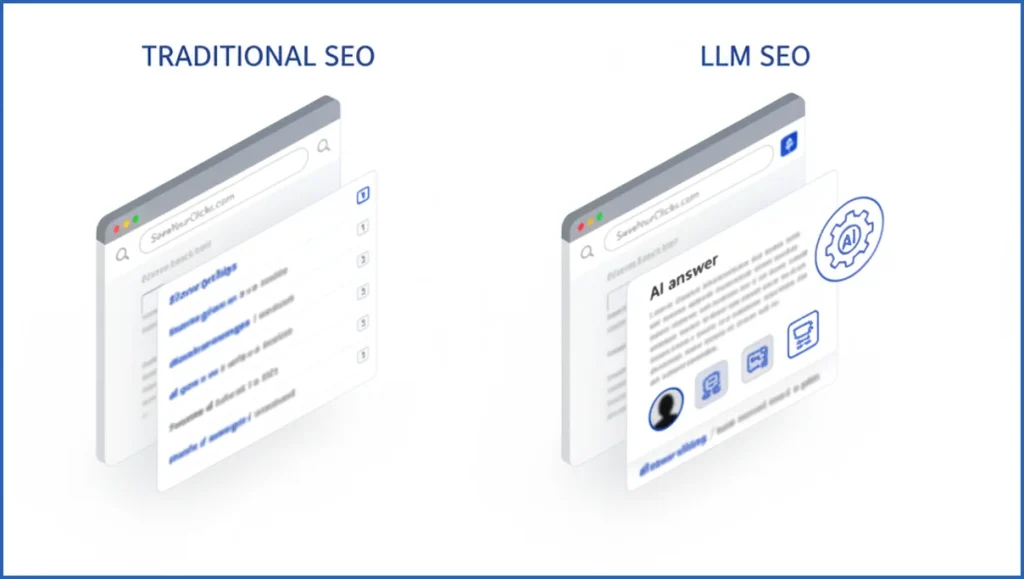
Traditional SEO vs LLM SEO: What Actually Changes
Traditional SEO rewards ranking signals at the query-page level. LLM SEO adds source selection at the passage and entity level. A page in position 6 can still feed an AI answer if it states the fact clearly and supports it well.
Source trust matters more here. Models prefer pages with obvious authorship, cited claims, updated dates, and stable topic focus. Intent matching also gets stricter. If the query asks for a comparison, a fluffy intro will lose to a page with a clean table and plain verdicts.
| Feature | Traditional SEO | LLM SEO | Verdict |
|---|---|---|---|
| Primary output | Ranked link | Synthesized answer | Both matter |
| Winning unit | Full page | Passage or fact block | Write in reusable chunks |
| Trust signal | Links and relevance | Links, citations, entity clarity | Trust gets more visible |
How LLMs Read Content and Pick Sources
Most AI search systems do two jobs. First, retrieval finds candidate documents. Then the model extracts passages, compares claims, and writes a response. That means headings, lists, tables, schema, and explicit definitions help machines split your page into usable units.
Specificity wins. “LLM SEO is the practice of optimizing content so AI systems can retrieve and cite it” is better than a broad paragraph. A practical workflow is to pull impression and query data from the Google Search Console MCP, find position 5-12 pages, and rewrite the first 150 words as direct answers.
Task:
1. Export queries for /llm-seo-guide/
2. Filter informational terms with impressions > 200
3. Rewrite intro as a 45-word definition
4. Add FAQ, comparison table, and cited stats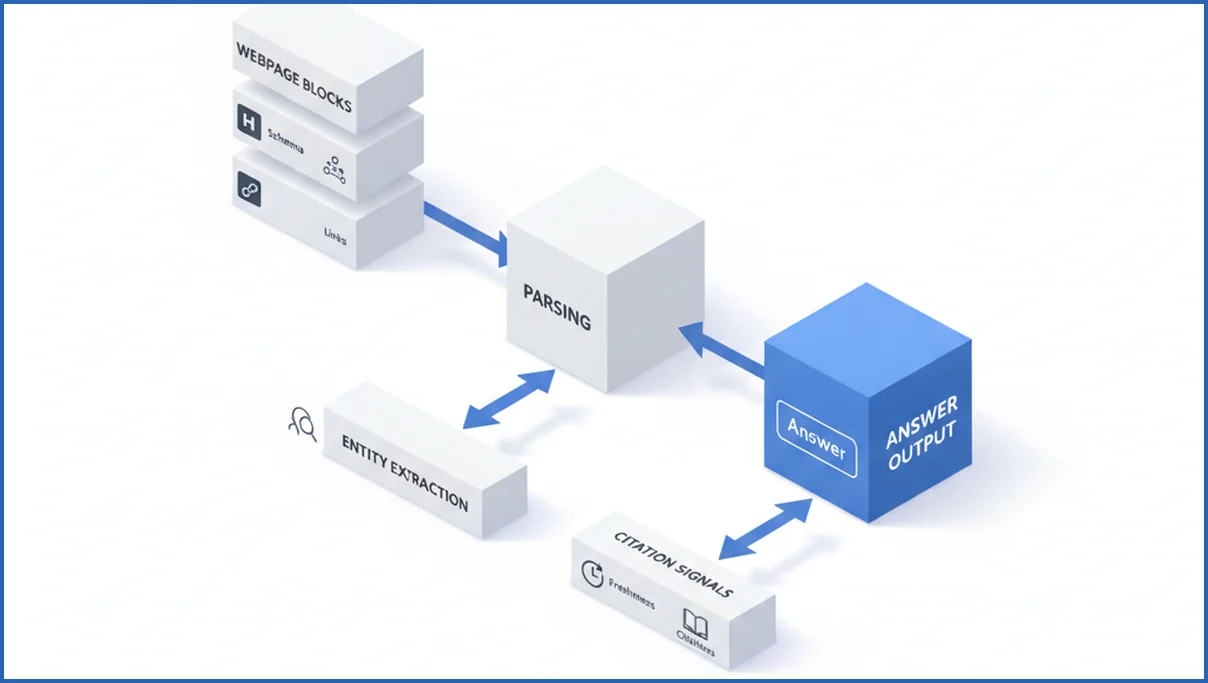
An LLM SEO Playbook: 8 Practical Steps
You do not need a new department for this. You need a tighter publishing system. Teams using automated content briefs with Claude Code can bake these checks into every page before publishing.
- Open with a direct definition or answer in 40-60 words.
- Use descriptive H2s that match user tasks and entities.
- Add tables, bullets, and short paragraphs for passage extraction.
- Cite claims with named sources when possible.
- Refresh pages when products, numbers, or SERPs change.
- Strengthen author, brand, and about-page signals.
- Build internal links from related pages with natural anchors.
- Create demand for your brand so users ask for you by name.
One example: a SaaS pricing guide ranking at position 8 for 47 queries can gain AI visibility by adding a comparison table, update date, reviewer bio, and product screenshots. Those changes often help normal CTR too. The overlap with modern SEO strategy in 2026 is larger than most people think.
Content Formats That Work Best for AI Visibility
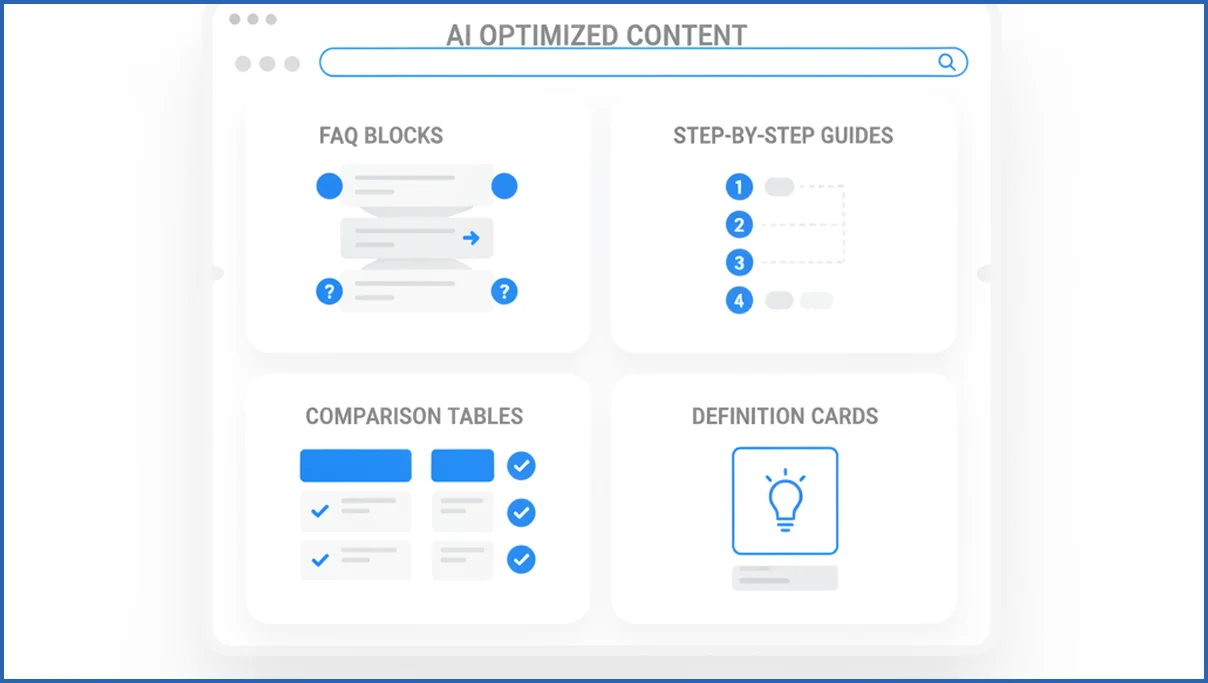
Some formats are easier for models to quote. Definitions, FAQs, comparisons, checklists, glossaries, and step-by-step guides tend to work well. They reduce ambiguity and package facts into chunks a model can lift without rewriting your whole page.
A good page often mixes formats. Start with a definition, follow with a comparison table, then add steps and FAQs. If you need a planning model, our content marketing strategy guide for 2026 maps this into an editorial calendar instead of a one-off post.
How to Measure LLM SEO Performance
You cannot rely on clicks alone. Track branded search lift, referral patterns from AI tools, cited mentions in AI answers, and query growth on pages built for answer extraction. GA4 plus the GA4 MCP setup helps surface landing pages that gain impressions while clicks stay flat.
Run monthly tests on 20 target prompts. Log whether your brand appears, whether your page is cited, and whether competitors dominate the answer. If impressions rise in Search Console, branded searches climb, and AI answers mention you more often, your LLM SEO work is moving.
How AI Overviews Change Citation and Click Patterns
AI Overviews change the old relationship between ranking, impressions, and clicks. A page can influence the answer without earning the first click. In many cases, users read the summary, scan cited sources, then click only when they need proof, pricing, visuals, or step-by-step detail. That means publishers should track not just position, but also assisted visibility, branded searches, and page types that earn citations.
Click patterns also become less uniform. Simple informational queries may lose clicks when the overview satisfies intent quickly. Complex or high-risk queries often send stronger clicks to pages with deeper evidence. Product comparisons, implementation guides, original data, and first-hand tests can benefit because users want validation beyond the summary. This is why LLM SEO is not only about being mentioned. It is about being the source users trust after the summary compresses the topic.
Your reporting should adapt. Segment Search Console data by query intent, page format, and branded versus non-branded demand. Look for rising impressions with flat clicks, then inspect whether those pages are feeding overview-style answers. A practical next step is using this Search Console analysis playbook to identify pages that gained exposure but changed click behavior. That helps you decide whether to tighten answers, add stronger proof, or improve conversion paths for lower-click, higher-intent visits.
How Google AI Mode Changes LLM SEO in 2026
Google AI Mode pushes LLM SEO closer to answer engineering than classic blue-link competition. Instead of rewarding only the highest ranking page, AI Mode often blends sources, extracts concise claims, and follows multi-step queries inside one session. Google framed AI Mode as a more advanced reasoning and exploration layer at I/O 2025, so content now needs to support summaries, comparisons, and follow-up questions across a topic cluster.
That changes what wins visibility. Pages with clean headings, explicit definitions, scannable lists, original evidence, and strong entity signals are easier for AI systems to compress accurately. You still need technical SEO and crawlability, but you also need content built for citation. If you need a broader framework, this Google AI Mode explainer helps connect the product shift to practical SEO execution.
- Answer the main query in the first 100 words with a direct, factual statement.
- Support claims with named products, dates, examples, and sourced numbers when possible.
- Build connected pages for subtopics, comparisons, FAQs, and definitions to help follow-up retrieval.
Frequently Asked Questions
What is the difference between traditional SEO and LLM SEO?
Traditional SEO focuses on helping pages rank in search results. LLM SEO focuses on helping passages get selected, summarized, and cited inside AI answers. The overlap is real, but the emphasis shifts toward clear entity signals, answer-first formatting, and source trust. A page can support AI visibility even when it is not the top blue link.
Is SEO dead or evolving in 2026?
SEO is evolving. Search still needs discovery, indexing, trust, and relevance. What changed is the interface layer. Users now get direct answers for many informational queries, so publishers need content that ranks and content that can be quoted. Teams that treat AI search as a formatting and trust problem usually adapt faster than teams chasing a separate channel.
Do backlinks still matter for AI search visibility?
Yes, but mostly because links still help pages earn authority, discovery, and trust. AI systems do not ignore the web’s existing reputation signals. Still, links alone will not rescue messy pages. A well-linked article with vague copy may lose to a clearer page with stronger structure, fresher facts, and cleaner entity framing.
How do I know if AI tools mention my brand?
Build a prompt set around your category, competitors, and product use cases. Test those prompts in ChatGPT, Perplexity, Claude, and Google AI results each month. Record brand mentions, citations, and answer position. Pair that with branded query growth in Search Console. If users increasingly search your brand after exposure, AI visibility is likely improving.
Should I create new content just for LLM SEO?
Usually, no. Start by upgrading pages that already rank, especially those sitting in positions 4-12 or earning high impressions with weak CTR. Add clearer intros, entity-rich subheads, FAQs, and cited claims. New content makes sense when you have obvious topic gaps, but most sites have enough existing pages to improve first.
Does schema markup help LLM SEO?
Schema helps machines interpret page type, authorship, products, FAQs, and organizations more consistently. It will not guarantee citations, but it improves clarity. Treat it as supporting infrastructure, not the main tactic. Good schema paired with strong on-page structure is more useful than elaborate markup on a weak or outdated article.
How often should I update pages for AI search?
Update pages when the facts, product details, or SERP behavior change. For fast-moving topics, quarterly is reasonable. For evergreen guides, review every six months. Focus on parts models rely on most: the intro definition, stats, tables, screenshots, and FAQ answers. Small factual updates often matter more than a full rewrite.
Pick five pages that already rank on page one or top of page two. Rewrite the intros, tighten the headings, add cited fact blocks, and track 20 prompts for 30 days. That will tell you more than another abstract debate about whether SEO is over.
How do I optimize content for Google AI Mode answers?
Start with one clear answer near the top, then support it with definitions, steps, examples, and source-backed claims. Use descriptive headings, tight paragraphs, and lists that are easy to extract. Add original details like prices, timelines, tool names, or test results. Build related pages around the topic so Google can understand depth and follow-up intent. For a wider framework, see answer engine optimization.
What matters now
Google AI Mode and AI Overviews reward pages that answer clearly, prove claims, and support deeper exploration. Strong rankings still help, but citation-ready structure matters more than ever. Focus on direct answers, original evidence, and connected topic coverage. That approach improves your odds of being summarized, cited, and clicked when users want more than a one-paragraph answer.