Last updated: August 2026
Off page SEO used to mean link building. That framing is too narrow now. Search engines assess reputation across links, mentions, citations, creator signals, and how often your brand appears in relevant conversations. AI helps with the heavy research, but judgment still decides what is worth pursuing and what will age badly.
TL;DR
- Off page SEO builds trust beyond your website.
- AI speeds research, outreach, and link prospecting.
- Quality mentions matter more than raw link counts.
- Track authority, referrals, and brand demand together.
What off page SEO really means today
Off page SEO is every signal that tells Google and AI search systems your site deserves attention. Backlinks still matter, but so do unlinked brand mentions, expert quotes, review coverage, podcast appearances, and citations in niche communities. If your name keeps showing up around a topic, search engines infer topical trust.
That matters even more as search shifts toward entity understanding and answer synthesis. A brand can win visibility without owning every click. The answer engine optimization shift makes off-site reputation part of discovery, not just rankings. Think less about acquiring 100 links and more about becoming the source people cite when a topic comes up.
Set your authority goals before you build links
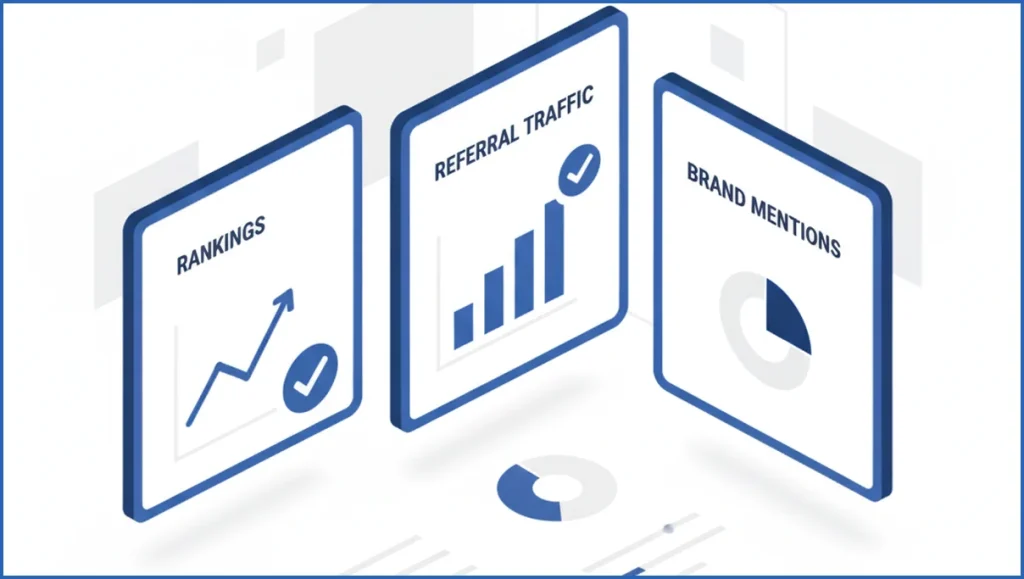
Pick one primary outcome first. Most teams mix three goals: ranking support, referral traffic, and brand mentions. Each needs different targets. A niche SaaS may want editorial links to product pages. A founder-led consultancy may get more value from quoted mentions in industry newsletters and podcasts.
Use a simple scorecard. For example, target 15 relevant referring domains in 90 days, 300 monthly referral visits, and a 20% lift in branded search impressions. If your off-page work sits inside a broader content marketing plan, those numbers stay tied to business results instead of vanity reports.
Use AI to find link and mention opportunities faster
AI is good at reducing the first 500 prospects to the best 40. Feed it competitor backlinks, author bylines, podcast guest lists, association directories, and journalist requests. Then ask for patterns by topic, audience, and likelihood of response. The Google Search Console MCP tools help connect those prospects to pages already ranking in positions 8 to 15.
One practical workflow looks like this:
- Export competitor referring domains and brand mentions.
- Group them by format: guest post, data citation, interview, roundup, resource page.
- Match each group to one URL you actually want to grow.
- Have AI draft angles, not final emails.
Example prompt and structure:
Goal: find 25 outreach targets for /off-page-seo-guide
Inputs: competitor backlinks.csv, podcasts.csv, newsletters.csv
Rules: prefer DR 30-70, active in last 6 months, topic relevance above broad marketing
Output: domain, reason it fits, likely asset type, first personalization hook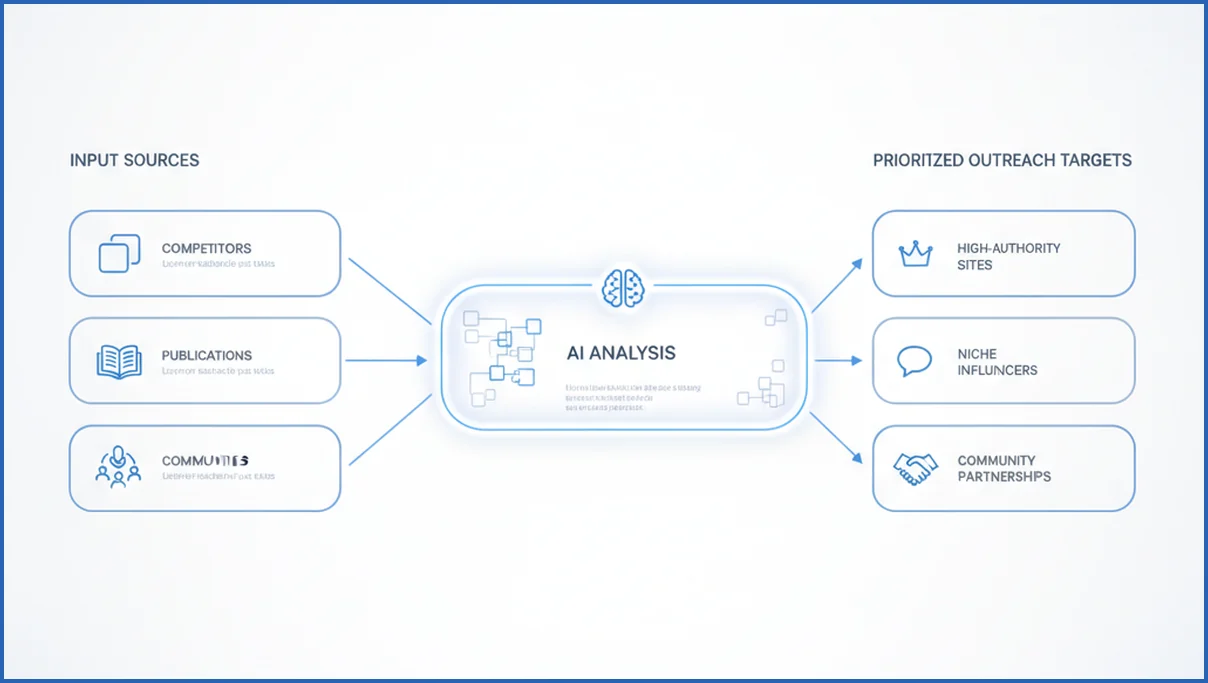
Create assets people actually want to reference
Most outreach fails because the asset is weak. Few editors want another opinion post. They do want original data, a free template, a calculator, a benchmark table, or a tight expert quote pack. Useful assets earn links because they remove work for the person publishing.
A solid example is a small dataset with a clear point. If you analyze 1,200 search queries and show where branded terms trigger AI Overviews, that becomes a citation source. Teams building these assets often pair them with AI content brief workflows so the page and its outreach materials stay aligned.
Run outreach that feels personal, not automated
Personal outreach starts before the email. Read the site. Check the last five posts. Find one article where your asset genuinely adds something. Then write two custom lines and one specific ask. If the message could fit 200 other domains, delete it and start again.
A simple format works well: context, relevance, asset, ask. For example, reference a recent article on local SEO, note that you have a 2026 off-page benchmark with 87 sites, and suggest one chart they may want to cite. If you use AI, keep it in the research lane. AI copy workflows can speed drafts, but the final email needs your judgment and tone.
Follow up once after four business days, then stop. Good outreach is selective. Bad outreach is loud.

Measure off page SEO impact the right way
Count outcomes, not activity. Track earned links by relevance, linked page, anchor context, referral visits, assisted conversions, branded impressions, and ranking movement for the target cluster. A single link from the right site can do more than 20 low-trust placements.
Use GA4 for referral quality and Search Console for query movement. The GA4 MCP setup makes it easier to compare assisted conversions against outreach campaigns. If links land but rankings stay flat, the problem may be on-page quality, internal linking, or weak topical coverage instead of authority alone.
Frequently Asked Questions
What is the difference between off page SEO and backlinks?
Backlinks are one part of off page SEO. Off page SEO also includes unlinked mentions, reviews, publisher citations, digital PR, creator references, and brand signals across the web. A backlink passes a direct signal, but repeated mentions on relevant sites can still strengthen perceived authority, especially when they support a clear topical footprint.
How does AI help with off page SEO?
AI helps most with research speed. It can group prospect lists, find patterns in competitor coverage, suggest asset angles, and draft first-pass outreach. It does not replace editorial judgment. You still need a human to decide if a site is credible, if the pitch is relevant, and if the asset deserves attention.
Which off page SEO tactics work best for new sites?
New sites usually do better with focused tactics, not broad campaigns. Start with niche directories, expert quotes, founder interviews, partner pages, and one useful asset worth citing. These are more realistic than chasing top-tier media on day one. Early wins should build topic relevance and a small set of trusted referring domains.
How many backlinks do I need to rank?
There is no fixed number because competition varies by query and intent. A page may rank with five strong, relevant links in one niche and need fifty in another. Compare the top results, their referring domains, and content quality. If your page is weaker than theirs, more links alone will not solve it.
Are brand mentions useful for SEO?
Yes, especially when they appear on relevant, trusted sites in the same topic area. Brand mentions can support entity recognition, increase branded search demand, and lead to later links from other writers. They are not a substitute for links in competitive spaces, but they often strengthen the broader authority picture around your brand.
How do I avoid spammy link building?
Avoid buying placements on obvious link farms, mass guest post networks, and any site that publishes unrelated topics every day. Vet domains for editorial standards, traffic quality, topic fit, and recent activity. Keep your outreach selective. If you would be embarrassed to show the placement to a client or investor, skip it.
What metrics should I track for off page SEO?
Track referring domains, link relevance, referral sessions, assisted conversions, branded search impressions, and ranking movement for the pages you support. Also note mention volume and publication quality. These metrics show whether authority is translating into visibility and business impact, not just creating a bigger spreadsheet.
Start with one page, one asset, and one prospect list of 30 sites. If that small system does not earn replies, scaling it will only multiply the noise.