
Last updated: August 2026
LLM visibility is a simple question with messy inputs. When ChatGPT, Claude, Gemini, or AI Mode answer a query in your category, do they mention you, cite you, or ignore you? Teams that track this early spot weak source coverage, shaky entity signals, and content gaps before those problems show up in traffic reports.
TL;DR
- Track how often AI tools mention your brand.
- Measure citations, rank shifts, and prompt coverage.
- Use a simple scorecard to find visibility gaps.
- Optimize pages for answer-ready, citation-worthy content.
- Review weekly to catch changes early.
What LLM visibility means in practice
LLM visibility means your brand appears inside AI-generated answers for relevant prompts. That can be a direct mention, a citation to your page, or a summary that clearly uses your material. It overlaps with SEO, but it is not the same thing. A page can rank well and still get skipped in AI answers.
What matters is discoverability across prompt patterns, not just keywords. A buyer might ask “best tools for content audits” instead of searching a head term. If your site is structured for clear answers and strong sourcing, you have a better shot. Answer engine optimization is the closest existing discipline, but LLM tracking adds recurring measurement.
Set up your llm visibility tracking baseline
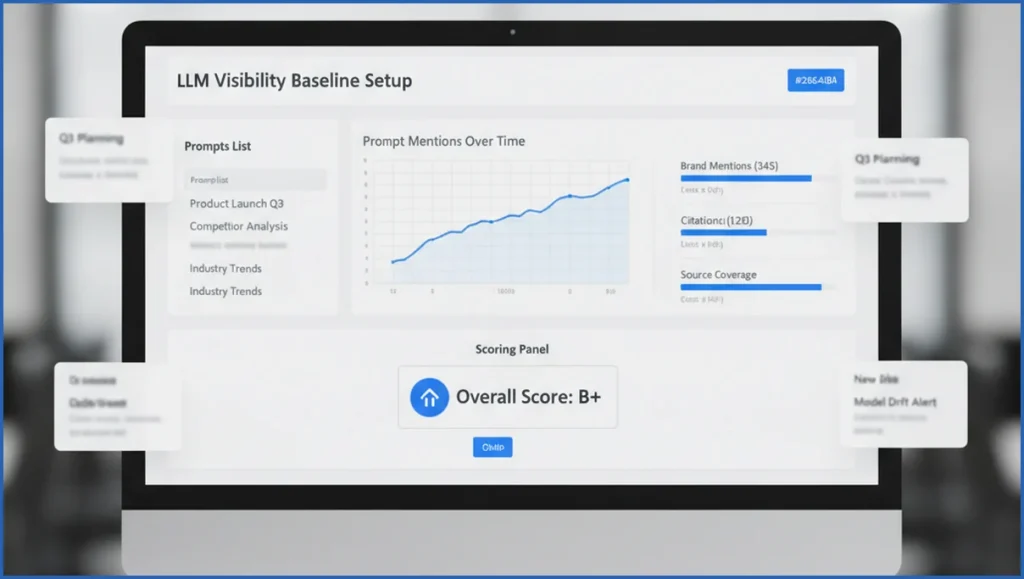
Start with 25 to 50 prompts across branded, non-branded, comparison, and problem-aware intent. Then log four things for each result: mention yes or no, citation yes or no, answer position, and source domain used. If you need a cleaner measurement stack, MCP integrations for Claude can help pull supporting search and analytics context beside your prompt logs.
Next, create a seed topic list. For example: “technical SEO automation,” “GA4 reporting for content teams,” and “internal link audit workflow.” Run each prompt in the same model, same temperature, and same time window. Baselines fail when teams change three variables at once.
Choose the metrics that actually matter
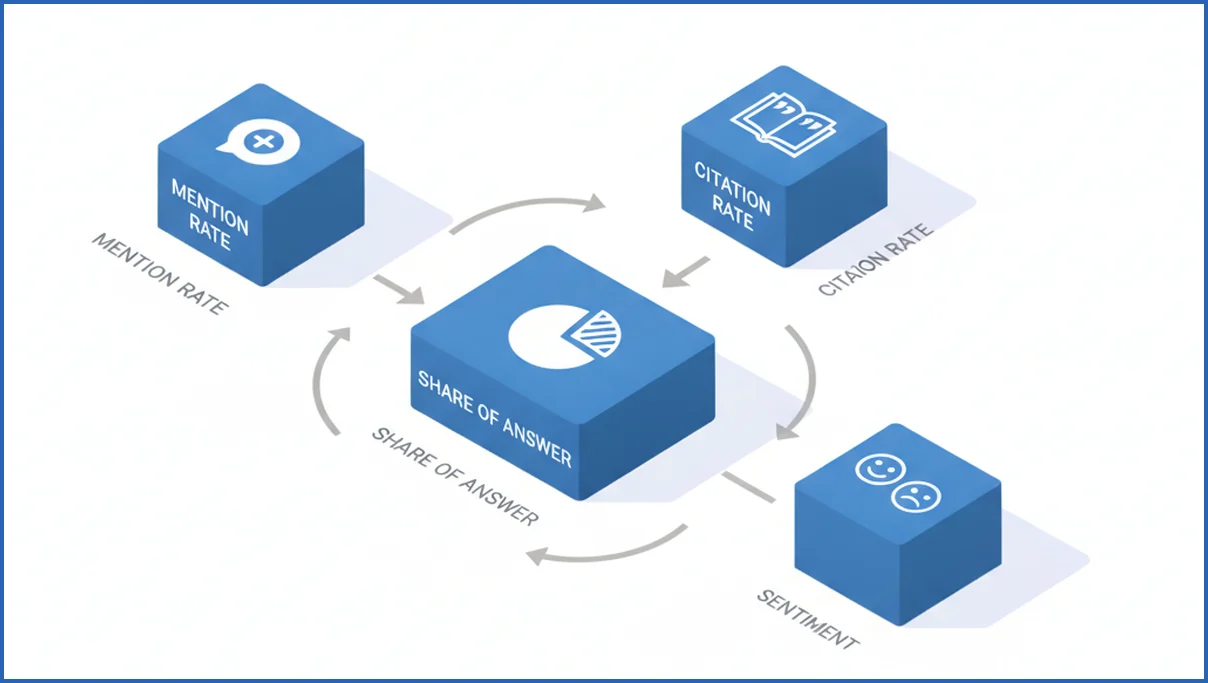
Ignore raw prompt volume. Track mention rate, citation rate, share of answer, and sentiment. Mention rate tells you if you exist in the model’s consideration set. Citation rate shows whether the model trusts your pages enough to name them. Share of answer measures how much of the response space your brand owns.
A simple scorecard works well:
Mention rate = mentions / total prompts
Citation rate = cited prompts / total prompts
Share of answer = brand sentences / total answer sentences
Visibility score = (0.4 x mention) + (0.4 x citation) + (0.2 x share)
If your mention rate is 42% but citation rate is 8%, the fix is rarely “write more.” Usually you need clearer sourcing, tighter page structure, and stronger entity reinforcement. Google AI Mode changes make those differences more visible.
Build a repeatable tracking workflow
Use a weekly run for core prompts and a monthly run for the full set. Keep one spreadsheet or database with prompt, model, date, answer text, mention, citation, and notes. Teams already doing Search Console analysis workflows can fold this into the same reporting cycle.
Follow a short process:
- Run fixed prompts in each target model.
- Log mentions, citations, and competitor appearances.
- Compare changes against content releases and site updates.
- Flag prompts with lost citations or new source competitors.
A real example: a SaaS team tracked 30 prompts weekly. After adding expert quotes and sharper definitions to six pages, citation rate rose from 11% to 23% in three weeks. Ranking data alone would not have shown that shift.
Improve visibility with content and technical fixes
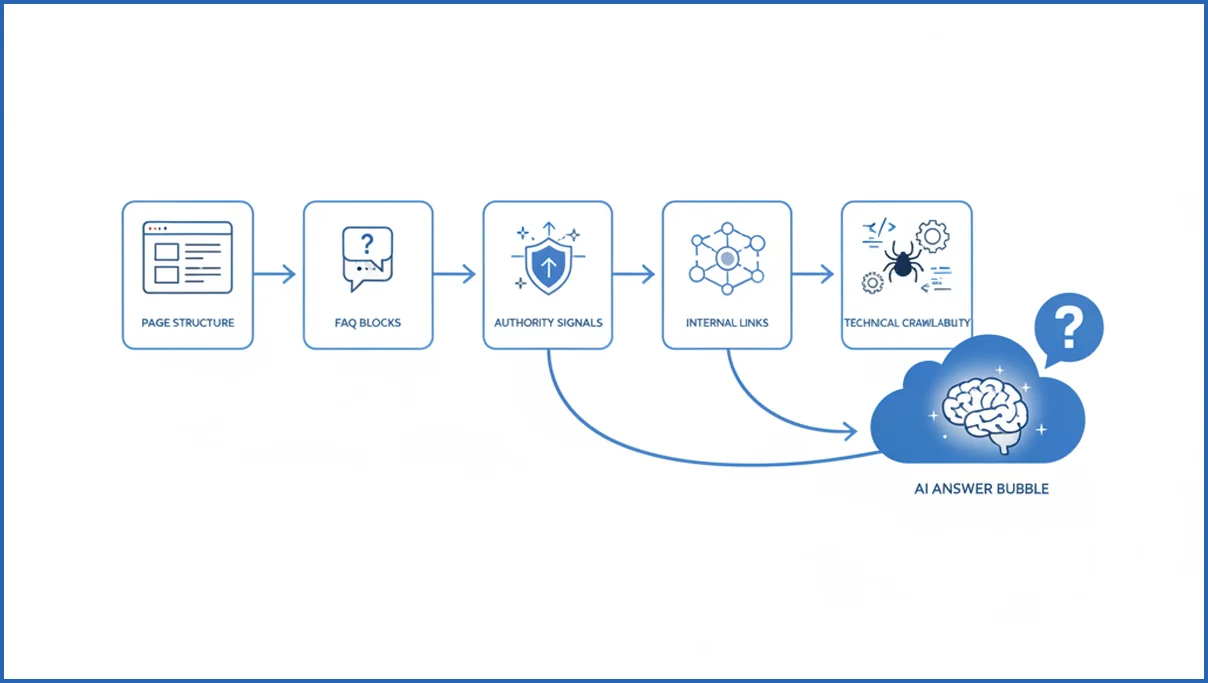
Most gains come from boring fixes done well. Add direct definitions near the top of pages. Break processes into steps. Use comparison tables where buyers need trade-offs. Include original numbers, dates, and named sources when you have them. These patterns make pages easier for models to quote and summarize. On-page SEO with AI still matters here.
Technical issues also block inclusion. If the page is slow, thin, blocked, or duplicated, citation odds drop. Check crawlability, canonical consistency, internal links, and schema where it helps interpretation. For content teams, the Google Search Console MCP is useful for finding pages that already earn impressions but fail to become cited sources.
Turn tracking into an ongoing optimization loop
Reporting should show movement, not just snapshots. Separate prompt groups by intent, then track winners and losers over time. If “how to” prompts improve but “best tool” prompts do not, your issue may be authority or comparison coverage, not page clarity.
Keep the loop tight. Measure, diagnose, change pages, and rerun the same prompts. Teams that already work from a documented content marketing strategy usually move faster because ownership is clear. LLM answers shift often, so your process matters more than any single score.
Frequently Asked Questions
How do you measure llm visibility?
Use a fixed prompt set and log whether your brand appears, whether your page gets cited, and how much answer space you occupy. Run the same prompts in the same models on a schedule. Store answer text and source domains, not just yes or no labels. That gives you trend data and a record of what changed.
What tools help track AI mentions?
A spreadsheet works at first. After that, teams usually add prompt testing scripts, SERP monitoring, and analytics connectors. Search Console and GA4 help tie visibility changes back to demand and page performance. Claude with MCP tools is useful when you want one workspace for prompts, source review, and traffic context.
How often should visibility tracking run?
Weekly is the right cadence for core prompts tied to revenue pages. Monthly is enough for wider research themes and lower-priority topics. Run extra checks after major page rewrites, new product launches, or site migrations. If a category is volatile, shorten the cycle. If results barely move, widen it and focus on experiments.
Which metrics predict better AI citations?
Citation rate is the direct signal, but it improves when pages are easy to extract from. Look for concise definitions, strong internal links, original facts, and clear authorship or brand association. Pages that already rank in positions 3 to 10 often become better citation candidates after structure fixes, even before rankings improve.
Can llm visibility improve organic traffic?
Yes, but not in a neat one-to-one way. Better LLM visibility can drive assisted discovery, branded searches, and referral clicks from cited sources. It also tends to overlap with stronger topical clarity, which can help organic performance. Treat it as a discovery layer and trust signal, not a replacement for search traffic reporting.
What content changes increase AI answer inclusion?
Start with pages that already have demand. Add a direct answer near the top, tighten headings, include a short FAQ, and remove vague filler. Support claims with specific examples, dates, or numbers. If a page covers a process, use steps. If it compares options, show trade-offs. Models tend to reward clear structure and concrete evidence.
Your next step is simple. Pick 30 prompts, score one model this week, and save the raw answers. After one baseline run, the weak points usually stop being abstract.