
Last updated: August 2026
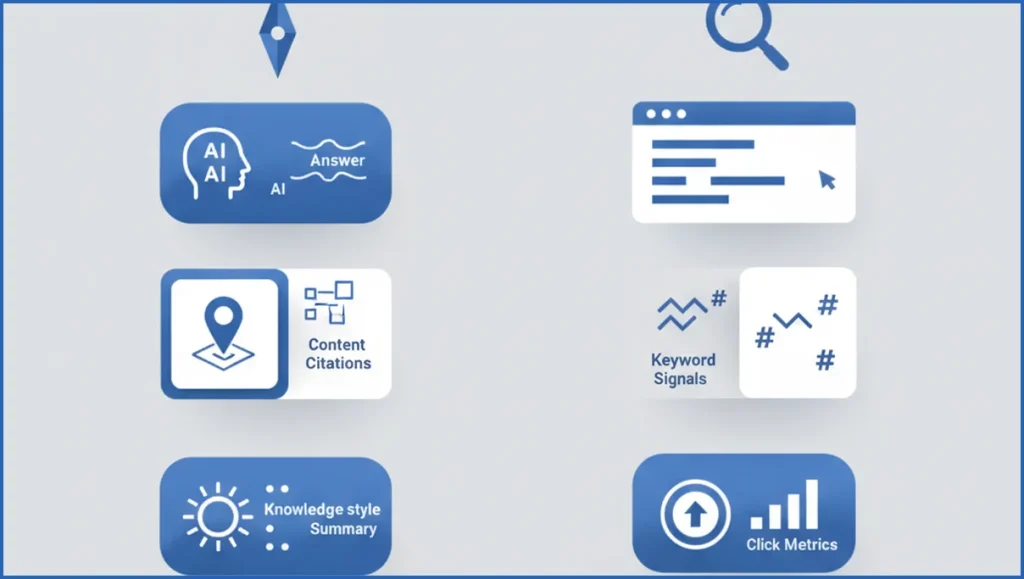
Search visibility now splits across two surfaces. One is the familiar ranked results page. The other is the generated answer layer inside Google AI Mode, ChatGPT, Perplexity, and similar tools. That shift makes the geo vs seo question practical, not theoretical. You still need rankings, but you also need content that AI systems can parse, trust, and cite.
TL;DR
- SEO helps pages rank in search engines.
- GEO helps content get used in AI answers.
- They overlap, but the success signals differ.
- The best strategy now combines both.
- This guide shows how to choose and optimize for each.
What GEO and SEO Mean in Plain English
SEO is search engine optimization. You improve pages so Google and other search engines rank them for specific queries, then users click through. That still means technical health, search intent match, internal links, and pages built around topics people actively search.
GEO usually means generative engine optimization. You shape content so AI systems can extract facts, summarize claims, and cite your page inside generated answers. A fuller breakdown lives in this practical GEO playbook. GEO cares less about one blue link position and more about whether your information becomes part of the answer.
There is overlap. Clear structure, expertise signals, and original information help both. But the output differs. SEO aims for rankings and clicks. GEO aims for inclusion, citation, and answer influence across AI interfaces, including the shifts covered in Google AI Mode.
GEO vs SEO: The Core Differences
SEO optimizes for retrieval. GEO optimizes for retrieval plus synthesis. A search engine can rank a mediocre page if it matches intent and has authority. A generative engine often prefers pages with direct definitions, scannable sections, sourceable claims, and clean entity relationships.
Measurement changes too. SEO teams track impressions, rankings, clicks, and conversions. GEO teams watch citations in AI answers, assisted visits, branded search lift, and referral patterns from AI surfaces. Those data points are still messy, which is why many teams pair classic reports with Search Console MCP workflows to inspect query shifts faster.
| Feature | GEO | SEO | Verdict |
|---|---|---|---|
| Main goal | Be used in generated answers | Rank and earn clicks | Different outputs |
| Winning format | Concise, structured, sourceable content | Intent-matched landing pages | Overlap exists |
| Core signals | Clarity, trust, extractability | Authority, relevance, UX | SEO is broader |
| Primary metric | Citations and assisted influence | Traffic and conversions | Do not compare directly |
When SEO Still Wins in Search Visibility
SEO remains the main engine for high-intent commercial queries. If someone searches “crm software pricing” or “emergency plumber near me,” rankings and landing page fit matter more than answer inclusion. Users want options, pages, and next actions.
It also wins where crawlable inventory matters. Ecommerce category pages, local service pages, and comparison content still depend on strong architecture and internal linking. If you publish 400 product pages, classic SEO strategy usually produces clearer revenue attribution than GEO-first work.
A simple example is a SaaS pricing page ranking at positions 4 to 6 for 18 bottom-funnel queries. Improving title tags, comparison schema, and internal links can raise clicks within weeks. GEO may help brand recall, but SEO drives the direct visit.
When GEO Has the Edge in AI Answers
GEO performs better on explanatory, research, and synthesis-heavy queries. Think “geo vs seo,” “how to choose an analytics stack,” or “what causes traffic drops after migration.” These prompts invite summaries, trade-offs, and source blending. AI systems want pages that answer cleanly and support the answer with distinct facts.
Pages with tight definitions, tables, examples, and explicit caveats are easier to lift into AI responses. Original numbers help too. A page that states “47 queries sit in positions 8 to 12 after the core update” gives a model something specific to quote, while vague advice often disappears.
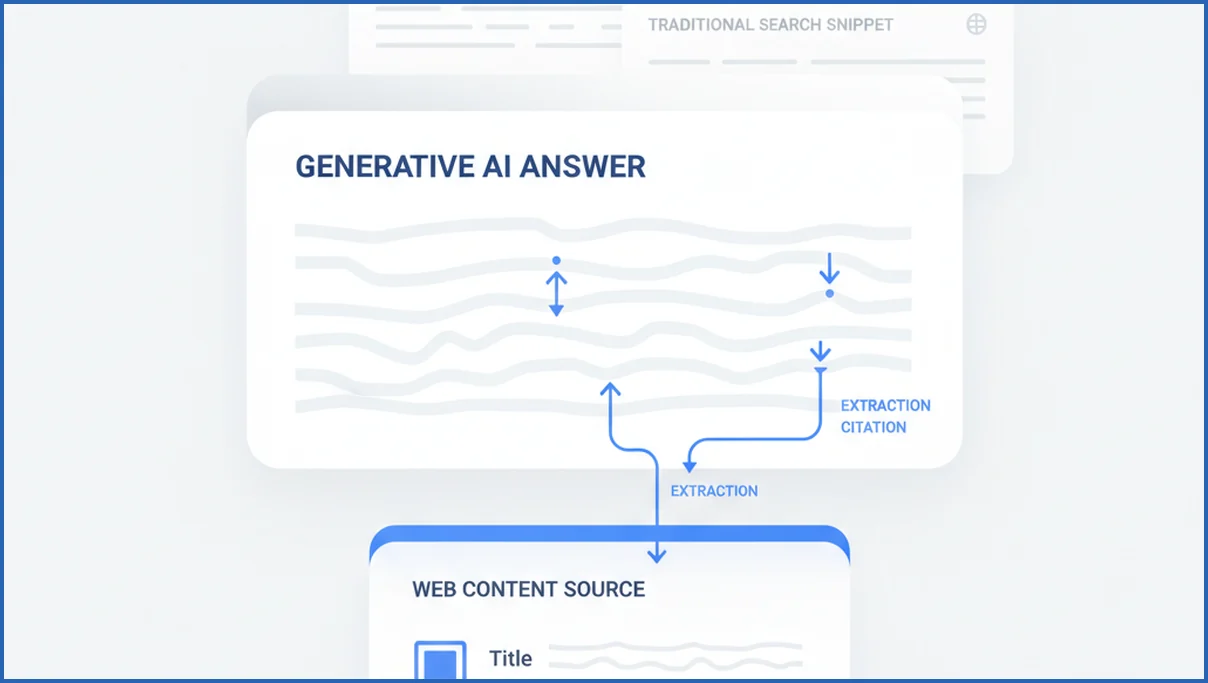
Another edge case is thought leadership. Founders and consultants may not rank number one for broad terms, but they can still appear in generated summaries if their content is clear and opinionated. That is close to the framework behind answer engine optimization.
How to Build Content That Works for Both
Use a hybrid workflow. Start with queries and SERP evidence, then shape the page so both crawlers and models can read it fast. This works especially well for guides, comparison pages, and B2B educational content.
- Cluster keywords by intent and entity.
- Draft a direct answer near the top.
- Add sections with definitions, examples, and trade-offs.
- Support claims with first-party data or named sources.
- Finish with internal links and conversion paths.
A real workflow might pull query data from GSC, group terms, and generate a brief before drafting. Teams doing that at scale often combine Claude with keyword clustering workflows and brief templates. Then they publish one page that can rank for “geo vs seo” and also feed answer engines a crisp summary block.
You can even script parts of it:
1. Export top queries from GSC
2. Group by intent: define, compare, choose, measure
3. Write a 40-word answer block for each intent
4. Add a table, one example, and one caveat
5. Review headers for extractable phrasing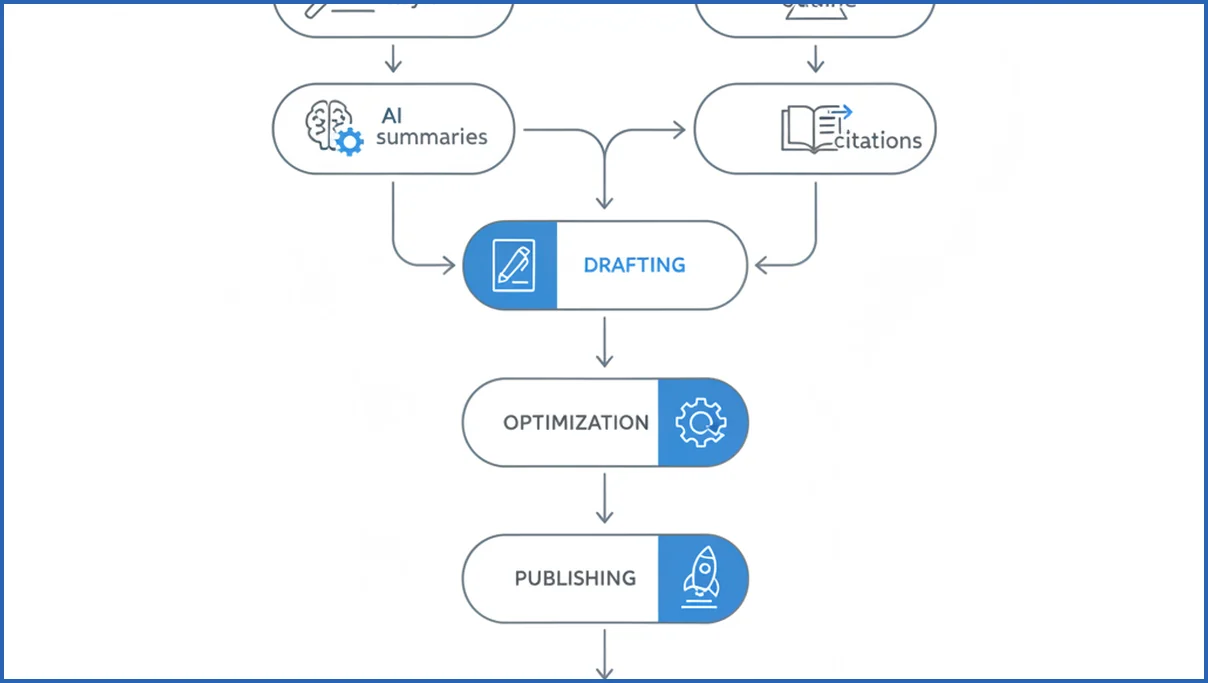
How to Measure Success Without Guessing
Separate direct-response metrics from influence metrics. For SEO, track impressions, average position, clicks, sessions, and conversions by page type. For GEO, look for cited mentions, referral sessions from AI products when available, branded query growth, and changes in assisted conversions.
Do not expect one dashboard to solve this yet. A better setup combines GSC, analytics, and manual sampling of AI answers. If you need a cleaner measurement stack, GA4 MCP tools help join engagement data with search changes faster than spreadsheet work alone.
Choosing the Right Mix for Your Site
If you run ecommerce, local services, or lead gen, start with SEO. Those models still depend on rankings, crawl coverage, and transactional pages. GEO can support top-of-funnel education, but it rarely replaces the need for strong search visibility.
If you publish B2B education, research, or expert commentary, weight GEO more heavily. Your pages can win citations even when classic rankings lag. Most sites need both. The practical question is not GEO or SEO. It is which content type deserves which mix.
Frequently Asked Questions
Is GEO replacing SEO?
No. GEO adds a second optimization layer, but it does not remove the need for rankings, crawlability, or intent-matched pages. Search engines still send a large share of traffic for commercial and navigational queries. GEO matters because answer interfaces now intercept some informational demand, not because SEO stopped working.
Can one article be optimized for both GEO and SEO?
Yes, and that is usually the smartest approach. Start with a clear target query set, then structure the article with direct definitions, concise subheads, tables, and examples. That gives search engines strong relevance signals while giving AI systems content blocks they can extract and summarize without guessing.
Does GEO matter for all types of websites?
No. It matters most for publishers, SaaS companies, consultants, and brands that win through education. A local locksmith site or a narrow ecommerce store should care, but not at the expense of basic SEO hygiene. Match the investment to how often your audience asks exploratory or comparison-heavy questions.
What metrics show GEO performance?
There is no perfect standard yet. Useful signals include AI referral traffic, citation frequency in generated answers, growth in branded searches, and assisted conversions after educational page visits. Many teams also track whether their definitions, tables, or original data points appear in answer summaries during regular manual checks.
How do AI answers affect organic traffic?
They can reduce clicks on simple informational queries because users get the summary before visiting a page. They can also improve traffic quality by filtering out low-intent visits. If your content earns citation in the answer, you may lose some volume but gain stronger brand recall and better downstream searches.
Should small sites focus on SEO first?
Usually, yes. Small sites need pages that rank, internal links that make sense, and a clear path to conversion. Once that base is stable, add GEO improvements to the pages most likely to inform AI answers. The exception is a niche expert site built mainly around opinions, research, or explainers.
What content formats work best for GEO?
Definition pages, comparison posts, Q and A content, glossaries, research summaries, and practical how-to guides tend to work well. The common trait is extractability. AI systems prefer pages with short answer blocks, labeled sections, precise claims, and visible trade-offs instead of vague marketing language or thin listicles.
Start by tagging ten existing pages as SEO-first, GEO-first, or hybrid. Then rewrite only two of them with clearer answer blocks, stronger examples, and measurable claims. You will learn faster from that small test than from another debate about whether GEO is the future.