
Last updated: July 2026
An ai seo content generator is useful when you treat it like a fast first-pass writer, not a publishing button. It can turn keyword research, SERP notes, and brand guidance into a workable draft in minutes. The catch is simple. Weak inputs create generic pages. Strong inputs create pages you can actually edit, ship, and improve with search data.
TL;DR
- Use AI to speed up SEO content without losing quality.
- Start with intent, keywords, and a clear content brief.
- Combine AI drafting with human editing for accuracy and voice.
- Optimize structure, internal links, and on-page elements before publishing.
What an AI SEO Content Generator Actually Does
An ai seo content generator usually handles four jobs well. It maps a topic to likely search intent, proposes headings, drafts sections, and rewrites for tone or format. Good tools also help with entity coverage, FAQ ideas, and outline expansion. If you are comparing options, tool differences matter more than feature lists.
What it does not do well is judgment. It cannot verify every claim, spot subtle product nuance, or know which examples feel credible to your buyers. It also tends to average the web unless you feed it original inputs. That is why the winning setup pairs generation with first-party data, editorial standards, and performance feedback from tools like the Search Console MCP workflow.
How to Set Up a High-Quality Content Brief
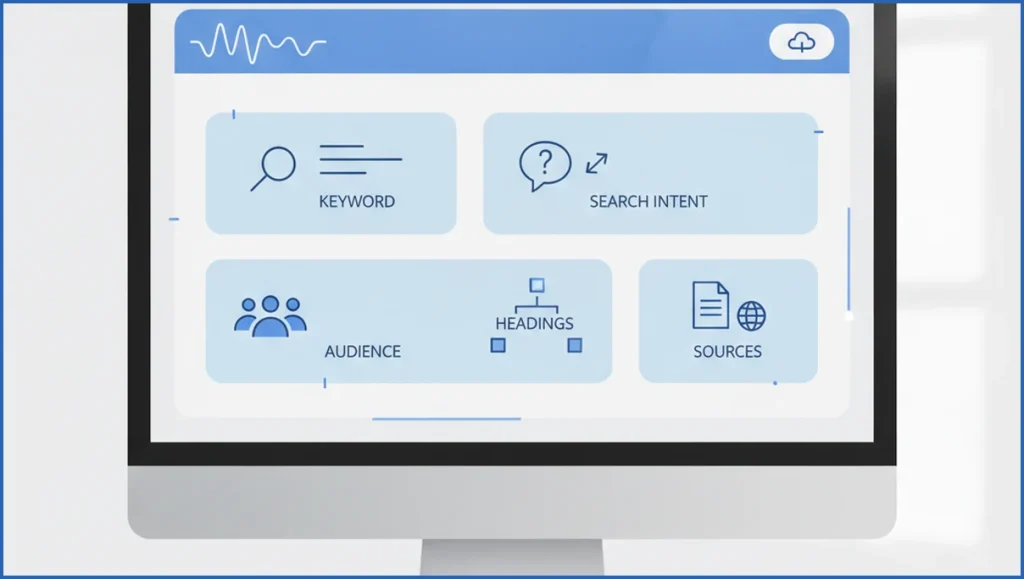
Start the brief with one primary keyword, three to eight supporting terms, and a plain-language intent statement. Add audience, funnel stage, product angle, and the action you want after the read. Then give the model constraints. Define what the article must cover, what it must avoid, and which claims need a source or a hedge.
A practical brief template looks like this: keyword, intent, audience, desired outline, internal links, examples to include, brand voice notes, and trusted sources. If your team wants repeatability, automating content briefs with Claude Code saves time without losing structure.
Step-by-Step Workflow: From Keyword to Draft
Use a repeatable sequence. Pull queries from Search Console, cluster them, inspect the live SERP, then draft against the dominant intent. This is where keyword clustering pays off. A page that targets one cluster is easier to structure and easier to improve later.
Here is a simple workflow:
- Choose a keyword cluster with one clear intent.
- Review the top 10 results for format, subtopics, and missing angles.
- Build a brief with audience, entities, examples, and internal links.
- Generate an outline first, then draft section by section.
- Edit for accuracy, originality, and product fit before on-page checks.
For example, a SaaS team targeting “ai seo content generator” might include product screenshots, a 5-step workflow, and a warning about hallucinated claims. That gives the model specifics to anchor on. If you already run Claude with connectors, MCP servers for SEO data let the drafting process use fresher context than a blank prompt.
Goal: Draft an article for the keyword "ai seo content generator"
Audience: SEO manager at a SaaS company
Intent: commercial investigation with practical workflow
Must include: brief template, editing checklist, on-page checklist
Must avoid: unverifiable claims, generic intros, fake statistics
Tone: direct, specific, slightly opinionated
Output: H2 outline first, then 120-word sections with examples
How to Edit AI Drafts for Search and Trust
Editing is where ranking pages separate from filler. Cut repeated phrases, flatten obvious AI transitions, and replace generic claims with proof. Add your own examples, screenshots, test results, or client patterns. If the draft says “businesses can improve performance,” rewrite it to something measurable, like “pages stuck in positions 8-12 often need stronger internal links and tighter intros.”
Next, check trust signals. Add author perspective, source notes, product detail, and realistic trade-offs. A useful editing pass also checks whether the piece can win in AI search surfaces, not only blue links. Answer-focused formatting often helps because concise definitions and clear steps are easier for engines to extract.
On-Page SEO Checks Before You Publish
Before publishing, review title tag, H1 alignment, intro clarity, heading logic, image alt text, and internal links. Make sure the primary keyword appears naturally in the title, first paragraph, and at least one subheading. Then verify that each section earns its place. If a paragraph does not support intent, cut it.
Use one final pass for freshness and search fit. Check whether the SERP now favors comparison pages, templates, or product-led explainers. Then add two or three contextual links to supporting pages, such as on-page SEO workflows with AI. Track performance after publishing so revisions come from data, not guesses.

Common Mistakes and How to Avoid Them
The biggest mistake is vague prompting. “Write an SEO article about X” invites a generic result. Another common issue is over-automation. Teams publish first drafts with no fact check, no brand layer, and no post-publish review. That saves time once, then creates a cleanup job later.
Avoid thin briefs, weak examples, and keyword stuffing. Also avoid treating all content types the same. A definition page, a product comparison, and a category page need different prompts, structures, and proof points. If your process still feels fuzzy, start with one template and improve it across five articles, not fifty.
Frequently Asked Questions
Can an AI SEO content generator replace a writer?
No, not if you care about trust, accuracy, and distinct point of view. It can replace parts of the workflow, especially outlining, first drafts, rewrites, and FAQ generation. A writer or editor still needs to shape the argument, verify claims, add original examples, and decide what is worth publishing. Treat the tool as production support, not editorial judgment.
How do I make AI content sound more human?
Give the model real constraints and real material. Feed it customer language, product details, founder opinions, support tickets, and examples from your own work. Then edit hard. Remove padded transitions, shorten predictable sentences, and swap abstract claims for specifics. A human voice usually comes from sharper choices, not from asking the model to “sound human.”
What should I include in an SEO content brief?
Include the primary keyword, supporting keywords, search intent, target reader, funnel stage, desired article angle, outline requirements, internal links, and trusted sources. Add things the article must not say. That part matters. If your product has compliance limits, pricing caveats, or technical edge cases, put them in the brief before generation starts.
How many keywords should I give the tool?
Usually one primary keyword and three to eight secondary terms are enough for a standard blog post. More than that often muddies intent. If you have 20 keywords, cluster them first and choose one cluster per page. The model writes better when the topic is narrow and the page has one clear job in the search journey.
Will AI-generated content rank on Google?
It can, but only when the page satisfies intent and adds value beyond a stitched summary of existing results. Google focuses on usefulness more than authorship method in its public guidance. In practice, pages rank when they are accurate, structured well, and supported by trust signals. AI helps with speed. It does not excuse thin content or weak editing.
What is the best workflow for editing AI drafts?
Use three passes. First, fix facts, examples, and product details. Second, tighten structure, remove repetition, and improve internal logic between sections. Third, run an SEO pass for headings, metadata, links, and snippet potential. That order matters. If you optimize before you fix substance, you end up polishing a draft that still lacks authority.
Pick one article this week and rebuild the process from the brief up. Measure draft time, edit time, and early rankings after 30 days. If the article still sounds generic, the problem is usually not the model. It is the input quality and the discipline of the edit.