Last updated: July 2026
AI Overviews changed a basic SEO assumption. Ranking does not always mean a visit now. Google can satisfy part of the query before a user reaches your page, which shifts traffic patterns across whole keyword sets. If you manage SEO by sessions alone, you can misread what is actually happening. The useful view is query intent, CTR movement, and where your content still earns the click.
TL;DR
- AI Overviews can reduce clicks even when impressions rise.
- Informational queries are usually the first to feel the impact.
- Some pages gain visibility by becoming citation-worthy sources.
- Track CTR, rankings, and branded clicks together, not alone.
What AI Overviews are and why they change traffic
AI Overviews are Google-generated summaries that appear above many standard organic results. They pull together information from multiple sources and answer the query on the SERP. For many searches, that means the user gets enough value without opening three tabs first.
User behavior changes because the search result now does more of the job. A page can keep its ranking, hold its impressions, and still lose clicks. That is why AI Overviews sit at the center of AI search optimization work and broader answer engine SEO strategy. The traffic shift is not random. It follows intent.
How AI Overviews affect clicks, impressions, and CTR
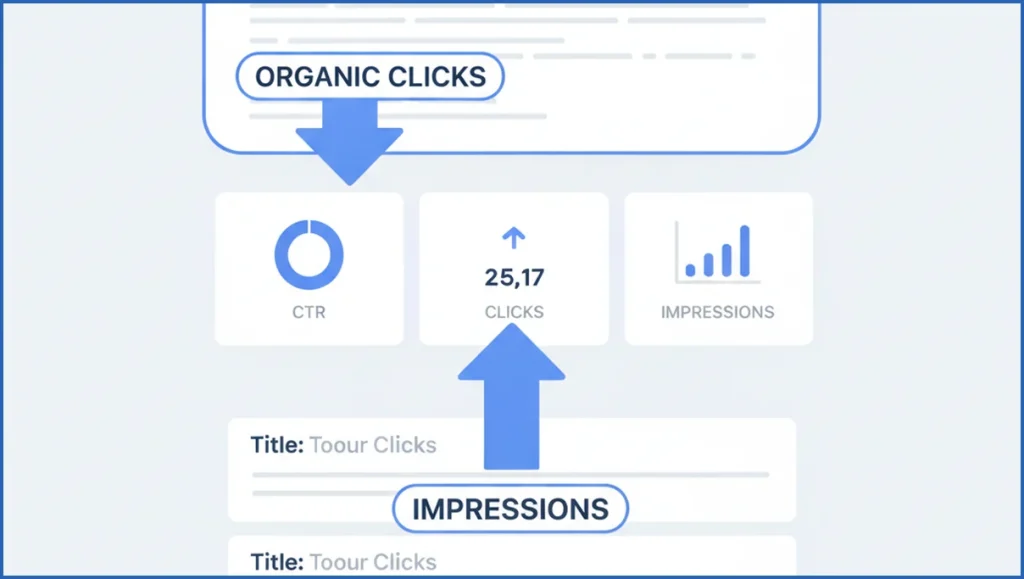
The common pattern is simple. Impressions rise because your page still appears for the query, sometimes more often across related variants. Clicks fall because the AI box absorbs part of the demand. CTR drops first, then sessions, while average position may barely move.
Say a page ranked for 47 queries in positions 3-8. Over six weeks, impressions climb from 18,000 to 24,000, clicks fall from 1,260 to 930, and CTR slides from 7.0% to 3.9%. That is not a ranking collapse. It is a SERP behavior change. If you want a clean workflow for this kind of readout, this GSC analysis playbook is the right frame.
Which query types lose traffic first
Top-of-funnel informational queries usually lose traffic first. Definitions, simple how-tos, lightweight comparisons, and fact-based questions are easiest for Google to compress into a useful summary. If the query can be answered in six lines, the click becomes optional.
Health, finance, software explainers, and B2B education content often feel this early. Branded queries, deep product queries, and messy decision-stage searches tend to hold up better. Teams working on 2026 content planning should split keyword sets by intent before judging loss. Otherwise, one dashboard can hide three very different stories.
Pages that still win in an AI Overviews world
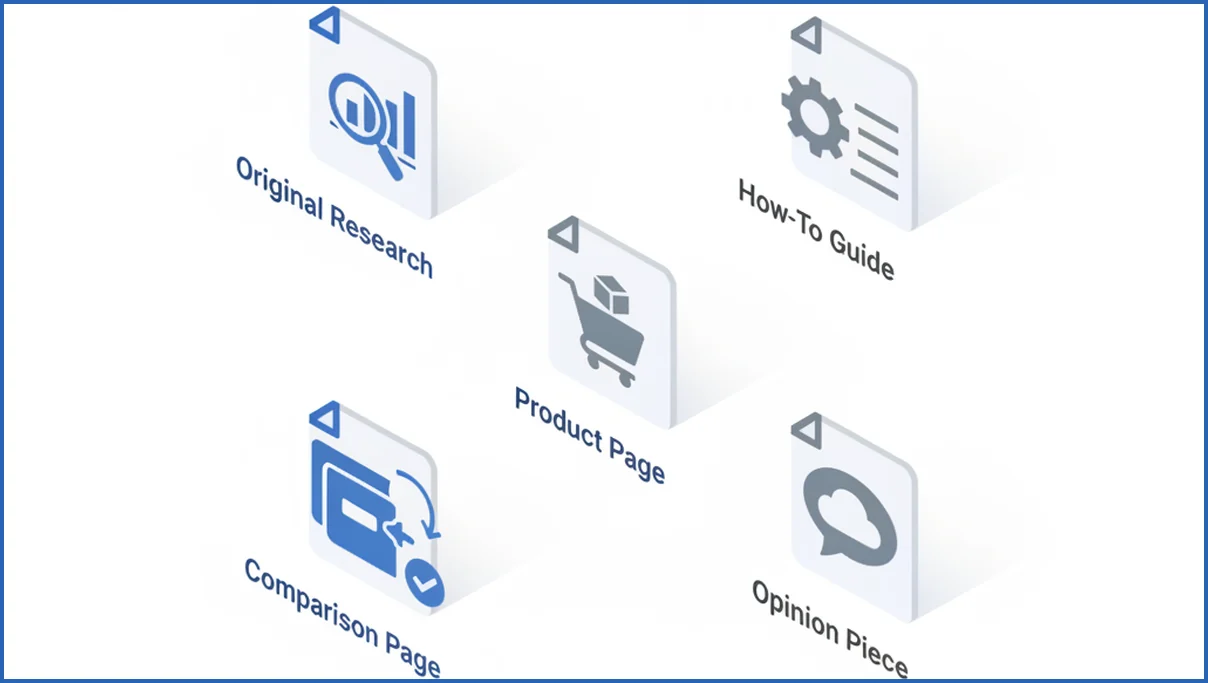
Pages still win when they offer something the summary cannot compress well. Original research, strong first-hand tests, calculators, pricing details, opinionated comparisons, and current product pages all fit. Google can summarize the premise, but users still need the source, the evidence, or the final recommendation.
A practical example is a SaaS comparison page with screenshots, migration steps, and a trade-off table. Another is a stats page updated monthly with cited methodology. Those assets can earn clicks and citations together. Generative engine optimization is less about stuffing answers everywhere and more about publishing pages that deserve to be referenced.
How to measure AI Overviews traffic impact
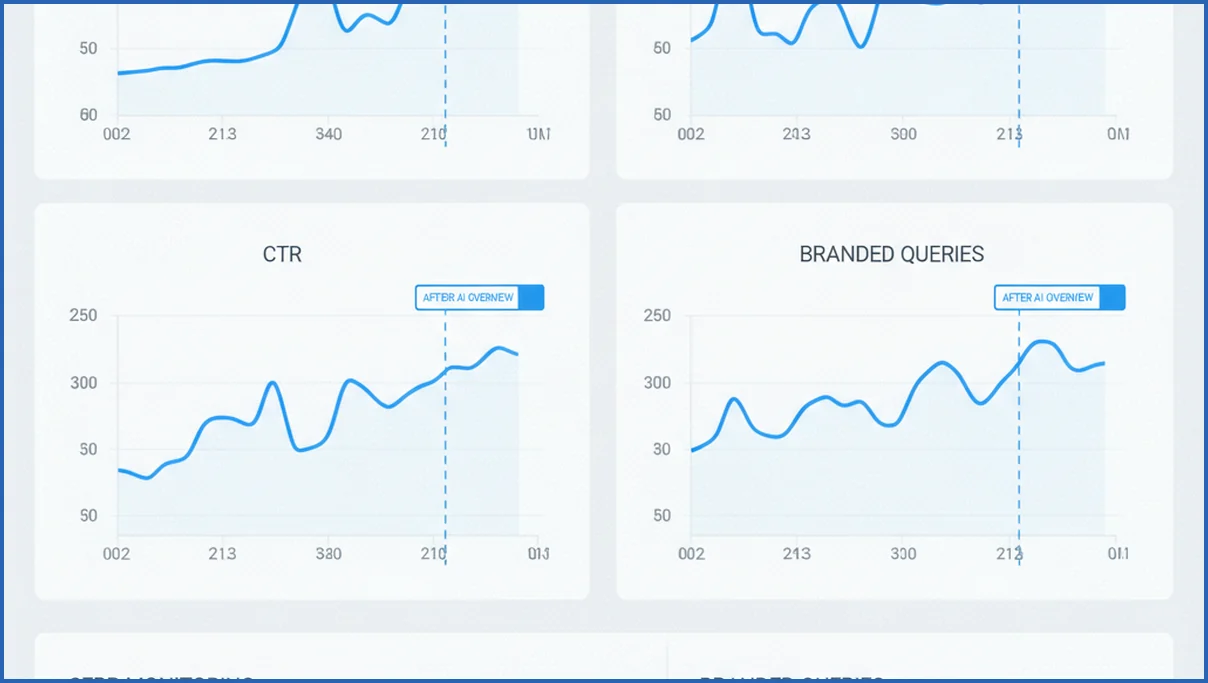
You need a before-and-after method, not a guess. Pull query-level data from Search Console, segment branded and non-branded terms, and flag terms where impressions rose while CTR fell. Then check live SERPs to confirm whether an AI Overview appears for those exact queries.
A simple workflow works well:
- Export 8-12 weeks of GSC query data.
- Group by intent: informational, commercial, navigational.
- Mark queries with CTR drops over 20% and stable rankings.
- Review SERPs manually or with your monitoring stack.
If you run Claude with the Search Console MCP endpoint and the GA4 MCP setup, you can compare clicks, landing page engagement, and branded lift in one pass. That is much closer to the real effect than watching organic sessions alone.
How to adapt content and SEO strategy
First, stop treating every traffic drop like a rankings issue. Improve pages that can win clicks with depth, proof, or tools. Merge thin informational pages that only restate basics. Build stronger comparison pages, updated stats hubs, and product-led content that gives users a reason to leave the SERP.
Second, widen your success metrics. Watch assisted conversions, branded search growth, email capture, and direct visits from known content clusters. AI Overviews can reduce last-click traffic while increasing brand recall. Your next move should be a query audit by intent, then a rewrite queue based on pages that still have a clear click reason.
Frequently Asked Questions
Do AI Overviews always reduce organic traffic?
No. They often reduce clicks on simple informational queries, but not every page loses traffic. Some URLs gain exposure through citations, and some branded or commercial terms stay stable. The effect depends on search intent, SERP layout, and whether your page offers something the overview cannot replace, such as pricing, tools, or original data.
Which content types are most affected by AI Overviews?
Short educational pages, glossary content, beginner explainers, and generic how-to posts tend to feel the impact first. These are easy for Google to summarize. Pages with custom data, strong comparisons, transactional details, or expert opinion hold up better because users still need depth before they decide or act.
How can I tell if AI Overviews caused a traffic drop?
Look for a pattern where impressions stay flat or increase, average position changes little, and CTR drops across a query set. Then verify whether AI Overviews appear for those terms in live results. If sessions fall while rankings remain steady, the SERP experience likely changed before your page performance did.
Can my page still get clicks if it appears in AI Overviews?
Yes. In many cases, citation visibility can support clicks, especially when users want proof, deeper context, or a decision aid. A summary may answer the headline question, but it rarely replaces a good comparison, a pricing page, a calculator, or a first-hand product breakdown. Those still create a real reason to visit.
What metrics should I watch besides organic traffic?
Track CTR, impressions, average position, branded clicks, assisted conversions, and landing page engagement together. Branded query growth matters because AI Overviews can increase awareness without sending an immediate visit. Query-level movement usually tells you more than sitewide sessions, especially when only one intent group is under pressure.
How often do AI Overviews change for a query?
They can change often. Google tests formats, source mixes, and coverage by query class, so a term may show an overview one week and not the next. Volatility is higher on informational topics. That is why weekly snapshots help. A single day of SERP checking is useful, but it should not be your only evidence.
Should I change old content or create new pages?
Start with old content that already has impressions, links, or near-page-one rankings. Those pages have the fastest path to recovery if you improve depth and click value. Create new pages when you spot unmet commercial intent, original research opportunities, or comparison gaps. Rewriting weak assets usually beats publishing another generic explainer.
Run one query-set audit before you rewrite anything. If clicks fell because the SERP now answers the question, publishing more of the same format will not fix it.