Last updated: July 2026
SEO 2026 Predictions: What Will Actually Change starts with a harder truth than rankings alone. Search is becoming a layered visibility system where AI summaries, conversational follow-ups, and classic results all compete for attention. Teams that adapt fastest will not chase every new feature. They will identify where demand is shifting, which pages still drive action, and how Google AI Mode changes the path from question to visit.
TL;DR
- AI search changes how people discover and click.
- Trust, originality, and brand signals matter more.
- SEO shifts from rankings to visibility across search surfaces.
- Technical basics still matter, but strategy gets broader.
What SEO 2026 Means for Search Visibility
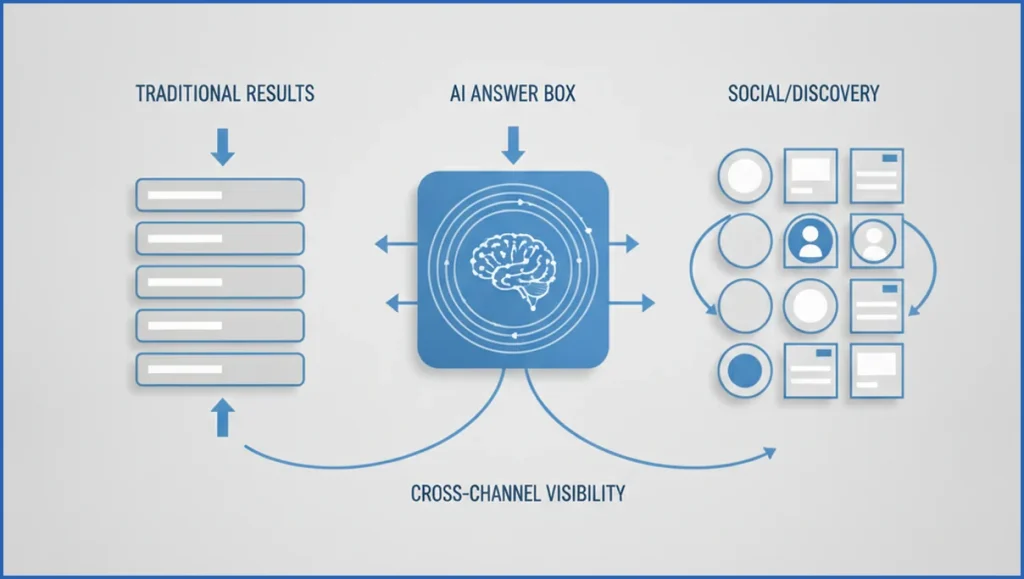
Search visibility now means being present wherever answers form. That includes AI Overviews, conversational follow-ups, shopping modules, YouTube, Reddit-style discussion results, and branded queries. If your page ranks #3 but the AI box resolves the query first, your real visibility is weaker than the ranking suggests.
Good teams will track three layers: rank, mention, and demand capture. Rank still matters. Mentions inside AI answers matter too. Demand capture matters when users skip generic queries and search your brand directly. This is why answer engine optimization sits next to classic SEO now, not behind it.
AI Search, AI Overviews, and the New Click Problem
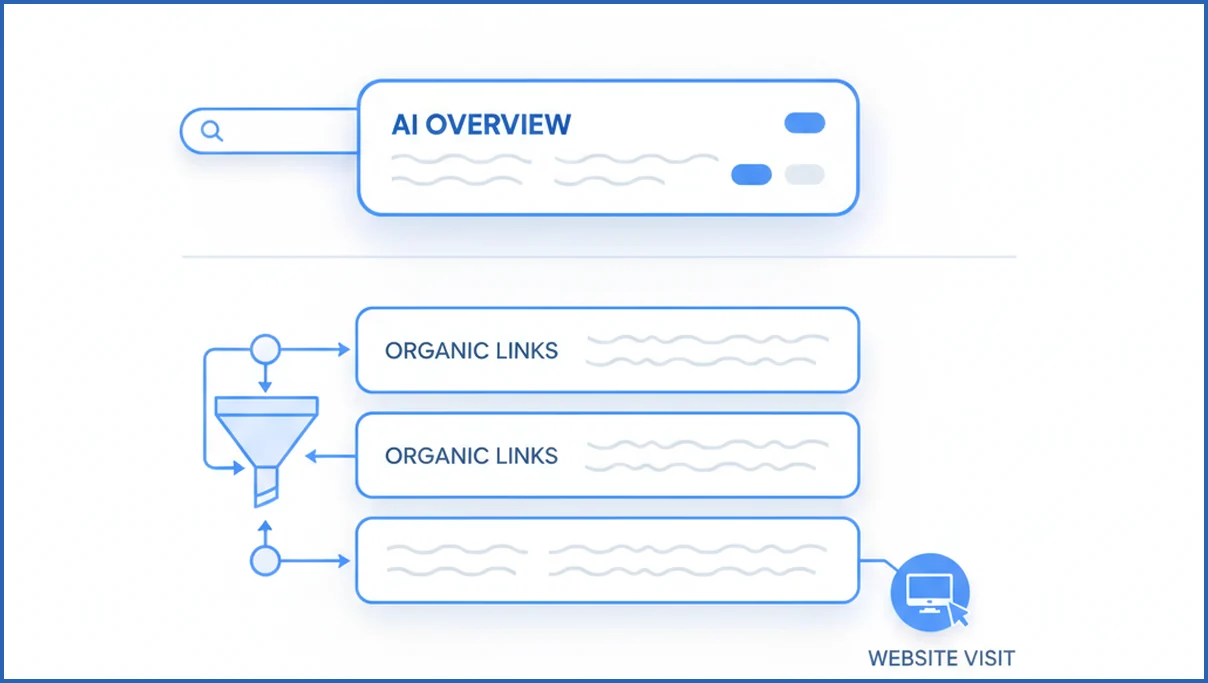
AI answers reduce clicks on many informational queries because they satisfy the first question on the SERP. That does not mean SEO is dead. It means low-intent traffic gets filtered harder, while high-intent visits become more valuable. Fewer clicks can still produce better pipeline if the remaining users arrive with clearer intent.
The new job is to earn citation-worthy passages and then convert branded interest. Pages that define a concept, show a method, and add a proprietary example have a better chance of being referenced. For a deeper breakdown of that shift, see Google AI Mode explained.
A practical example helps. Suppose a B2B SaaS page gets 18,000 impressions, ranks in positions 4-7, and loses 22% clicks after AI Overviews expand. If branded searches rise 11% and demo conversions per organic session rise from 1.8% to 2.6%, the page did not simply decline. It changed role.
The 5 SEO Rules That Will Matter Most in 2026
First, match intent tightly. Pages built around vague keyword variants will keep underperforming. Second, prove experience and trust. Show authors, original data, screenshots, product use, and clear sourcing. Third, add information gain. If your page says what every other page says, AI systems have little reason to cite it.
Fourth, use structured data where it clarifies entities, products, reviews, and organization details. Fifth, build brand authority beyond your site. Mentions, branded search growth, and repeated association with a topic matter more when search engines summarize instead of listing. The broader strategic model in this SEO strategy in 2026 guide aligns well with that reality.
A simple test works. Ask whether your page contains one thing an expert could not copy in ten minutes. That might be a benchmark table, a first-hand workflow, or a proprietary dataset. If not, you probably have publishing volume, not defensibility.
Content Strategy for a Search-Plus-AI World
Content planning in seo 2026 starts with entities, jobs-to-be-done, and proof. Build fewer pages, but make each page easier to quote. Clear headings, concise definitions, comparison blocks, and explicit conclusions help both readers and machines. So does a content format that answers the first question fast, then expands into specifics.
A solid workflow looks like this: cluster topics, map intent, draft with source notes, add expert review, then publish with schema and internal links. Teams using keyword clustering workflows usually spot cannibalization earlier and produce tighter page briefs.
Here is a simple page outline for a cite-worthy article:
H1: Primary question
Intro: 40-60 word answer
H2: Definition
H2: Step-by-step method
H2: Original example with numbers
H2: Common mistakes
H2: FAQ with concise answers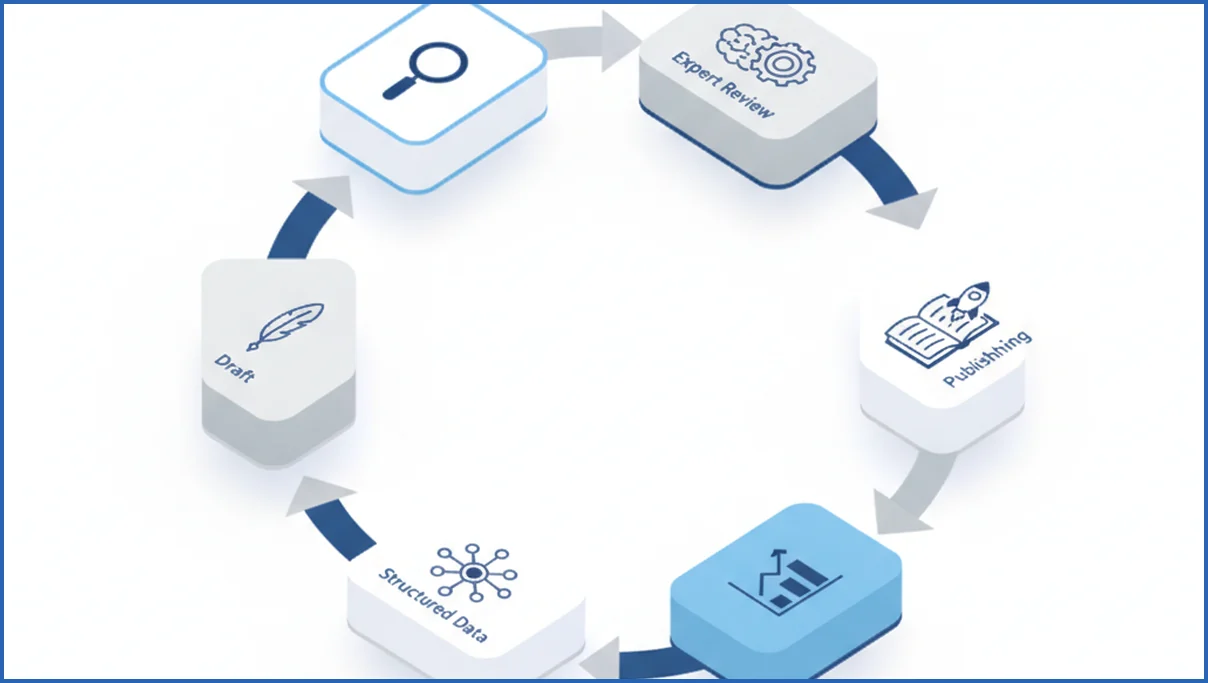
Technical SEO Priorities You Should Not Ignore
Technical SEO still decides whether your content can be discovered, rendered, and trusted. Crawl waste, weak canonicals, slow templates, and messy internal linking will keep hurting sites in 2026. AI search does not remove those issues. It punishes them faster because fewer pages get consistent attention.
Focus on crawlable architecture, indexable money pages, and cleaner hubs. Audit pages with impressions but poor clicks, then improve title targeting and snippet value. If you want a practical stack for diagnosis, pair GSC exports with the Google Search Console MCP tools and review internal link gaps against your priority URLs.
A Simple 90-Day SEO 2026 Action Plan
You do not need a full rebuild. You need sequence.
- Days 1-30: audit query classes, branded demand, AI-sensitive pages, and technical blockers.
- Days 31-60: refresh 10-20 priority URLs with stronger intros, unique proof, schema, and sharper internal links.
- Days 61-90: publish supporting pages, monitor assisted conversions, and document which pages earn mentions or branded follow-up searches.
One useful workflow is to pull 90 days of query data, isolate pages ranking positions 3-12, and rewrite only the sections that lack originality. Then compare click-through rate, branded lift, and conversion rate by page type. If you need a wider operating model, this content planning guide for 2026 complements that process well.
How AI Mode changes query behavior and zero-click visibility
AI Mode changes query behavior because people no longer need to compress intent into one short phrase. They can ask broad questions, add constraints, and continue the conversation in the same session. That often turns one keyword into a chain of related prompts. In many cases, the first visible winner is not a webpage. It is the synthesized answer, with cited sources supporting it.
This increases zero-click visibility, but zero-click does not always mean zero value. If your brand is cited in the answer, mentioned in comparison text, or used as a source for follow-up prompts, you can still shape demand. Many teams should track branded search lift, assisted conversions, and page-level citation frequency beside clicks. That is closer to how discovery works in AI search surfaces.
It also changes keyword research. Instead of mapping one page to one exact query, map content to intent clusters and follow-up branches. Questions like cost, alternatives, setup time, and compatibility now appear closer together in the search journey. A useful starting point is answer engine optimization, which helps teams structure pages for direct extraction and citation.
The practical takeaway is simple. Some informational traffic will decline, especially on basic definition pages. But pages that offer evidence, comparisons, original data, and clear next steps can still earn clicks when users move from summary to action.
What Google AI Mode changes for SEO in 2026
Google AI Mode changes SEO by shifting more discovery into conversational paths instead of one search and one click. Users can ask layered questions, compare options, and refine intent without starting over. Google presented AI Mode as a deeper, reasoning-led search experience, which raises the value of pages that answer follow-up questions clearly (Google I/O 2025).
For SEO teams, this means rankings matter, but inclusion matters more. A page can influence the answer even when it does not win the first blue link. Brands need stronger entity signals, clearer claims, and content built for extraction. If you need a broader framework for this shift, see Google AI Mode explained for the mechanics behind the interface.
- Measure visibility beyond rank, including citation presence and assisted branded searches.
- Publish pages that resolve one intent fully, then support the next likely question.
- Use structured data and plain language so answers are easier for Google to parse.
Frequently Asked Questions
What are SEO rules in 2026?
The core rules are stricter, not completely different. Match intent closely, publish original evidence, make pages easy to parse, and build brand trust off-site as well as on-site. Rankings still matter, but they are no longer the only score that counts. You also need citations, branded demand, and pages that answer a question clearly enough to be reused by AI systems.
Will AI search replace traditional SEO?
No, but it changes what traditional SEO is for. Search engines still need pages to crawl, rank, and cite. What shifts is the user path. Some queries end on the results page, while others move into branded or transactional searches. The teams that win will treat SEO as discovery plus demand capture, not only traffic acquisition from generic keywords.
How do I optimize for AI Overviews?
Start with pages that already rank in the top 10 and answer factual or procedural queries. Tighten the intro, add short definitions, include a clear method, and support claims with first-hand examples or named sources. Use schema where it helps clarify the page. Then watch which queries lose clicks but keep impressions, because those often indicate AI Overview exposure.
What content performs best in seo 2026?
Pages with a strong first answer, clear structure, and non-generic proof tend to hold up better. Think expert explainers, comparison pages, original research, implementation guides, and pages with screenshots or benchmarks. Thin listicles and lightly rewritten summaries will struggle. The useful question is not whether content is long or short, but whether it gives a reader something specific worth trusting.
Does technical SEO still matter in 2026?
Yes. If Google cannot crawl, render, or understand a page efficiently, that page will not compete well in either classic results or AI-generated surfaces. Indexation control, speed, canonicals, internal linking, and clean templates still form the base layer. Technical SEO is not the whole strategy, but weak foundations quietly cap every content and brand effort above them.
How can brands earn more citations in AI search?
Give systems something quotable. Publish concise definitions, direct answers, and unique evidence on the same page. Add author expertise, cite sources, and maintain topical consistency across related content. Off-site mentions help too, especially when other sites refer to your brand in a clear topic context. Citation likelihood rises when your page is both easy to extract from and worth extracting.
What should I fix first for seo 2026?
Fix pages that already have visibility but weak business output. Look for URLs with strong impressions, mid-pack rankings, and soft click-through rates. Improve their intros, add original proof, and tighten internal links from relevant hubs. That work usually beats launching 30 new articles. Once those pages improve, you can expand with more confidence instead of publishing into the same old gaps.
Start by choosing ten pages that rank, but do not persuade. If those pages cannot earn clicks, mentions, or branded follow-up searches after a serious rewrite, your problem is not the algorithm. It is page quality and topic selection.
How does Google AI Mode affect organic traffic in 2026?
Google AI Mode will likely reduce some top-of-funnel clicks, especially for simple informational queries. But it can also increase qualified traffic when your pages are cited for comparisons, deeper research, or action-oriented follow-ups. Watch Google Search Console and assisted conversion trends together. Google Search Console analysis is useful here because click loss alone can hide stronger branded demand and higher-intent visits.
What matters most next
The biggest SEO change in 2026 is not that websites disappear. It is that visibility gets redistributed across answer layers, citations, and follow-up journeys. Brands that publish clear, evidence-led pages can still win attention and conversions. The smarter play is to measure influence, not just clicks, then build content that helps Google summarize and users act.