
Last updated: July 2026
Answer Engine Optimization: A Practical Guide for Search Visibility matters more now because Google can answer the query before a user clicks. In AI Mode, your page may win attention as a cited source, lose it to a stronger summary, or support a follow-up question deeper in the session. That changes content strategy. You still need technical SEO and rankings, but you also need pages built for extraction, trust, and fast comprehension.
TL;DR
- AEO helps your content get cited by AI answer engines.
- It combines search intent, structure, and trust signals.
- Clear answers beat keyword stuffing in AI-driven search.
- Measurement now includes visibility, citations, and traffic quality.
What answer engine optimization means
Answer engine optimization, or AEO, is the practice of shaping content so AI systems can use it inside direct answers. That includes AI Overviews, chat assistants, and answer-first search interfaces. If you already follow generative engine optimization basics, the idea is similar, but AEO stays focused on getting quoted, summarized, or cited for a specific question.
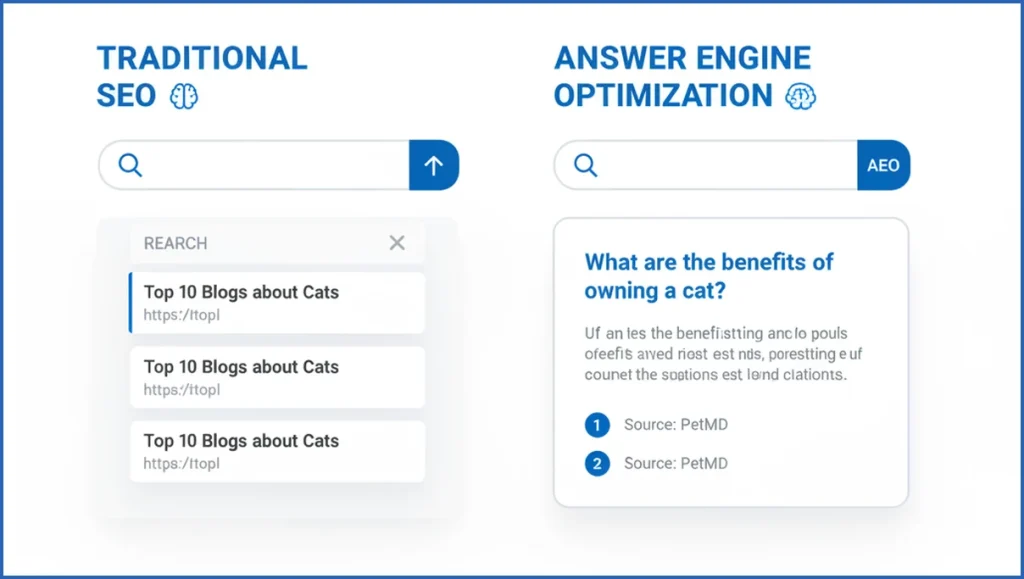
Traditional search asked, “Can this page rank?” AEO asks, “Can this page answer?” That means concise definitions, clean sections, source-backed claims, and obvious context. An answer engine does not want to guess what your page means. It wants a statement it can lift with low risk and clear supporting detail.
Set expectations correctly. AEO does not guarantee attribution, and it does not replace rankings. It improves your odds that an engine will surface your content when a prompt matches your expertise. The practical goal is broader visibility across search, summaries, and assistant responses.
How answer engine optimization differs from SEO
SEO still focuses on crawlability, indexation, links, and ranking signals. AEO shifts the target from page position to answer inclusion. You are not only competing for rank 3. You are competing to become the sentence an AI system selects when someone asks a multi-step question.
That changes page design. Strong AEO pages lead with a direct answer in 40 to 70 words, then expand with evidence, examples, and edge cases. It also changes research. Query strings still matter, but prompt patterns, follow-up questions, and entities matter more. Google AI Mode behavior makes this shift easy to spot.
| Feature | SEO | AEO | Verdict |
|---|---|---|---|
| Primary goal | Rank pages | Get cited in answers | Use both |
| Content format | Comprehensive page | Direct answer plus support | AEO needs tighter structure |
| Success metric | Clicks and positions | Citations, mentions, assisted visits | Reporting expands |
| Research input | Keywords | Prompts, entities, questions | AEO is more conversational |
Build content that answer engines can quote
Start pages with a clean answer block. Then use question-led H2s, short paragraphs, bullets, and plain claims. Good AEO copy reads like a reliable briefing note. It gives the model one crisp statement, then enough surrounding detail to confirm scope, caveats, and relevance. On-page structure still matters, but the extraction layer now matters too.
A simple workflow works well for service pages, glossaries, and product explainers. One SaaS client rewrote 18 articles with a 55-word summary, three question headers, and cited examples. Within six weeks, branded assisted traffic rose 14% in GA4, while long-tail clicks held steady.
- Lead with a direct definition or recommendation.
- Add two to four subquestions users ask next.
- Support each answer with one example, number, or source.
- Close with limitations, comparisons, or who the advice fits.
<h2>What is answer engine optimization?</h2>
<p>Answer engine optimization is the practice of formatting content so AI systems can extract, trust, and cite it in direct answers.</p>
<ul>
  <li>Best for definitional and how-to queries</li>
  <li>Needs clear structure and source-backed claims</li>
  <li>Works alongside classic SEO</li>
</ul>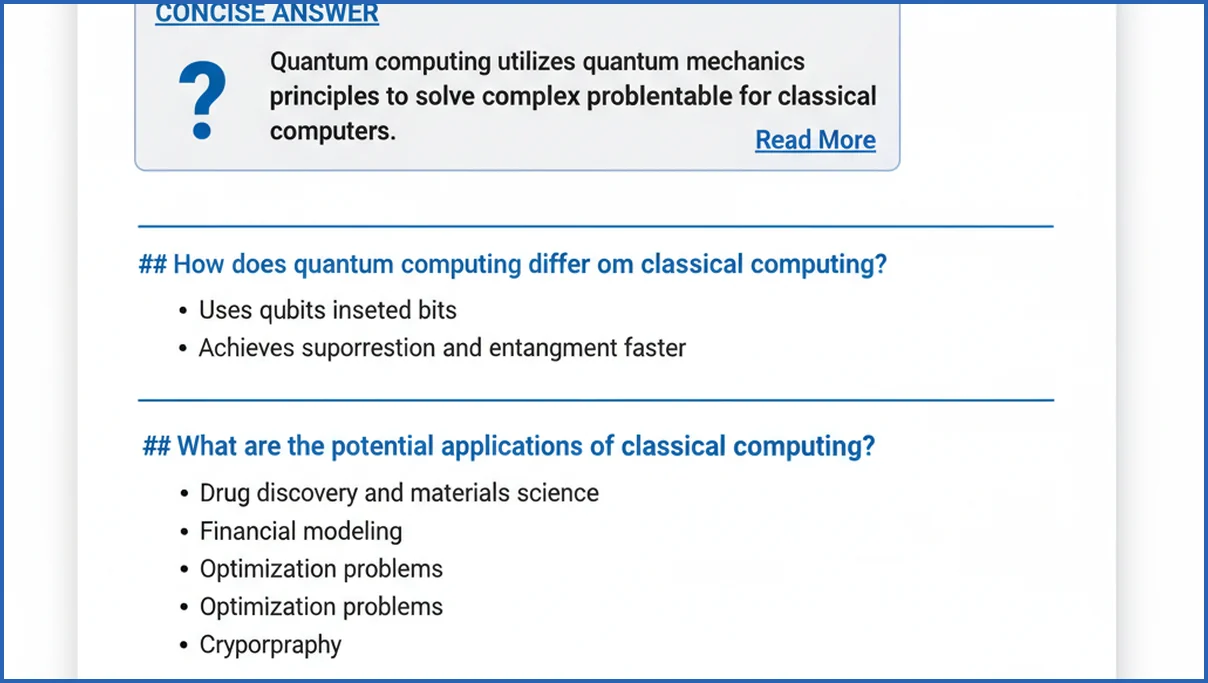
Add trust signals that improve citation potential
Answer engines prefer low-risk sources. That does not always mean giant brands. It often means clear authorship, recent updates, first-hand examples, outbound citations, and consistency across your site. If your article makes a claim, show where it came from or explain how you know it.
Strong trust signals include expert bylines, product screenshots, methodology notes, and pages that connect logically through internal link architecture. Off-page mentions still help. So do branded searches and references from relevant sites. A smaller site can win citations if it answers precisely and sounds accountable.
Optimize for prompts, entities, and user intent
AEO research starts with questions people ask in natural language. Instead of mapping one page to one keyword, map a topic to a cluster of prompts, related entities, and next-step intents. For “answer engine optimization,” that might include “AEO vs SEO,” “how to measure citations,” “does schema help,” and entity links to Google AI Overviews, Bing Copilot, ChatGPT, and Perplexity.
Use Search Console to find queries sitting in positions 5 to 12, then rewrite those pages around clearer answers and stronger entity coverage. With the Google Search Console MCP tools, you can pull query patterns, group them by intent, and spot pages that need a better opening definition or a missing FAQ.
A practical prompt map has three layers. Top of funnel asks for definitions. Mid funnel compares tools or methods. Bottom funnel asks for implementation and cost. Content planning in 2026 already looks this way. AEO just makes the map more explicit.

Measure answer engine optimization results
You cannot rely on rank tracking alone. AEO reporting should include cited mentions in AI interfaces, branded lift, assisted conversions, and traffic quality from informational pages. Watch for rising direct traffic, higher branded query volume, and better engagement on pages built for answer extraction.
One useful method is a weekly query set. Test 20 prompts in the same geography and device, log whether your brand appears, and note citation frequency. Then pair that with GA4 landing page data. GA4 MCP workflows can help connect engaged sessions and downstream conversions to pages that earn answer visibility.
Updates matter because answers get stale quickly. If a page loses citations, inspect whether the opening answer is weak, the facts are old, or another page explains the topic more clearly. AEO is less about publishing volume and more about keeping a small set of pages accurate, quotable, and easy to verify.
How Google’s AI answers choose sources
Google does not publish a simple checklist for citation selection, but several patterns are clear from Search documentation and AI Overview behavior. AI answers tend to prefer pages that are relevant, crawlable, recent when freshness matters, and easy to parse. Source selection also appears tied to query intent. A medical question, a product comparison, and a local service query each demand different evidence and formatting.
Topical fit matters more than broad authority in many cases. A focused page answering one question well can outperform a stronger domain with vague coverage. Google also looks for consistency. If your title, heading structure, body copy, and schema point to the same core answer, the page is easier to trust and summarize. Pages with conflicting claims, thin context, or weak sourcing are less likely to be cited.
First-hand signals can improve confidence. Original images, test results, author credentials, dates, and product specifics help your content stand apart from paraphrased summaries. If you track performance in Search Console, segmenting long-tail question queries can show which pages already earn impression growth in AI-heavy search layouts. This Search Console analysis playbook is useful for spotting pages that deserve AEO updates.
Think less about gaming citations and more about making selection easy. Give Google one clear answer, support it with verifiable detail, and remove friction from the page structure.
How Google AI Mode changes answer engine optimization
Answer Engine Optimization: A Practical Guide for Search Visibility now has to account for Google AI Mode, not just classic rankings. AI Mode expands the search result into a synthesized answer, follow-up prompts, and linked sources. That means visibility depends on whether Google can extract, trust, and attribute your information inside an answer flow. For a broader breakdown of the product, see Google AI Mode explained.
For publishers, the shift is practical. Pages should answer a narrow question fast, then support that answer with definitions, steps, comparisons, and evidence. AI Mode often rewards pages that reduce ambiguity. Strong headings, short blocks, updated facts, and clear entity references help Google interpret the page. This mirrors Google’s long focus on helpful content, but AI Mode raises the value of extraction-friendly formatting.
- Lead with the direct answer in the first 100 words.
- Use descriptive subheads, tables, bullets, and concise summaries.
- Back claims with first-party data, expert attribution, or cited sources.
Frequently Asked Questions
Is answer engine optimization replacing SEO?
No. SEO still handles discovery, crawlability, links, and rankings. AEO adds another layer for answer-first interfaces. Think of it as a content and formatting shift inside a broader search strategy. Sites that ignore SEO lose reach. Sites that ignore AEO miss citations, assisted visits, and visibility in AI summaries.
What types of content work best for AEO?
Definitions, how-to pages, comparisons, FAQ hubs, glossaries, and product explainers tend to work well. These formats give answer engines something specific to extract. Opinion pieces can work too, but only when they are grounded in evidence, examples, and clear attribution. Vague thought leadership is harder for models to trust and quote.
How do I know if AI engines cite my content?
Use a mix of manual prompt testing, brand mention checks, referral analysis, and Search Console trend reviews. There is no perfect source of truth yet. Build a prompt list for your core topics, test it weekly, and record whether your site appears as a citation or named source. Then compare that pattern with branded and assisted traffic changes.
Can small websites benefit from answer engine optimization?
Yes, especially in narrow topics where precision beats domain size. A small site can win if it publishes a clear answer, supports it with first-hand detail, and keeps the page current. Many AI systems prefer a page that is easy to parse and verify over a larger site that buries the answer under filler.
How often should AEO content be updated?
Review high-value pages every one to three months. Update faster if the topic changes often, such as pricing, product features, regulations, or AI platform behavior. Focus on the opening summary, examples, sources, and FAQs first. Those are the parts most likely to affect whether an engine still sees the page as reliable.
Does schema markup help answer engine optimization?
Schema helps, but it is not a shortcut. Structured data can clarify page type, entities, authorship, and FAQs for machines. That said, weak content stays weak with schema added. Use it to reinforce meaning, not replace clarity. Clean HTML, direct answers, and trustworthy sourcing usually matter more than markup alone.
If you want one practical next step, pick five pages that already rank in positions 4 to 12 and rewrite only the first 100 words, subheads, and FAQs. That is often enough to test whether your site can earn answer visibility before you rebuild the whole content library.
How does Google AI Mode affect answer engine optimization?
Google AI Mode increases the value of content that can be extracted and cited quickly. Pages need clear answers, strong structure, and trustworthy support, not just rankings. If your content is specific, current, and easy to summarize, it has a better chance to appear as a cited source. This overlaps with AI search optimization, but AI Mode makes answer formatting even more important.
Next steps for stronger answer visibility
Google AI Mode does not eliminate SEO fundamentals. It raises the bar for clarity, specificity, and source quality. The most resilient pages answer one intent well, show evidence, and use formats that are easy to quote. If you treat AEO as a layer on top of solid SEO, you improve your odds of both clicks and citations as search keeps evolving.