

Last updated: June 2026
Generative Engine Optimization: A Practical Beginner’s Guide starts with a new reality. Many searchers now see an AI-shaped answer before they choose a page. GEO is the practice of making your content easy for those systems to find, trust, summarize, and cite. It does not replace SEO. It extends it. If you want your brand to influence the answer itself, your content must be structured for both ranking and reuse.
TL;DR
- GEO helps brands appear in AI-generated answers.
- Strong SEO foundations still matter for GEO success.
- Useful, structured, trustworthy content performs best.
- Measure visibility, citations, and referral traffic-not just rankings.
What generative engine optimization means
GEO is search optimization for answer engines. That includes AI Overviews, ChatGPT, Perplexity, Claude, and any system that reads multiple sources, then produces a synthesized response. Traditional SEO aims to rank pages. GEO aims to make your page quotable, extractable, and easy to verify.
That changes the target. You still need crawlable pages, clear titles, and good on-page analysis. But now you also need strong definitions, direct answers, original data, and evidence that a model can reuse without guessing. A vague article can still rank. It rarely gets cited well.
A simple example helps. A classic SEO article might target “what is generative engine optimization” with a long introduction. A GEO-ready page opens with a one-sentence definition, lists key principles, names tools, and supports claims with sources. That format gives both humans and machines less work.
Why GEO matters for modern search visibility
Search behavior already changed. Users ask full questions and expect a finished answer, not ten tabs. When an AI layer summarizes the web, brand exposure can happen before the click. If your site is cited, users may trust you faster. If it is ignored, rankings alone may not protect visibility.
Clicks can drop on informational queries, but influence does not disappear. It shifts upward in the journey. Teams that track only positions miss the new win condition: being referenced in generated answers, comparison summaries, and follow-up prompts. That is why GEO now sits next to traditional SEO fundamentals, not outside them.
The core GEO principles that AI systems prefer
First, make content easy to parse. Use short definitions, scannable headings, tables when they clarify trade-offs, and language that answers one intent at a time. AI systems prefer text with clear boundaries. A messy page with five mixed intents gives weaker snippets than a page with one job.
Second, show trust signals. Add author context, publication dates when relevant, product specifics, and real examples. If you discuss measurement, mention tools such as the Google Search Console MCP for Claude or GA4 exports, not just “analytics software.” Concrete references help models map claims to evidence.
Third, keep the technical layer boring and reliable. Clean HTML, indexable pages, sensible internal links, and helpful schema still matter. Good technical SEO gives generative systems stable access. Freshness matters too, but only when the topic changes often. Updating fluff every week does nothing.

How to optimize a page for generative engines
Start with an existing page that already gets impressions. Pages in positions 5-15 often make the best candidates because they have demand and enough authority to improve. Pull queries, inspect the SERP, then rewrite the opening so the first 120 words answer the core question directly.
Next, add structure. Break the page into question-led sections, insert a short comparison table or checklist, and include one original example. If the page explains keyword clustering, show the exact workflow or tool. For teams using MCP integrations for Claude, that often means querying GSC, grouping terms, and expanding gaps in one pass.
- Audit the current page for mixed intent and weak openings.
- Rewrite the intro with a direct answer and one clear definition.
- Add sections for process, examples, and trust signals.
- Link supporting pages with natural internal linking anchors.
- Publish, request recrawl, then track citations and referral traffic.
Here is a simple measurement pull you can run after publishing:
Page: /generative-engine-optimization/
Window: last 28 days vs previous 28 days
Check:
- Impressions for question-based queries
- CTR from AI-assisted surfaces when available
- Referral sessions from ChatGPT, Perplexity, Gemini
- Assisted conversions from those sessions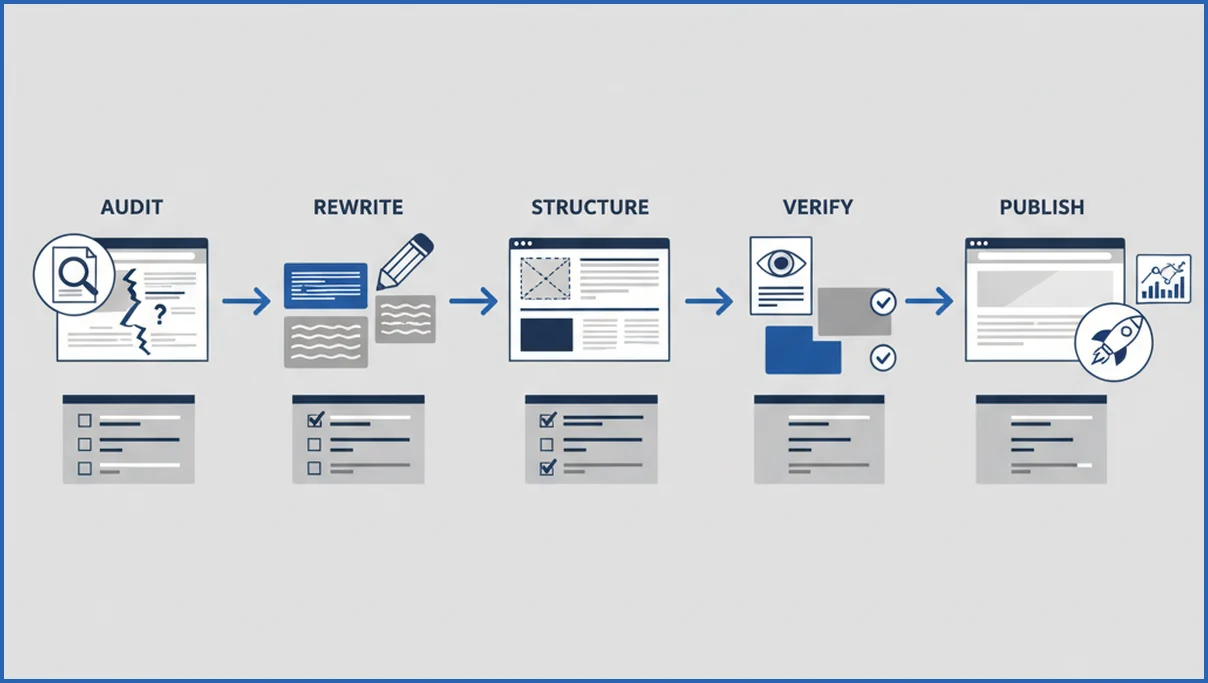
How to measure GEO performance
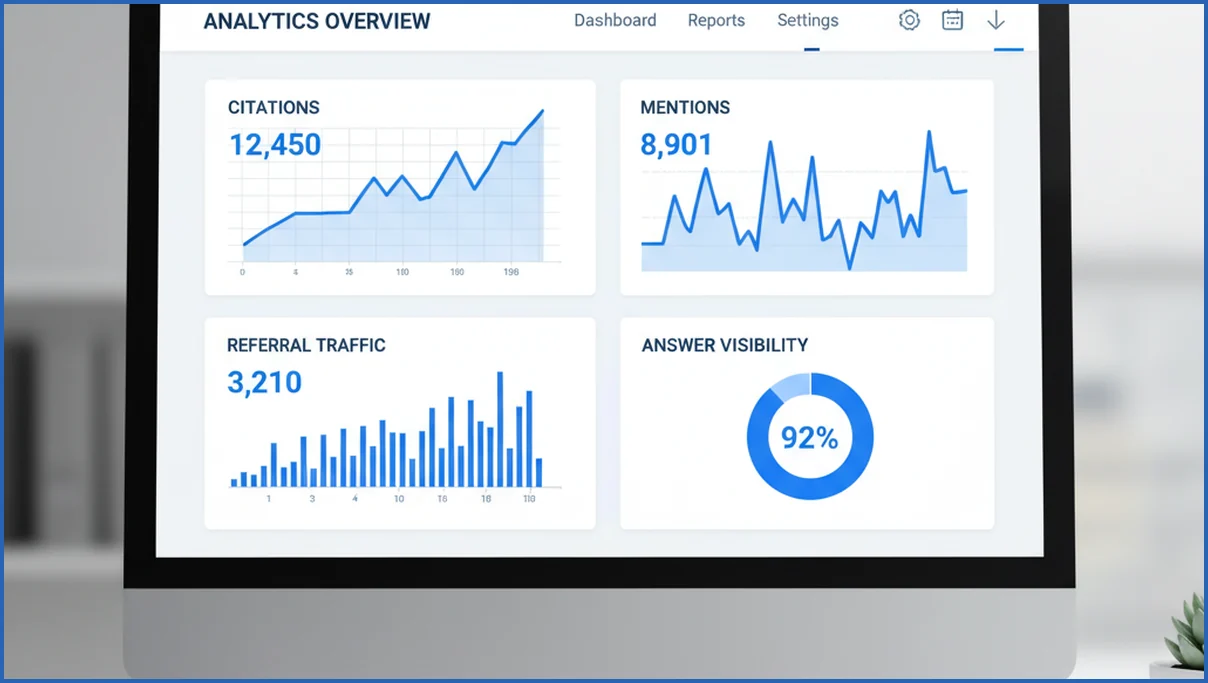
Do not use one metric. GEO performance is a blend of visibility, citations, traffic quality, and downstream action. Rankings still matter, but they are only one input. You want to know whether your brand appears in answer engines and whether that exposure sends qualified visits.
Use Search Console for query trends and landing page movement. Use GA4 or a GA4 MCP workflow to isolate referral traffic from AI sources, then look at engagement and conversions. For many sites, the first positive sign is not more clicks. It is better branded search, stronger assisted conversions, and more pages being cited together.
Common GEO mistakes to avoid
Many teams mistake GEO for prompt bait. They stuff pages with repetitive questions, robotic summaries, and generic claims. That can make content less useful and less trustworthy. AI systems often prefer pages that sound like a subject expert, not a synthetic outline.
Another mistake is skipping foundations. Thin pages with weak titles, poor crawlability, or no topical support rarely become strong sources. GEO works best when paired with solid topical authority and page quality. If the source is weak, the answer engine has better options.
A simple GEO starter plan for beginners
Pick three pages that already rank for question-based searches. Update each page with a stronger intro, clearer subheads, one specific example, and one source-backed claim. Then add links from nearby supporting articles. This keeps the scope small and shows results faster than rewriting your whole site.
Set a 30-day review window. Track impressions, branded searches, AI referrers, and any citations you can capture manually. If one page gains traction, repeat the pattern across similar topics. Beginners do not need a huge stack. They need a repeatable process and enough discipline to compare before and after.
SEO vs. GEO
SEO and GEO overlap, but they optimize for different outcomes. Search engine optimization helps a page rank in traditional results, win clicks, and capture demand through titles, snippets, links, and site quality. Generative Engine Optimization helps content become useful inside AI-generated answers, where the system may summarize your page before a user visits it. In practice, GEO sits on top of SEO rather than replacing it.
The clearest difference is the unit of visibility. In SEO, success often means a blue link in positions one through five. In GEO, success can mean your definition, comparison, quote, or step-by-step advice gets cited or paraphrased inside the answer. That changes how you write. Pages need clean structure, obvious claims, source-backed statements, and language that is easy to extract without losing meaning. Answer engine optimization is a useful related framework if you want to compare systems.
For a beginner, think of SEO as discoverability and GEO as usability for machines. SEO asks, can Google find and rank this page? GEO asks, can an AI trust this passage enough to reuse it? Good pages do both. They target a clear intent, cover the topic completely, and provide details that generic AI text usually lacks, such as named tools, specific scenarios, constraints, and recent updates.
How Google’s AI Mode changes GEO visibility in 2026
Google’s AI Mode changes Generative Engine Optimization because visibility now depends on being selected inside a synthesized answer, not only ranked as a link. Google presented AI Mode as a more advanced search experience for complex, multi-part queries (Google I/O 2025). That means pages with clear facts, direct answers, original examples, and strong entity signals have a better chance to inform the final response.
For beginners, the main shift is simple. You should write for retrieval and summarization at the same time. Strong title tags and keyword targeting still matter, but structure matters more when AI assembles answers from several sources. Short definitions, comparison tables, step lists, author context, and updated examples help machines extract your content. If you need a broader primer, see Google AI Mode explained.
- Answer the query early with one clear summary paragraph.
- Use descriptive subheads that match real search tasks and follow-up questions.
- Add unique evidence, such as product examples, benchmarks, screenshots, or first-hand observations.
Frequently Asked Questions
Is generative engine optimization replacing SEO?
No. GEO sits on top of SEO, not instead of it. Search engines and answer engines still need crawlable pages, clear relevance, and trusted sources. If your technical setup is weak or your content lacks depth, GEO work will struggle. Think of SEO as eligibility and GEO as answer readiness.
Can beginners do GEO without technical skills?
Yes, up to a point. A beginner can improve headings, intros, examples, and content structure without touching code. That alone can help. Technical help becomes useful when you need cleaner templates, schema, crawl fixes, or analytics setup. Start with content quality and basic measurement before adding complexity.
How long does GEO take to show results?
Small improvements can show in a few weeks, especially on pages that already have impressions. Citation growth usually takes longer because AI systems need to recrawl, compare, and trust your source over time. A fair window for early signals is 30 to 60 days, then 90 days for a stronger read.
What content works best for AI-generated answers?
Pages that define, compare, explain, and verify tend to work well. Good formats include glossaries, buyer guides, product comparisons, how-to pages, FAQs, and original research summaries. The key is clarity. If a page answers one intent cleanly and supports claims with specifics, it is easier to quote.
How do I know if my brand is cited by AI search?
There is no perfect single report yet. Check AI platforms manually for your priority queries, then monitor referral traffic patterns in analytics. Brand lift can also show up as more branded searches and better assisted conversions. For larger teams, keep a query set and review citations on a fixed schedule.
Does GEO help local businesses too?
Yes, especially for service comparisons, category questions, and “best option near me” research. Local businesses still need accurate profiles, reviews, and location pages, but GEO can improve how they appear in summarized recommendations. It works well when paired with strong local SEO basics and clear service detail.
Your next step is simple. Choose one page with steady impressions, rewrite the first section for direct answers, add one real example, and measure it for 30 days. That small test will tell you more about GEO than a month of theory.
How does Google AI Mode change GEO strategy?
Google AI Mode pushes GEO toward extractable, source-worthy content. You still need solid SEO, but pages now need sharper summaries, cleaner structure, and stronger evidence. Focus on answering the query early, using specific subheads, and adding original details AI cannot invent confidently. For many teams, this also means measuring visibility beyond clicks and reviewing assisted search behavior with AI search optimization in mind.
Next steps
GEO works best when you treat it as a content quality system, not a trick for AI visibility. Keep your SEO foundation strong, then improve retrievability, clarity, and evidence on the pages that matter most. Start with a few high-intent articles, update them with stronger summaries and examples, and watch how impressions, citations, and assisted visits change over time.