

Local seo helps businesses get found by nearby customers who are ready to compare options, make contact, or visit. It goes far beyond adding a city name to a page. Effective local search engine optimization brings together a well-managed Google Business Profile, accurate business details, strong location-focused pages, customer reviews, and clear trust signals across the web. When those elements support each other, you can improve map visibility, attract better-qualified traffic, and turn local demand into real enquiries. The most effective strategy is the one built around the areas, services, and customer actions that matter most to your business.
Last updated: September 2026
What Is Local SEO?
Local SEO, or local search engine optimization, is the process of improving your online visibility for searches with local intent. These are queries where users want results from businesses nearby, such as “pizza near me” or “plumber in Chicago.” Local SEO focuses on ranking your business higher in local search results and map listings, making it easier for people in your area to find you.
Unlike traditional SEO, which targets national or global audiences, local SEO zeroes in on a specific geographic area. For example, a dentist in Austin wants to show up when someone nearby searches for “dentist open now.” Local SEO is also crucial for service-area businesses, like landscapers or cleaning companies, who want to attract customers within a certain radius.
In practice, local SEO involves optimizing not only your website but also your presence on platforms like Google Maps, Apple Maps, and local directories. This multi-channel approach ensures your business appears wherever local customers are searching.
Why Local SEO Matters for Small Businesses
Most people use search engines to find local services, and nearly half of all Google searches have local intent. If your business doesn’t show up in these results, you may miss out on valuable customers. Local SEO helps you reach people who are ready to buy or visit your location.
For example, a local bakery can attract more foot traffic by appearing in Google Maps and local packs. This direct connection to nearby customers is a powerful way to grow your business without massive advertising budgets.
- Immediate impact: Local SEO can quickly drive calls or visits from people searching nearby, often leading to same-day sales.
- Cost-effective marketing: Unlike paid ads, optimizing for local search can deliver ongoing results without ongoing spend.
- Competitive advantage: Many small businesses neglect local SEO, so even basic improvements can help you stand out in your area.
Consider a hair salon that updates its hours and adds photos to its Google Business Profile. This simple step can help it appear above competitors who haven’t optimized their listings, leading to more bookings.
How Local SEO Works: The Fundamentals
Local SEO relies on several key factors: your Google Business Profile, local citations, website signals, reviews, and proximity to the searcher. When someone searches for a local service, search engines consider these signals to decide which businesses to show.
- Google Business Profile: This free listing lets you appear in map packs and local results. Keeping your profile accurate and updated is essential. For example, adding special holiday hours or new photos can increase engagement.
- Local Citations: Mentions of your business on directories like Yelp or local chambers of commerce help establish trust and relevance. Even niche directories, such as those for pet services or legal professionals, can boost your authority.
- On-Page SEO: Optimizing your website for local keywords, adding location pages, and using schema markup can boost your rankings. For example, a plumber might use “emergency plumbing in Dallas” in headings and content.
- Reviews: Positive, recent reviews on Google and other platforms influence both rankings and customer trust. Responding to reviews—thanking customers or addressing concerns—shows you care about service.
- Proximity: Search engines often prioritize businesses closest to the user’s location. This means even small businesses can outrank larger competitors if they’re nearer to the searcher.
- Behavioral signals: Actions like clicks, calls, and requests for directions from your profile can also influence your local rankings.
For example, if someone searches for “best pizza near me,” Google will show pizzerias nearby with strong profiles, good reviews, and accurate business info. A pizzeria with updated hours, lots of positive reviews, and a complete profile is more likely to appear at the top.
Local SEO vs. Traditional SEO: What’s Different?
| Aspect | Local SEO | Traditional SEO |
|---|---|---|
| Target Audience | People in a specific location | National or global users |
| Ranking Factors | Proximity, reviews, citations | Content quality, backlinks |
| Key Tools | Google Business Profile, local directories | Website, content, link building |
| Results | Map packs, local listings | Organic search results |
| Content Focus | Location-specific pages, local events | Broad topics, industry authority |
Local SEO and traditional SEO share some techniques, but local SEO focuses on signals that matter to people searching nearby. Both are important, but the strategies and expected outcomes differ. For example, a national e-commerce store may focus on product pages and backlinks, while a local restaurant should prioritize reviews and map visibility.
Local SEO also emphasizes consistency in business information and encourages engagement with local communities, such as sponsoring events or joining local associations, which are less relevant for traditional SEO.
Key Steps to Implement Local SEO
1. Claim and Optimize Your Google Business Profile
Start by claiming your free Google Business Profile. Fill out every field: business name, address, phone, hours, website, and business category. Add high-quality photos and keep your information up to date. Respond to reviews and post updates regularly.
- Verify your location to unlock all features.
- Add a business description highlighting your services and unique selling points.
- Use Google Posts to share promotions, events, or news.
2. Build and Manage Local Citations
List your business consistently across reputable directories. Common sites include Yelp, Bing Places, and local business associations. Make sure your name, address, and phone number (NAP) are identical everywhere. Inconsistencies can confuse search engines and lower your visibility.
- Regularly audit your listings to find and fix outdated or incorrect information.
- Seek out local industry-specific directories (like health directories for clinics or legal directories for law firms).
3. Optimize Your Website for Local Keywords
Include city or neighborhood names in your page titles, meta descriptions, and content. Create dedicated location pages if you serve multiple areas. Use structured data (schema markup) to help search engines understand your business details. Tools like the keyword gap analysis can help you identify missed opportunities.
- Embed a Google Map with your business location on your contact page.
- Add local testimonials or case studies to build trust with area customers.
4. Encourage and Respond to Reviews
Ask satisfied customers to leave reviews on Google and other platforms. Respond to all reviews—positive or negative—to show you value feedback. Reviews not only influence rankings but also help potential customers decide to choose you.
- Follow up with customers via email or text to request reviews after a successful service.
- Address negative reviews promptly and professionally to demonstrate commitment to customer satisfaction.
5. Create Locally Relevant Content
Write blog posts about local events, partnerships, or news relevant to your audience. Highlight community involvement or local case studies. This signals to search engines that your business is active and engaged in the area.
- Feature local customer stories or interviews with community leaders.
- Create guides or resources about your city or neighborhood (e.g., “Top 10 Things to Do in [Your Town]”).
6. Build Local Backlinks
Reach out to local organizations, newspapers, or bloggers for mentions or links. Sponsoring events or offering expert quotes can help you earn quality backlinks from reputable local sources.
- Join local business groups or chambers of commerce and request a link from their member directory.
- Collaborate with nearby businesses for cross-promotions or joint content that links to each other’s websites.

On-Page Optimization for Local SEO
- Include your location in page titles, meta descriptions, and headers.
- Add a map and clear contact information to your website.
- Use schema markup to specify your business’s location, hours, and contact details.
- Keep your website mobile-friendly and fast-loading, as many local searches happen on phones.
- Regularly update your content to reflect changes in services or local events.
- Add an FAQ section on location pages to answer common customer questions.
- Use internal links to connect your location pages with relevant service pages.
For businesses with multiple locations, create a separate page for each, with unique content and accurate details. This helps each location rank in its own geographic area. For example, a chain of gyms should have a dedicated page for each branch, listing address, staff, class schedules, and local reviews.
Off-Page Optimization and Reputation Management
Off-page signals, like reviews and local backlinks, play a big role in local SEO. Encourage happy customers to share their experiences online. Monitor your reputation by responding to reviews and addressing complaints quickly. Building relationships with local influencers or organizations can lead to valuable mentions that boost your authority in the community.
Tools such as the keyword rank tracker can help you monitor your local search positions and understand how review management impacts your visibility.
- Set up Google Alerts for your business name to catch new mentions or reviews across the web.
- Encourage customers to share photos or stories about your business on social media, tagging your location.
- Participate in community events and ask for coverage or mentions in local news outlets.
Regularly monitoring and responding to off-page signals not only helps your rankings but also builds long-term trust with your local audience. A proactive approach to reputation management can turn even negative feedback into an opportunity to demonstrate excellent customer service.
Tracking and Measuring Your Local SEO Success
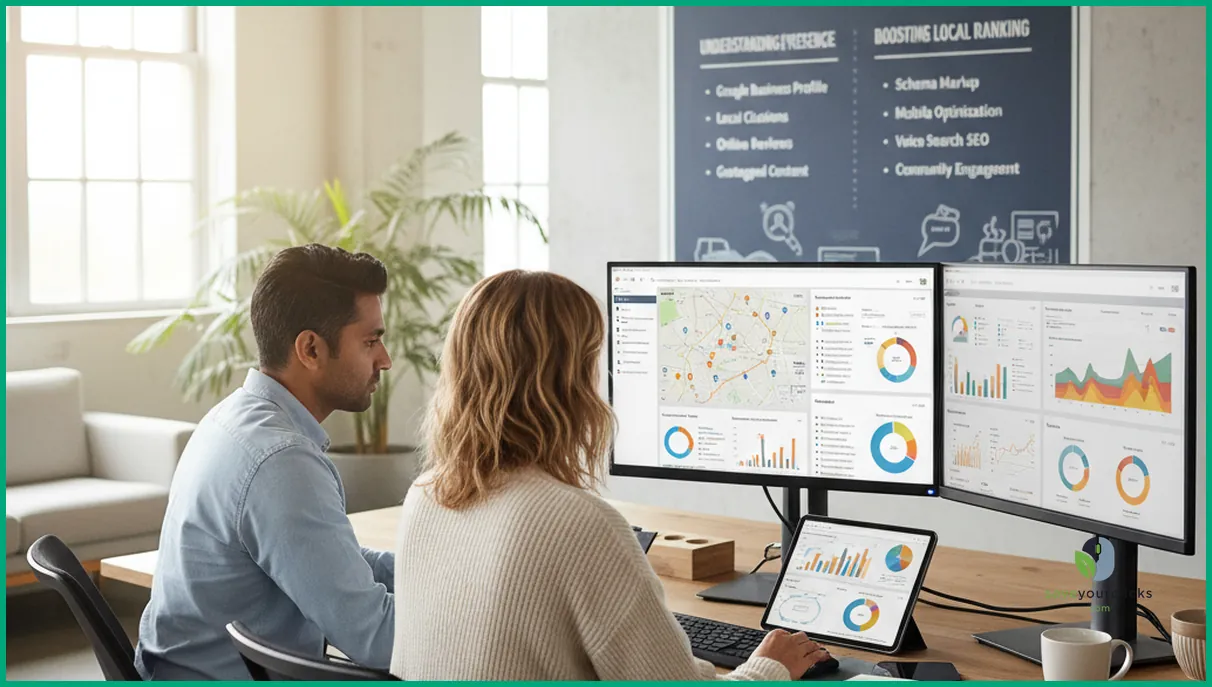
Measuring local SEO results requires tracking rankings, website traffic, and conversion actions. Google Business Profile Insights shows how many people find and interact with your listing. Website analytics reveal which pages attract local visitors. Use rank tracking tools to monitor your positions for target keywords in local results.
- Monitor calls, direction requests, and website clicks from your Google Business Profile.
- Track keyword rankings specific to your location with specialized tools.
- Analyze website traffic for local landing pages.
- Review the number and quality of new reviews over time.
- Set up conversion tracking to measure actions like form submissions or appointment bookings from local visitors.
- Compare year-over-year data to spot seasonal trends in local search interest.
Set up regular reporting to identify trends and adjust your strategy as needed. Consistent tracking helps you understand what’s working and where to focus your efforts next. For a deeper dive into identifying gaps in your local content, try the article gap analysis tool.
For example, if you notice a spike in direction requests after posting about a local event, you can repeat similar campaigns to drive more foot traffic.
Common Local SEO Mistakes to Avoid
- Inconsistent business information across directories.
- Ignoring negative reviews or failing to respond to customer feedback.
- Using duplicate content on multiple location pages.
- Neglecting mobile optimization.
- Failing to regularly update your Google Business Profile.
- Overlooking the importance of local backlinks and partnerships.
- Not tracking key metrics or analyzing local SEO performance.
Addressing these issues helps maintain credibility with search engines and customers. Regular audits and updates are essential for ongoing success. For example, set a quarterly reminder to review your online listings and check for outdated info or broken links.
Helpful Tools for Local SEO
- Google Business Profile Manager: Manage your listing, respond to reviews, and post updates.
- Local citation services: Help you find and fix inconsistencies in your business listings.
- Rank tracking solutions: Monitor your local keyword performance. Tools like rank tracker tools make this easier.
- Content gap analysis: Identify missing topics or keywords with tools such as heading gap tool and keyword clustering tool.
- Review management platforms: Track and respond to reviews across multiple sites.
- Google Analytics and Search Console: Monitor website traffic, user behavior, and search queries from local visitors.
- Social listening tools: Track mentions of your business on social media and in local forums.
Choosing the right combination of tools can simplify your workflow and help you spot new opportunities to improve your local presence. Start with free tools, then add specialized solutions as your needs grow.
Ongoing activity is what separates average profiles from high-performing ones. Encourage customers to leave reviews, respond to every review professionally, and monitor for edits suggested by users or Google. Track which calls, direction requests, and website visits come through the profile so you can see what drives action. If you are unsure where your setup is weak, a local SEO consultation can help uncover missing fields, category issues, and profile gaps that limit local pack visibility.
Next, strengthen the profile with details that support trust and engagement. Write a clear business description focused on what you do, who you serve, and the area you cover. Add real photos of your exterior, interior, team, vehicles, products, or completed work. Keep holiday hours updated, list services or products where available, and use posts to highlight offers, events, or recent projects. The Q&A section also deserves attention: add common questions yourself and answer them clearly before customers have to ask.
Your Google Business Profile is often the first thing local customers see, so complete setup matters. Start by confirming that your business name, address, phone number, website, and business hours exactly match what appears on your site and across directories. Choose a primary category that reflects your main service, then add secondary categories only when they genuinely fit. This helps Google connect your profile to the right searches instead of diluting relevance.
How to Optimize Your Google Business Profile
Also look for supporting topics that answer local questions before a customer is ready to buy. Content such as “how much does roof repair cost in Manchester?” or “best time to schedule pest control in Leeds” can capture early interest and build relevance. If you need help deciding which pages to create first, reviewing your options with SEO package pricing can make it easier to match effort, content scope, and budget.
Once you collect terms, group them by intent. One set may belong on your homepage, another on service pages, and another on dedicated location pages. Avoid creating thin city pages that only swap place names. A useful localised seo page should include real local details such as service areas, nearby landmarks, customer problems common in that location, testimonials from local clients, and photos or examples tied to the area. This makes the content more credible to both users and search engines.
Effective local seo starts with understanding how people search in specific places. Instead of chasing broad phrases, look for combinations of service, city, neighborhood, and intent. A plumber may find value in terms like “emergency plumber in Bristol,” “boiler repair Clifton,” or “drain cleaning near me.” These variations reveal what people want and where they want it, which is the foundation of practical local search engine optimization.
Local Keyword Research and Location-Based Content
Prioritize quality over volume. A few strong local mentions from credible sources usually outperform mass-submitted directory links. Keep a record of live listings, link sources, and updates so your seo local seo efforts stay organized as the business grows. For businesses that want to show real expertise and trust, it also helps to present a clear story about the people behind the brand, such as this background and expertise page.
After the basics, focus on the local listings and links that actually matter for your market. A chamber of commerce profile, local trade association listing, neighborhood business directory, or trusted niche site often carries more value than dozens of low-quality directories. Backlinks from community organizations, local news sites, suppliers, schools, sponsorships, and event partnerships can strengthen both authority and geographic relevance. These signals help Google see your business as a real part of the local area rather than just another website targeting a city name.
Off-page local seo optimization depends on consistency and credibility. Begin with citations: your business name, address, phone number, and website should appear the same way everywhere, including major directories, industry platforms, mapping apps, and local business listings. Even small differences such as abbreviations, old phone numbers, or outdated suite numbers can weaken trust and create confusion. Audit existing mentions, correct inaccurate entries, and remove duplicates where possible.
Build Citations, Backlinks, and Local Listings
Responses matter too. Thank happy customers with a specific reply that reflects the service they received, and answer negative reviews calmly without getting defensive. A thoughtful response shows future customers that you take service seriously. Beyond star ratings, reputation signals also include testimonials on your website, case studies, and visible trust markers such as certifications, guarantees, and clear contact details. If your business needs a structured plan to improve review generation and local trust signals, a site and profile review can help you identify the gaps quickly.
Reviews influence rankings, clicks, and conversions, which makes them a core part of local seo services performance. The best approach is to build a simple, repeatable review process. Ask at the right moment, such as after a successful appointment, completed delivery, or resolved support issue. Send a direct review link by text or email, and make the request personal rather than scripted. A steady flow of honest feedback is more valuable than a sudden burst followed by silence.
How to Improve Reviews and Reputation Signals
Finally, track outcomes instead of guesses. Monitor calls, direction requests, form leads, local rankings, and which pages attract nearby users. A simple benchmark sheet can reveal patterns quickly. If you want an outside view before making changes, a practical SEO consultation can help turn scattered data into clear priorities.
After that, compare your business with real local competitors. Search your core services in your target towns and note who appears in the map pack and organic results. Study their review volume, categories, page quality, and local citations. This helps you spot whether your biggest weakness is authority, relevance, or proximity.
Next, review your website signals. Make sure each key page clearly states what you do, where you do it, and how customers should contact you. Confirm that your name, address, and phone details match what appears on your listings. Look for missing title tags, weak location pages, slow mobile performance, and unclear internal links. If you serve more than one area, check whether each target location has a useful page instead of thin copy with swapped place names.
A local SEO audit should show you where visibility is being won or lost before you change anything. Start with your Google Business Profile. Check that your business name, primary category, phone number, hours, services, and service areas are accurate. Then look at photos, recent posts, questions and answers, and whether new reviews are being answered. Small gaps here can weaken trust and reduce map visibility.
How to Audit Your Local SEO Performance
Budget matters here because expansion usually means more content, more listing management, and better reporting. If you are deciding how far to scale your rollout, reviewing SEO package options and expected costs can help you match your local seo optimization plan to the markets most likely to generate returns.
Multi-location companies should also keep every branch listing consistent and separate. Each branch needs its own Google Business Profile, local landing page, opening hours, phone number where possible, and review strategy. Avoid funneling all branches into one generic contact page. Instead, create clear paths from your main navigation and connect related service and city pages with sensible internal links.
Each location or service-area page should include unique details: services available there, response times, landmarks, neighborhoods covered, customer problems common in that area, and testimonials from nearby clients. A page for one town should not be a rewritten copy of another with only the place name changed. That kind of localised SEO often fails because it adds little value for users or search engines.
Businesses that travel to customers or operate in several branches need a more structured local SEO setup than a single-location shop. The goal is to show search engines exactly which areas each service or branch covers without creating duplicate pages. For service-area businesses, define your real coverage based on travel time, demand, and profitability, not every nearby town. Then build pages around meaningful areas where you can offer distinct information, examples, and proof of service.
How to Optimize for Local Service Areas and Multi-Location Businesses
The best content plan usually comes from audience knowledge, not templates. Reviewing how experienced practitioners approach content strategy, user intent, and trust signals can sharpen your direction. A good starting point is learning more about the SEO specialist behind the strategy so your content decisions are based on practical local experience rather than guesswork.
Another useful format is a local FAQ hub. Answer questions about pricing ranges, service availability, permits, delivery zones, and what customers should prepare before an appointment. You can also turn reviews into content themes by expanding on recurring customer concerns. If people often mention speed, accessibility, or weekend availability, build content that addresses those needs directly.
For example, a dentist could create content about emergency appointments in a specific district, school-holiday checkup timing, or parking and transport tips for a local clinic. A trades business might publish pages on common home issues in older properties in one neighborhood, or explain response times across nearby towns. This kind of local search engine optimization works because it proves relevance rather than just repeating location terms.
Good local SEO content answers the questions nearby customers actually ask before they call, visit, or book. Instead of publishing generic blog posts, focus on pages that connect your services to real places and real buying intent. Strong examples include city service pages, neighborhood pages, “near me” style FAQs, seasonal service guides, and articles tied to local events, weather patterns, or regulations that affect your customers.
Local SEO Content Ideas That Attract Nearby Customers
Price should be discussed in context, not isolation. The cheapest option may only cover basic listing work, while broader campaigns include content, review generation, and multi-location support. Before you compare vendors, it helps to review typical SEO pricing and package structures so you know whether a proposal matches your goals and market size.
It also helps to ask how communication works. Will you get monthly actions, not just monthly reports? Who writes the content? Who manages listing issues? What happens if your Google Business Profile is suspended or your locations change? Reliable providers can answer these questions clearly and without jargon.
Look for evidence of practical process. That includes a clear roadmap, realistic timelines, access to your data, and examples of improvements tied to calls, bookings, or store visits. Be cautious if an agency focuses only on rankings, avoids discussing reviews and listings, or talks about creating dozens of near-duplicate area pages. Those are common signs of weak strategy.
Choosing a provider for local SEO services is less about bold promises and more about method, transparency, and fit. A good local seo agency should explain how it will improve your visibility across Google Business Profile, local pages, reviews, citations, and reporting. Ask what they would audit first, which metrics they track, and how they separate meaningful local leads from vanity rankings.
How to Choose the Right Local SEO Agency or Service
Create a simple reporting dashboard that includes local keyword movement, GBP actions, organic sessions to local pages, conversion rate, and lead quality. That makes it easier to spot whether a drop is caused by weaker rankings, poor click-through rates, or a page that is attracting the wrong audience. If your data is messy or fragmented, a practical SEO review can help you set up cleaner tracking and connect local visibility to actual return on investment.
Call tracking is especially important for local search engine optimization. Assign a tracked number carefully, while keeping your core business details consistent across your website and listings. If calls are a major lead source, review call volume, missed calls, call duration, and time of day. Direction requests and form submissions should also be treated as conversions, not just soft engagement metrics.
Use Google Business Profile insights to monitor key actions such as calls, website clicks, direction requests, and messages. These signals help you understand whether your profile is attracting nearby customers at the moment they are ready to act. Pair that with Google Search Console and analytics data so you can see which location pages generate impressions, clicks, engaged sessions, and conversions. This gives you a clearer view of which services and towns are actually producing demand.
Measuring local seo performance starts with separating visibility metrics from business outcomes. Rankings matter, but a number-one position is only useful if it leads to calls, bookings, visits, or quote requests. Track your presence in the local pack and organic results by location, because rankings often vary by postcode, device, and searcher proximity. A business may appear strongly in one area and almost disappear a few miles away.
How to Track Local SEO Rankings, Traffic, and Calls
The goal is not simply to be present in more places, but to be useful in each one. When your website, profiles, and listings mirror how the business actually operates, local seo optimization becomes more scalable and more credible. If you are planning expansion or cleaning up a complex footprint, reviewing SEO package options and costs can help you scope the work realistically.
Localised seo also depends on operational accuracy. If a business changes hours, moves premises, or uses call centres that route to the wrong branch, trust can drop quickly. Make ownership clear for every profile and listing, and give local teams a process for updating information. For service-area businesses, explain where you do and do not work. For larger brands, prevent duplicate profiles and overlapping pages that compete against each other.
For multi-location brands, structure matters even more. Each branch should have its own location page with unique contact details, opening hours, service information, reviews or testimonials, and local context. If one office offers different treatments, products, or appointment options than another, that should be clear on the page. Internal linking should connect the main services to the relevant locations so search engines can understand both the business and the geography.
Local seo works differently for businesses that travel to customers and for brands with multiple branches. A service-area business may not have a public storefront, but it still needs strong local relevance signals. That means defining service areas clearly in Google Business Profile, keeping name, address, and phone details consistent where applicable, and building pages that explain what you offer in each target area. Avoid creating thin copies of the same page with only the town name swapped out. Each page should reflect real differences in customer needs, service availability, response times, or examples from that location.
Local SEO for Service-Area Businesses and Multi-Location Brands
Finally, plan content updates, not just new pages. Refresh opening details, add testimonials from local customers, expand FAQs, and link related service and location content together. Over time, this creates a more complete local footprint that can support both map visibility and organic traffic. If you want to understand the strategy behind that process, the background and approach of our SEO specialist offers useful context on how local content planning is developed in practice.
Good seo local seo content also benefits from specificity. Mention landmarks, neighbourhood names, travel times, common service issues in the area, and examples of who you help. Do not force local terms into every sentence. Write for someone who genuinely lives or works nearby and wants a quick, trustworthy answer. That usually produces better engagement than generic copy ever will.
Build your plan around a few core content types. First, create high-quality location pages for priority towns or districts, each with unique details about the services offered there. Second, publish local guides or practical articles tied to nearby concerns, events, regulations, or seasonal demand. Third, use FAQs to capture long-tail searches with clear local intent, such as pricing, parking, availability, or same-day appointments in a specific area. These assets help local search engine optimization by strengthening topical depth around a place and a service together.
A strong content plan for local seo should start with real buying intent, not just a list of city names. Look at the questions people ask before they book, visit, or call. Then map those questions to the places you want to win in. For example, a dental practice might need service pages, neighbourhood pages, emergency care FAQs, and guides explaining treatment options near transport links or business districts. This approach supports both relevance and conversions.
How to Build a Local SEO Content Plan That Drives Nearby Leads
The right support should feel practical and transparent. You want a partner who can explain what needs fixing first, what can wait, and how budget affects the pace of work. Before committing long term, it is often worth starting with a one-to-one SEO consultation to assess whether you need strategic advice, full management, or a more limited local seo optimization project.
Be cautious of any local seo agency that guarantees top rankings, creates doorway pages at scale, or avoids discussing measurement. Weak providers often focus on vanity metrics while ignoring leads and revenue. Another red flag is vague monthly activity with no documented priorities, no ownership of listings, and no explanation of how recommendations connect to business goals.
When comparing local seo services, ask what the deliverables actually include. A useful provider should be able to explain their process for Google Business Profile optimisation, on-page updates, location page strategy, citation management, review support, tracking setup, and ongoing reporting. They should also define what success looks like, whether that means more qualified calls, better map visibility, or stronger performance in specific towns.
Hiring help for local seo makes sense when the work is beyond what your team can manage consistently. That often happens when rankings are unstable, listings are inaccurate, reviews are not being managed, or location pages have not been built properly. It also becomes relevant when you need faster progress across several branches or service areas. In-house teams may understand the business well, but they do not always have the time or specialist experience to handle technical fixes, content planning, citation cleanup, and reporting at the same time.
When to Hire a Local SEO Agency or Local SEO Services
Review results monthly, but look for trends over a 3- to 6-month window. Local search engine optimization often improves in stages: first visibility, then traffic, then enquiries, then revenue. If the numbers are unclear, a structured SEO review can help identify which tracking gaps are hiding the true return. Good reporting should tell you not only what improved, but which local actions produced the result.
It also helps to assign estimated values to different lead types. A phone call that lasts more than 60 seconds may be worth more than a simple page visit. A form submission for a high-margin service may deserve a higher conversion value than a general enquiry. Once those values are in place, you can calculate whether your local SEO optimization work is generating profitable demand rather than just more clicks.
To make that measurable, connect Google Business Profile insights, Google Search Console, Google Analytics, call tracking, and your CRM. Use UTM tags on your business profile links so you can separate traffic from the profile versus organic location pages. If you serve multiple towns or branches, segment reports by landing page, city, or branch name. That makes it much easier to see whether one area is outperforming another.
A practical framework begins with four layers of measurement: visibility, traffic, leads, and revenue. Visibility includes map pack impressions, Google Business Profile views, and location-based keyword rankings. Traffic covers sessions to location pages, click-through rates, and mobile visits from nearby users. Leads include tracked calls, forms, bookings, and messages. Revenue is the final layer: how many of those leads became paying customers, and what they were worth.
Measuring local SEO ROI starts with defining what a local conversion actually looks like for your business. For some companies, success means phone calls from Google Business Profile. For others, it is booked appointments, contact-form submissions, direction requests, quote requests, or in-store visits. If you only track rankings, you miss the commercial impact. Local SEO should be judged by whether it brings in nearby prospects who are ready to act.
How to Measure Local SEO ROI
Finally, keep your profile aligned with your website. If your profile highlights a service, the relevant page on your site should support it with matching detail and local context. Businesses that want a clearer roadmap for profile improvements often benefit from expert guidance on local visibility before making wider changes. Small refinements in a Business Profile can produce outsized gains when they improve relevance, trust, and user action together.
Google Posts can support visibility and engagement when used strategically. Instead of posting random updates, publish short items tied to seasonal services, promotions, local events, or common customer questions. The Q&A section deserves equal attention. Seed it with realistic, useful questions and answer them clearly. This can reduce friction for searchers and surface more service-related language naturally.
Photos are another underused lever. Upload recent exterior, interior, team, product, and work-in-progress images. Geographically relevant visuals can reinforce trust because users want to know they are choosing a real local provider, not a vague listing. Keep them current, high quality, and useful rather than purely promotional.
Next, strengthen the services section. Break down core offers into specific services instead of relying on one generic description. This helps Google connect your profile with more detailed local intent. Attributes also matter. Features such as accessibility options, appointment availability, ownership details, or service methods can improve both relevance and click confidence when users compare nearby businesses.
Start with category precision. Your primary category carries a lot of ranking weight, so it should reflect the main service you most want to be found for. Secondary categories can expand relevance, but they should only be used where they genuinely match what you offer. Avoid adding broad or loosely related categories just to appear in more searches. Relevance matters more than volume.
Once the basics of Google Business Profile are in place, the biggest gains often come from refinement rather than setup. Many businesses verify a profile, add opening hours, and stop there. Stronger local SEO comes from treating the profile like an active storefront that needs regular updates, clearer service signals, and better proof of quality.
Advanced Google Business Profile Optimization Tips
Because expansion often raises costs in content, tracking, and page management, businesses should plan structure before scaling. Reviewing SEO package and budget options can help teams match rollout plans to realistic resources. In multi-location local seo optimization, disciplined architecture usually beats sheer page volume.
It is also important to prevent cannibalisation. If multiple pages target the same service in nearby areas with almost identical intent, they may compete against each other. Differentiate by geography, service emphasis, customer needs, and supporting content. Reviews, images, team information, and local case studies can all help pages feel genuinely distinct.
Internal linking matters here. A clear hub-and-spoke structure can help: a main locations or areas page links to each branch or service-area page, while those pages link back to relevant services. Schema markup, consistent NAP details where applicable, and well-managed Google Business Profiles for eligible locations all strengthen local understanding.
For service-area businesses, the approach is slightly different. If you do not have a staffed office in a town, avoid creating misleading location pages that imply you do. Instead, build service-area pages around real coverage zones, practical delivery information, typical response times, and examples of jobs completed in those areas. The aim of localised SEO is to show relevance honestly, not manufacture fake local presence.
For location-based businesses, each branch should usually have its own dedicated page with unique business details, opening hours, service information, customer proof, and nearby landmarks or area references. These pages should not be thin copies with only the town name swapped out. Google can recognise template duplication, and users can too. Strong pages explain what that branch offers, who it serves, and why someone in that area should choose it.
Local SEO becomes more complex when a business operates in several locations or serves customers across multiple areas without a public office in each one. The challenge is not just scale. It is structure, differentiation, and consistency. Without a clear setup, multi-location and service-area brands often create overlapping pages, duplicate copy, and confusing business signals that weaken performance instead of expanding it.
Local SEO for Multi-Location and Service-Area Brands
Anchor text should stay natural, branded, or descriptive rather than stuffed with service and city keywords. The linked page should also match the context. If a local newspaper mentions your team’s expertise, it makes sense to point readers toward the specialist behind the work rather than forcing a commercial page into every placement. Over time, these local trust signals can support stronger map visibility and improve click confidence among nearby searchers who see your name in familiar places.
Community pages, chambers of commerce, business associations, neighbourhood blogs, and local event websites can all be worthwhile if the mention is relevant and genuine. The goal is not to collect every possible citation or link. It is to build a believable web of local references around your brand. Quality beats quantity, and relevance beats authority scores taken out of context.
Local PR can also support seo local seo efforts when handled with substance. Instead of sending broad press releases, look for stories that matter locally: expansion into a new area, support for a community initiative, a charity drive, an award, original local data, or expert commentary on a regional issue. The best local coverage creates both visibility and credibility.
A good starting point is partnerships that already exist offline. Suppliers, trade associations, nearby complementary businesses, local charities, and event organisers may all have valid reasons to mention or link to you. A landscaping company might be listed on a local garden centre partner page. A dentist could be featured by a neighbourhood school after sponsoring a health event. These are natural community signals because they reflect real-world involvement.
Local link building is less about chasing high volumes of backlinks and more about earning signals that prove your business belongs in a specific area. Search engines look for evidence that other local organisations, publications, and community websites recognise your presence. Those mentions can reinforce relevance, authority, and trust in ways that generic directory links rarely do.
Local Link Building and Community Signals
Finally, end every report with actions, not just numbers. Identify what improved, what declined, why it likely happened, and what should happen next month. If reporting gaps are making performance hard to interpret, compare needs against available SEO service levels before expanding the workload. A strong local seo report should tell a clear story from ranking movement to real customer response.
Do not ignore reputation signals. Monitor review volume, review recency, average rating, and the themes appearing in customer feedback. Those insights can shape both content and operations. Also check citation consistency, profile completeness, duplicate listings, and major changes in competitors’ local presence.
Then move to conversions. Report on phone calls, contact forms, bookings, direction requests, messages, and any tracked offline actions. If possible, break them down by source and landing page. This helps you see whether a Google Business Profile update, a location page refresh, or a review push had measurable impact.
Next, review traffic quality. Look at organic sessions to location and service-area pages, mobile traffic trends, click-through rates, and engagement signals such as scroll depth or time on page. A rise in visits matters less if users bounce immediately because the page does not match local intent.
Start with search visibility. Track rankings for key local terms by town, city, or postcode where relevant, but separate map pack performance from standard organic results. Include Google Business Profile impressions, branded versus non-branded queries, and top-performing location pages. This shows whether your local search engine optimization is expanding reach or only capturing people who already know your name.
A useful local SEO report should make decisions easier, not bury results under too many disconnected metrics. The best reporting checklist balances visibility data with business outcomes, so you can spot where local momentum is building and where something is breaking.
Local SEO Reporting Checklist
Frequently Asked Questions
How long does local SEO take to work?
Local SEO can show early movement in 4 to 8 weeks, especially after profile improvements or citation fixes, but meaningful lead growth often takes 3 to 6 months. Timing depends on competition, review strength, website quality, and how established your local presence already is. New locations usually take longer than existing businesses with solid authority.
What is the difference between local SEO and SEO?
SEO focuses on improving visibility in general organic search results, while local SEO is designed to help businesses appear for nearby searches and map-based results. Local SEO relies more heavily on Google Business Profile, reviews, local landing pages, and location signals. It is especially important for businesses serving specific towns, cities, or service areas.
Do Google reviews help local SEO?
Yes, Google reviews can support local SEO by improving trust, strengthening prominence signals, and increasing click-through rates. Reviews also add fresh, user-generated content around your services and locations. The biggest benefit comes from earning genuine, recent reviews consistently and responding thoughtfully, rather than chasing volume alone.
What is the best local SEO strategy for small businesses?
The best strategy usually combines a fully optimised Google Business Profile, accurate business information, strong service or location pages, review generation, and clear conversion tracking. Small businesses should focus on the areas and services that drive the most value first. Consistency and relevance usually outperform trying to rank everywhere at once.
How do I know if my local SEO is working?
Local SEO works best when every signal points in the same direction: accurate business details, strong local pages, a well-managed Google Business Profile, trustworthy reviews, and reporting that connects visibility to revenue. Whether you run one location or many, the goal is the same: become the obvious choice for nearby customers at the moment they are ready to act. If you want a clearer plan for improving your local presence, book a consultation today.