
SEO, or search engine optimization, means making your website easy for people and search engines to find. For home service businesses, good SEO helps your business show up when local customers search for what you offer—like plumbers, electricians, or cleaning services.
What Is SEO? A Clear Explanation for Home Service Owners
SEO stands for search engine optimization. It’s a set of practices that help your website appear higher in search results. When someone types “best plumber near me” or “emergency electrician,” search engines like Google look for the most relevant and trustworthy sites. If your site is well-optimized, you’re more likely to be found by people in your area who need your services.
SEO covers three main areas: technical SEO (how your site is built), on-page SEO (your content and keywords), and off-page SEO (links and reputation). For home service businesses, local SEO is especially important. This means making sure your business shows up in maps, directories, and local searches.
For example, if you run a landscaping business, optimizing your site for terms like “lawn care in [your city]” and making sure your business is listed on Google Maps can significantly increase your visibility to nearby homeowners. Even simple steps, such as adding your service area to your website footer and updating your business hours, can make a difference in local search rankings.
Why Is SEO Important for Home Service Businesses?
Most people turn to search engines when they need a service at home. If your business doesn’t show up, you’re missing out on local leads. SEO ensures you appear where your customers are searching. It’s not just about ranking #1—it’s about being visible when it matters most.
- SEO brings in targeted local traffic—people actively looking for your services.
- It builds trust. Customers often trust businesses that appear near the top of search results.
- SEO can reduce your reliance on paid ads over time.
- It helps you compete with larger companies by focusing on local relevance.
- It increases your chances of being included in voice searches, such as “Hey Google, find a roofer near me.”
- SEO supports word-of-mouth referrals by making your business easy to find and share online.
For example, a local cleaning company with strong SEO can appear above national chains in search results for “house cleaning near me.” If your website is optimized for both desktop and mobile, you’ll capture customers searching from their phones while on the go. A well-ranked site can also make your business look more established and reputable to new customers.
How Does SEO Work? A Step-by-Step Look
SEO is a process, not a one-time task. Here’s how it typically works for home service businesses:
- Research what your customers are searching for (keywords).
- Optimize your website structure and pages for those keywords.
- Make sure your site loads fast and works on mobile devices.
- Get listed in local directories and encourage customer reviews.
- Earn links from reputable sites in your industry or community.
- Track your results and adjust as search engines update their algorithms.
- Regularly update your content to stay relevant and reflect seasonal services or promotions.
Tools like keyword gap analysis can help you find opportunities your competitors might be missing. You can also use a keyword rank tracker to monitor your progress over time.
For instance, if you notice that your competitors are ranking for “emergency plumbing repair,” but you aren’t, you can create a dedicated page for that service. Step-by-step, you’d start by researching the phrase, then write a page that answers common questions, add before-and-after photos, and encourage customers to leave reviews mentioning emergency repairs. This targeted approach helps you fill gaps and reach more potential clients.

Key Types of SEO: Technical, On-Page, and Off-Page
Technical SEO
This is about how your site is built. Is it fast? Does it work on mobile? Are there broken links or confusing navigation? Technical SEO helps search engines crawl and understand your site. Common tasks include fixing slow-loading pages, improving site security (HTTPS), and making sure all pages can be indexed.
- Use tools like Google PageSpeed Insights to find and fix speed issues.
- Create an XML sitemap and submit it to Google Search Console.
- Ensure your site is accessible for people with disabilities (ADA compliance).
On-Page SEO
This focuses on the content of your site. Are you using the right keywords? Are your service pages clear and helpful? On-page SEO includes optimizing titles, headings, images, and making sure your information matches what people are searching for. Tools like a heading gap tool can help you spot missing or weak sections in your content.
- Use unique titles and meta descriptions for every page.
- Add FAQ sections to answer common customer questions.
- Highlight special offers or certifications to build trust.
Off-Page SEO
This covers everything happening away from your site. Earning links from other local businesses, getting positive reviews, and building your reputation online all help. Off-page signals show search engines that your business is trusted in your community.
- Partner with local organizations and ask for a link on their websites.
- Encourage satisfied customers to share their experiences on social media.
- Participate in community events and get featured in local news stories.
Local SEO: The Game Changer for Home Services
Local SEO is crucial for home service companies. It focuses on making sure your business appears in local searches, map packs, and directories. This means optimizing your Google Business Profile, collecting reviews, and ensuring your name, address, and phone number are consistent everywhere online.
- Claim and verify your Google Business Profile.
- Use local keywords, like “HVAC repair in Springfield.”
- Encourage happy customers to leave reviews.
- Add your business to trusted local directories.
- Upload photos of your team and completed projects to your Google Business Profile.
- Respond to all reviews—positive or negative—to show you value customer feedback.
For example, a local plumber who appears in the “map pack” at the top of search results will often get more calls than those who don’t. If you serve multiple neighborhoods, create location-specific pages or mention service areas on your website to boost your chances of showing up in those searches. Consistency in your business information across platforms like Yelp, Facebook, and Angie’s List also helps search engines trust your listings.
Content Optimization: Creating Pages That Work
Great content answers your customers’ most common questions and matches their search intent. For home service businesses, this means service pages, FAQs, and helpful blog posts. Each page should focus on a specific topic or service, using clear language and relevant keywords.
Consider using a keyword clustering tool to group similar topics together. This helps you build authority and cover more ground with your content.
- Write clear, helpful service pages for each offering.
- Include location-specific details and customer testimonials.
- Use headings to break up content and improve readability.
- Add images of your team, work, or equipment (with descriptive alt text).
- Update your content seasonally—like promoting “gutter cleaning in fall” or “AC repair in summer.”
- Link to related services or blog posts to keep visitors engaged and boost SEO.
For example, if you offer both plumbing and heating services, create separate pages for each, and use internal links to guide visitors between them. Adding a short video demonstration or a downloadable checklist can also help your pages stand out and provide extra value to customers.
Tracking Results: How to Measure SEO Success
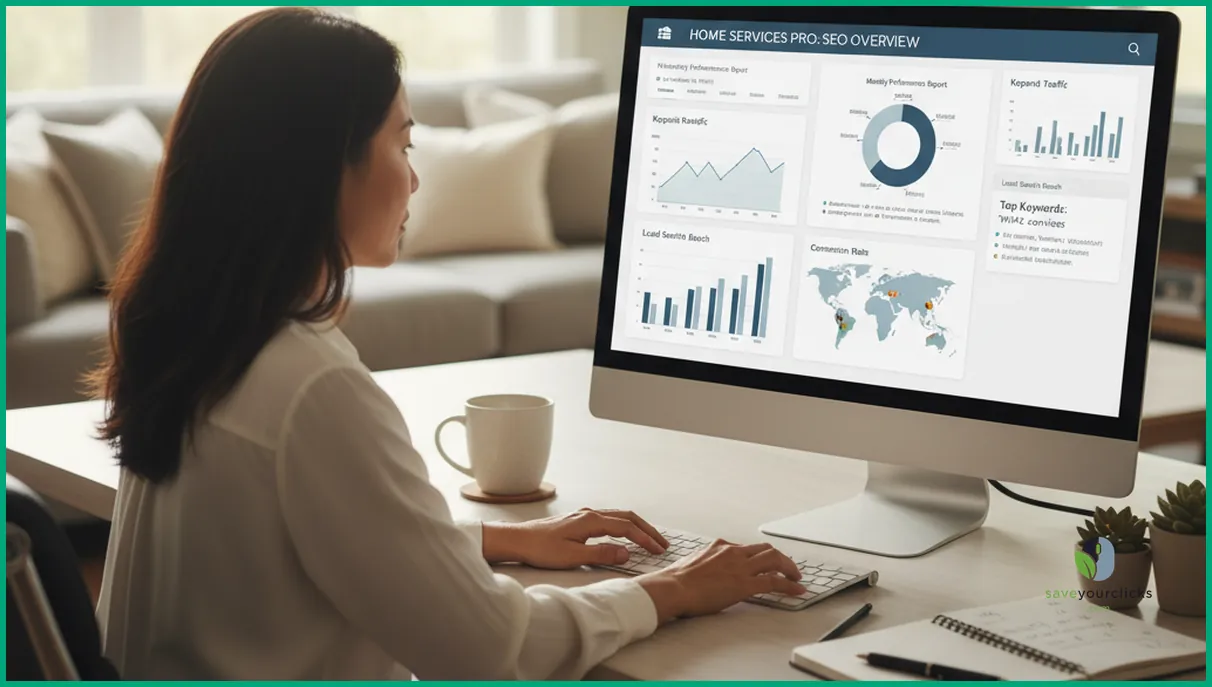
SEO isn’t just about launching changes and hoping for the best. You need to track what’s working. Key metrics include:
- Organic traffic: How many people visit from search engines.
- Keyword rankings: Where your site appears for target searches.
- Leads and calls: How many new customers contact you.
- Reviews and ratings: Your reputation on Google and other platforms.
- Conversion rate: The percentage of visitors who take action, like filling out a form or calling you.
- Bounce rate: How many visitors leave your site without interacting—high bounce rates may signal content or usability issues.
Using rank tracker tools helps you see which keywords are moving up or down. This lets you adjust your strategy for better results.
| Metric | What It Shows | How to Track |
|---|---|---|
| Organic Traffic | Number of visitors from search engines | Analytics tools |
| Keyword Rankings | Your position for target search terms | Rank trackers |
| Leads/Calls | Customer inquiries and calls from your site | Call tracking software |
| Reviews | Customer feedback and ratings | Google Business Profile |
| Conversion Rate | How many visitors become leads or customers | Website analytics |
For example, if you see a spike in organic traffic after updating your service pages, check if that leads to more calls or form submissions. If not, review your call-to-action buttons or contact forms to ensure they’re easy to use. Set up monthly or quarterly reports to spot trends and make informed decisions.
Common SEO Mistakes Home Service Businesses Should Avoid
- Ignoring mobile optimization—many customers search from their phones.
- Using duplicate or thin content across service pages.
- Neglecting local listings or having inconsistent business info.
- Overusing keywords (“keyword stuffing”) instead of writing naturally.
- Not tracking results, so you don’t know what’s working.
- Forgetting to update business hours or contact details after changes.
- Failing to respond to negative reviews, which can hurt your reputation.
One practical tip: schedule a regular review of your site’s main pages and business listings every quarter. This makes it easier to spot issues before they harm your rankings.
For example, if you move locations or add a new service, update your website and all directory listings promptly. Regularly check your site on different devices to catch display problems early. Avoid copying content from competitors—write in your own words to stand out and avoid search penalties.

Choosing the Right SEO Tools for Home Services
Many tools can help you with SEO, but it’s important to pick ones that match your needs. For example, article gap analysis tools can show you topics your competitors cover that you might be missing. Keyword research, rank tracking, and content optimization tools are all helpful.
- Start with free tools, then invest as your business grows.
- Look for tools that focus on local SEO and reputation management.
- Use tools that help you monitor your competitors’ strengths and weaknesses.
- Choose tools with easy-to-read dashboards and clear reporting features.
- Consider tools that integrate with your website platform for easier updates.
Saveyourclicks offers several options that can simplify each step of your SEO journey.
For example, Google Search Console can alert you to technical issues, while a keyword clustering tool helps you plan new content. As your business grows, you might add a review management tool to track customer feedback or a call tracking service to see which pages drive the most calls. Test out a few tools and choose the ones that save you time and deliver clear results.
How SEO Compares to Paid Advertising (SEM)
SEO and paid ads (like Google Ads) both aim to get your business in front of customers, but they work differently. Paid ads show up instantly but cost money every time someone clicks. SEO takes longer but can bring in traffic for free once you’re ranking.
| SEO | Paid Ads (SEM) |
|---|---|
| Builds trust over time | Immediate visibility |
| Ongoing investment, but no per-click cost | Pay per click |
| Results last longer | Traffic stops when ads end |
| Organic, unpaid traffic | Paid, targeted traffic |
| Requires patience and consistent effort | Can be used for quick promotions or seasonal offers |
Many home service businesses use both approaches. Over time, a strong SEO foundation can reduce your need for paid ads.
For example, you might run Google Ads for “emergency AC repair” during a heatwave, while relying on SEO for steady business year-round. If your SEO brings in enough leads, you can lower your ad budget and invest more in content or customer service. Combining both strategies gives you flexibility and helps you reach customers at different stages of their search.
FAQ
What is SEO and why does it matter for home service businesses?
SEO helps your business show up in search results, so local customers can find you. For example, strong SEO means more calls from people searching for your services online.
How long does it take to see SEO results?
SEO usually takes a few months to show real results. Small improvements—like fixing broken links—can sometimes boost rankings in a few weeks.
What’s the difference between local SEO and regular SEO?
Local SEO targets customers in your area, showing your business in map results. Regular SEO is broader and may attract visitors from outside your service zone.
Can I do SEO myself, or do I need to hire someone?
You can start with basics yourself—like claiming your Google Business Profile. For advanced tasks, many hire an SEO specialist for best results.
What are some free tools to help with SEO?
Free tools include Google Search Console, Google Business Profile, and keyword research tools. You can also try a free keyword clustering tool for content ideas.
How do I know if my SEO is working?
Track your site’s traffic, keyword rankings, and the number of calls or leads you get. Consistent growth in these numbers signals your SEO is working.
Methodology & Limitations
This guide is based on common practices used by home service businesses and digital marketers. Information comes from industry experience, reputable online resources, and hands-on use of SEO tools. SEO is always changing, so results may vary depending on competition, location, and search engine updates. We recommend testing strategies and monitoring your own data for best results.
Keep in mind that while the steps and examples provided are widely applicable, your results may vary based on your specific market and competition. Regularly reviewing your analytics and staying updated with SEO best practices will help you adapt and continue growing your business online.
Ready to take the next step? Start by reviewing your business’s main service pages and see where you can improve. For a deeper dive, try a keyword gap analysis to uncover missed opportunities in your local market.