
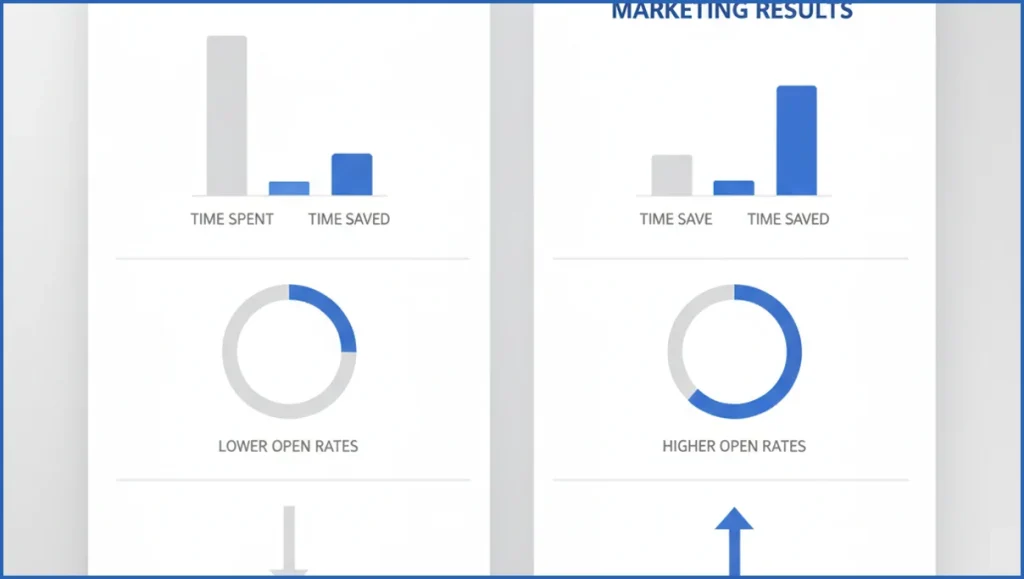
Last updated: July 2026
Automated Email Marketing: A Practical AI Playbook now sits at the intersection of lifecycle marketing and AI-driven search. Winning teams do more than automate sends. They build pages and workflows that explain who gets each message, when it fires, and what result it should drive. That matters because buyers increasingly research tactics through AI search experiences. Brands that pair better automation with clearer educational content can earn stronger visibility and more qualified traffic.
TL;DR
- Build automated journeys that send the right email at the right time.
- Use AI to segment audiences and personalize messages faster.
- Start with high-impact flows: welcome, abandoned cart, and re-engagement.
- Track opens, clicks, and revenue to refine every automation.
What automated email marketing actually is
Automated email marketing means emails go out based on a trigger, rule, or customer action. A signup form can start a welcome series. A cart event can trigger a reminder after 2 hours. A 90-day gap can launch a win-back sequence. You set the logic once, then the system runs it repeatedly.
That makes it different from one-off campaigns. Campaigns are manual sends to a list. Automation is behavior-based messaging across the customer lifecycle. It usually lives inside tools like Klaviyo, HubSpot, Mailchimp, or ActiveCampaign, next to segmentation, templates, and reporting. If your broader team already uses AI workflows, understanding how connected systems work helps a lot.
A simple example: a lead downloads a pricing guide, gets email one immediately, email two after 2 days, and a case study after 5 days if they did not book a call. That is not complex. It is just structured timing with clear conditions.
Why automation matters for growth and efficiency
Manual email programs break when volume grows. One marketer cannot hand-send lifecycle emails to 4,000 subscribers with consistent timing. Automation fixes that. It keeps follow-up speed high, reduces forgotten leads, and creates a repeatable path from signup to sale.
It also improves relevance. New subscribers need orientation. Buyers need onboarding. Lapsed users need a reason to return. When messages match stage and intent, click rates and revenue usually improve. Most teams also find easier testing because each flow has one job, not ten.
The core workflows every business should build first
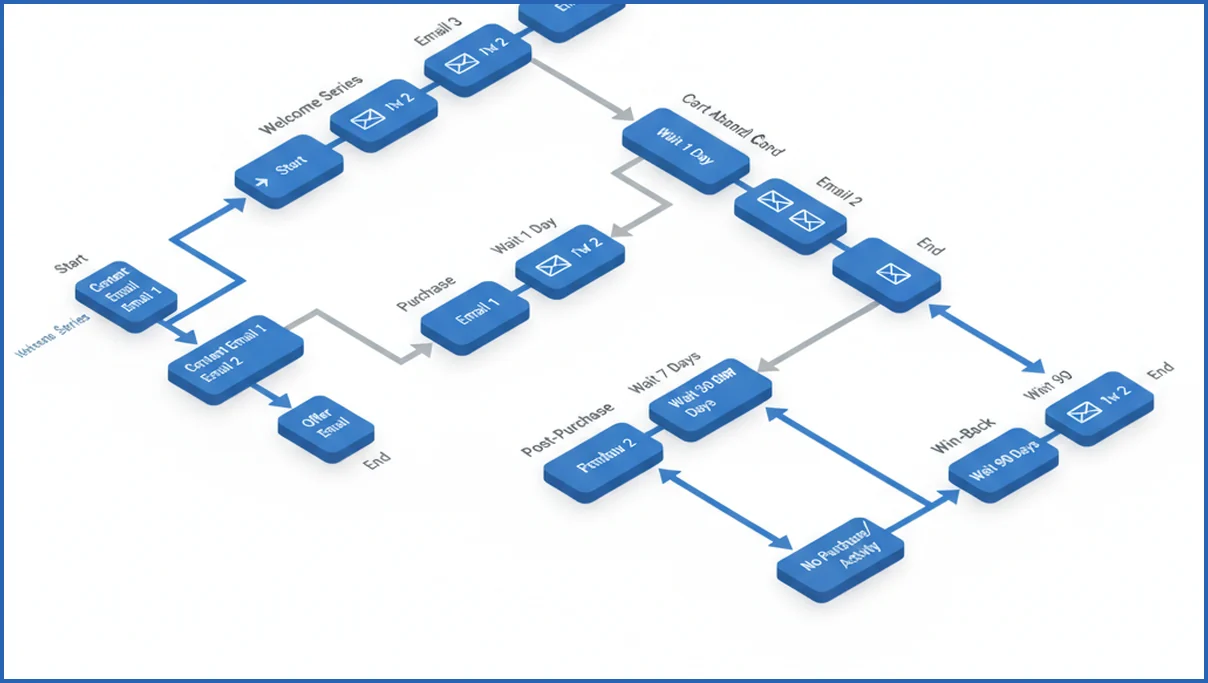
Start with five flows. Welcome series, abandoned cart, post-purchase, lead nurture, and win-back. These cover the biggest lifecycle gaps for most brands. Ecommerce teams should also connect them with their wider ecommerce growth stack so offers and messaging stay consistent.
A welcome series often has 3 emails over 5 days. Email one sets expectations. Email two explains the product or offer. Email three handles objections or shows proof. An abandoned cart flow usually sends within 1 hour, 24 hours, and 72 hours, often with product reminders and a support angle before any discount.
Post-purchase emails should confirm value, not just the transaction. Send setup tips, cross-sells, review requests, or reorder reminders. Lead nurture works well for B2B and higher-ticket services. A strong sequence might teach one idea per email, then invite a demo after the third touch.
- Welcome: 3 emails, 5-7 days
- Abandoned cart: 2-3 emails, 72 hours
- Post-purchase: onboarding, review, repeat order
- Lead nurture: education plus one clear CTA
- Win-back: trigger after 60-120 inactive days
How to set up automated email marketing step by step
Begin with one goal per flow. Recover carts. Convert leads. Increase second purchases. Then define the trigger, audience, delay, and exit rules. Keep the logic simple first. Complexity usually hides weak strategy.
- Pick one flow and one business outcome.
- Define the trigger and suppression rules.
- Write 2-4 emails with one job each.
- Set delays, then QA every branch.
- Launch small, measure for 2-4 weeks, then iterate.
A real setup for a SaaS lead magnet might look like this:
Trigger: form_submitted = "demo-checklist"
Email 1: send immediately
Email 2: wait 2 days if no demo booked
Email 3: wait 3 days if opened email 2
Exit: remove when meeting_booked = true
Copy quality matters, but structure matters more. Keep subject lines specific. Match each email to one stage. If you use AI for drafts, treat it like a fast first pass. The same review habits from an AI copywriting workflow apply here.
Where AI improves email automation without losing control
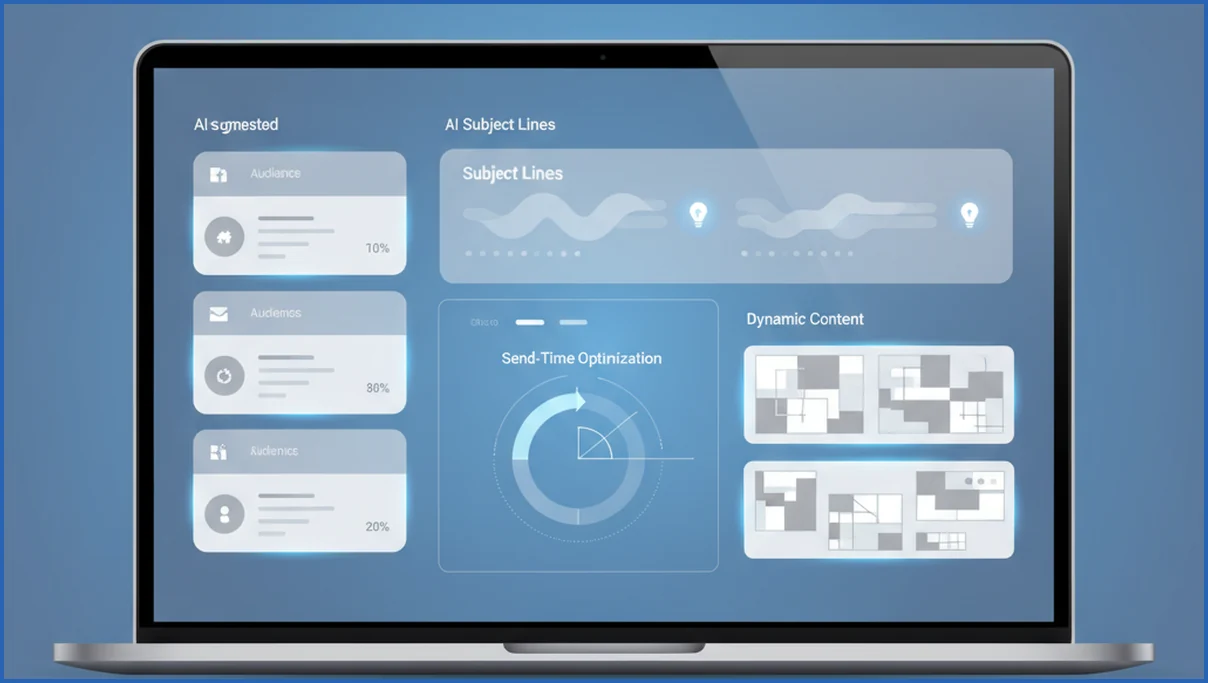
AI helps most in planning and optimization, not final judgment. Use it to draft subject lines, suggest audience segments, summarize purchase patterns, and generate variant copy blocks. Good tools can also predict send times or recommend product content based on behavior.
For example, you can export GA4 and email data, ask Claude to spot cohorts with low repeat purchase rate, then build a reactivation flow around those users. If you work with connected analytics, a GA4 MCP setup can speed up that analysis. Human review still decides the offer, timing, and brand voice.
Metrics, mistakes, and optimization habits
Track flow-level revenue, click rate, conversion rate, unsubscribe rate, and time to purchase. Opens still help for directional checks, but privacy changes made them less reliable. For ecommerce, revenue per recipient often beats open rate as a decision metric.
Common mistakes are easy to spot. Too many emails. Weak trigger logic. No suppression after purchase. The same offer sent to every segment. Review automations monthly, and audit larger programs quarterly. Marketers who already monitor search systems with a repeatable analysis process usually adapt well to this discipline.
How AI Mode changes automated email marketing discovery
Google AI Mode changes how people discover email marketing advice, templates, and software comparisons. Instead of clicking ten blue links, users can get synthesized answers that highlight a few cited sources. That means your email content must answer practical questions fast, with clear steps, examples, and terms the model can quote. If you need the search context behind this shift, see Google AI Mode explained.
For automated email marketing, this favors pages that connect strategy to execution. A strong page explains trigger logic, names real tools like Klaviyo, Mailchimp, HubSpot, and ActiveCampaign, and shows when each workflow fits. AI Mode can also reward tightly structured sections, concise definitions, and comparison tables because they are easier to parse into direct answers. Google has positioned AI search experiences around better task completion and follow-up exploration in recent product updates, including Google I/O announcements.
- Write standalone answers for workflows like welcome series, cart recovery, reactivation, and post-purchase follow-up.
- Add concrete inputs such as send delays, audience rules, product examples, and success metrics like revenue per recipient.
- Refresh pages when platform features change so your content stays citation-worthy for AI-assisted search results.
Frequently Asked Questions
Can email marketing be automated?
Yes. Most email platforms let you trigger messages from signups, purchases, page views, inactivity, or CRM changes. You can automate timing, branching, and suppression rules without turning the whole program into a black box. Start with one welcome flow and one abandoned cart flow. That gives you enough data to improve the next sequence with confidence.
What is the 60/40 rule for email?
The phrase gets used in different ways, but a practical interpretation is this: spend 60 percent of your effort on the audience and offer, and 40 percent on the creative. A perfect subject line cannot save a weak segment or irrelevant message. In automation, list quality, trigger timing, and offer fit usually matter more than clever copy.
Which emails should be automated first?
Start with the flows closest to revenue or conversion. For ecommerce, that means welcome, abandoned cart, and post-purchase. For B2B or service businesses, begin with lead capture, nurture, and re-engagement. Pick the sequence where intent is already strong. That keeps setup simple and makes the first reporting cycle easier to interpret.
How often should automated emails be reviewed?
Check core metrics every month and do a deeper audit every quarter. Review sooner if you change pricing, offers, onboarding, or product positioning. Also inspect trigger logic after any site or CRM update. Broken automations often come from technical changes, not copy problems. A short recurring checklist is enough for most teams.
Does AI replace manual email strategy?
No. AI speeds up research, variants, segmentation ideas, and reporting, but it does not own your positioning or customer judgment. It cannot decide the right incentive, the correct brand tone, or when to leave people alone. Strong teams use AI for speed and pattern-finding, then apply editorial and commercial judgment before anything goes live.
What metrics matter most in automated email marketing?
The answer depends on the flow, but revenue per recipient, click rate, conversion rate, and unsubscribe rate are the core set. For onboarding, time to activation can matter more than direct revenue. For win-back, look at reactivation rate and margin, not just clicks. Pick one primary metric per flow so optimization decisions stay clear.
If you are setting this up from scratch, build one welcome flow this week and instrument revenue before adding more branches. Most teams do not need smarter automation first. They need fewer flows, cleaner logic, and a tighter review loop.
How does Google AI Mode affect email marketing content discovery?
Google AI Mode can reduce clicks to generic list posts and increase visibility for pages with direct, structured answers. Email marketing content now performs better when it explains workflows clearly, names tools, and includes practical examples. Pages built around answer-first formatting and topical depth often align better with answer engine optimization patterns, which can improve discovery in AI-assisted search experiences.
Next steps for stronger visibility and automation
Automated email marketing still depends on timing, segmentation, and message quality. AI Mode adds a discovery layer that rewards clearer explanations and more useful detail. Review your highest-value workflow pages, tighten answer-first formatting, and connect strategy to real platform execution. For a broader search planning lens, pair this work with AI search optimization so your email content is easier to surface, cite, and trust.