Last updated: August 2026
AI Overviews change what “good SEO” looks like. Ranking still matters, but extractability, trust, and intent fit now shape whether your page gets cited, summarized, or skipped. The shift is simple to describe and annoying to execute. You need pages that answer fast, prove their claims, and still earn the click when Google shows part of the answer first.
TL;DR
- Optimize for answers, not just rankings.
- Structure pages so AI can extract key facts fast.
- Strengthen authority with clear, trustworthy signals.
- Measure visibility, clicks, and assisted conversions.
Why SEO best practices need a new AI Overviews lens
Traditional SEO aimed to win blue links. AI Overviews add a second job. Your content must be easy for systems to parse, compare, and quote. That pushes seo best practices closer to answer design. If a paragraph buries the point in 140 words, the model may ignore it.
Search behavior also changes. Informational queries often end at the result page, while commercial and complex queries still drive visits. That means visibility alone is not enough. You need content that earns mentions in summaries and gives users a reason to continue. answer engine optimization is now part of normal SEO work, not a side topic.
Build pages that AI can understand and summarize
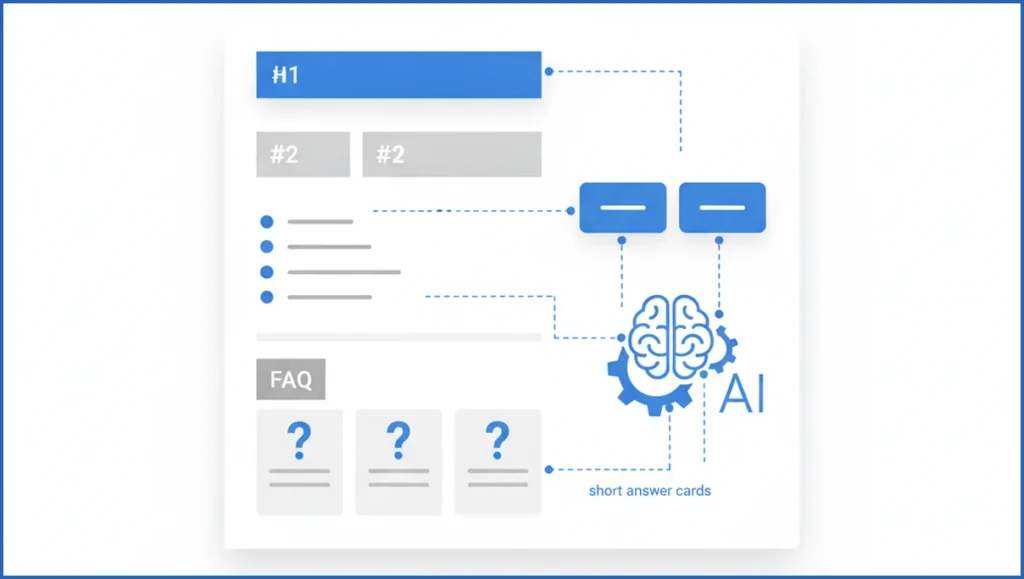
Start with a clean hierarchy. One clear H1, descriptive H2s, short answer-first paragraphs, and lists where the topic supports them. Good pages often answer the core question in the first 50 words, then expand with examples, caveats, and proof. That pattern helps both scanners and models.
A practical format works well: definition, steps, example, then FAQ. For a page on canonical tags, open with a two-sentence answer, follow with implementation steps, and add a short mistake list. If you already use on-page SEO with AI, keep prompts focused on extracting facts, not inflating prose.
Match search intent with useful, specific content
Intent fit is stricter now. A query like “seo best practices” can mean beginner advice, enterprise process, or AI-era adaptation. Check the SERP and classify the dominant format. If results show playbooks, publish a playbook. If they show checklists, do not force a thought piece.
Specificity wins. “Add author bios” is weak. “Add an editor note, named reviewer, and three external citations on YMYL pages” is useful. For topic planning, a clustering workflow from keyword clustering with Claude Code helps separate overview pages from task pages before you write.
- Pull query variants from Search Console.
- Group by intent, not just shared nouns.
- Map each cluster to one page type.
- Write the shortest complete answer first.
Strengthen authority with signals AI and users trust
Models and humans both look for similar trust cues. Show who wrote the page, why they know the topic, when you updated it, and what sources support the claims. Link to primary documentation where possible. Add original screenshots, data, or field notes when you have them.
Consistency matters too. A strong brand page, clear editorial standards, and repeated topic depth across related articles all help. If you are building a broader workflow, generative engine optimization overlaps heavily with brand trust, source quality, and citation hygiene.

Optimize technical foundations for crawlability and clarity
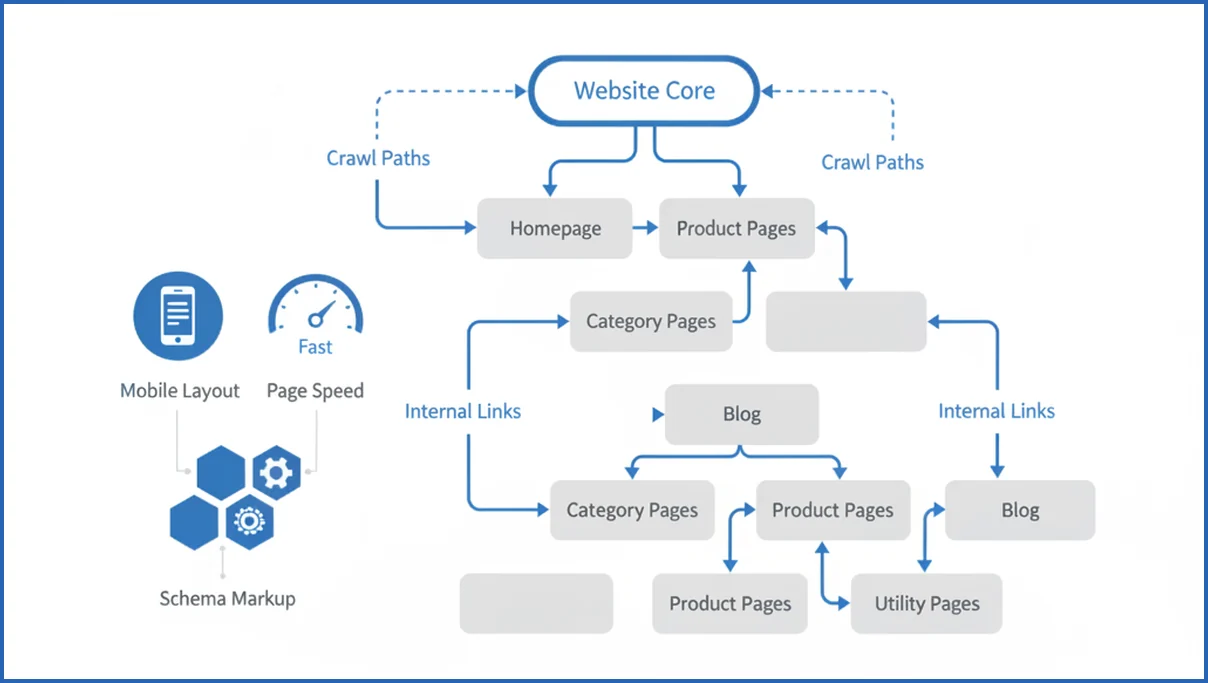
AI-friendly content still depends on technical SEO basics. Keep pages indexable, fast on mobile, internally linked, and free of duplication traps. Schema can help disambiguate entities and page purpose, though it will not rescue weak content.
One simple audit is to pull pages with impressions but low clicks, then inspect speed, title fit, and internal links. Teams using the Google Search Console MCP can review query-page pairs faster inside Claude. Use that speed to fix real issues, not to mass-produce templated pages.
{
  "page_type": "how-to",
  "schema": ["Article", "FAQPage"],
  "checks": ["indexable", "mobile_pass", "core_web_vitals", "3+ internal links"]
}
Measure AI Overviews impact and refine your content
Track more than average position. Watch impressions, CTR shifts on informational queries, assisted conversions, and branded search lift after publication. AI Overviews can reduce direct clicks while increasing downstream demand. If you only measure sessions, you will miss the story.
A simple weekly loop works. Review query movement, inspect pages that gained impressions but lost CTR, rewrite answer blocks, and strengthen internal links from higher-trust pages. A Search Console analysis workflow makes this repeatable without turning the process into a spreadsheet hobby.
Frequently Asked Questions
What are SEO best practices for AI Overviews?
Focus on answer quality, structure, and trust. Put the main answer near the top, use descriptive headings, add supporting details in lists or short sections, and cite solid sources. Keep pages technically clean and easy to crawl. Strong internal linking also helps search systems understand topic relationships and page importance.
Do AI Overviews reduce website clicks?
Often, yes, especially for simple informational searches. A user may get the basic answer without visiting your site. But that does not make the traffic worthless. Complex, commercial, and comparison queries still drive visits, and brand familiarity can rise when your site appears in cited sources. Measure assisted conversions, not just raw clicks.
How do I optimize content for AI-generated answers?
Write like you expect a machine to quote a clean excerpt. Answer the question directly, keep definitions tight, and separate steps, examples, and caveats into obvious sections. Avoid fluffy intros. Add evidence, dates, author context, and external references where needed. Then test whether a reader can find the answer in under 15 seconds.
Which content formats work best in AI Overviews?
Pages that combine a clear answer with structured depth usually work best. Think how-to guides, definitions, checklists, FAQs, comparison pages, and concise category explainers. The exact format should match the SERP. If Google shows list-heavy results, publish a list. If it shows practical tutorials, give steps and screenshots instead of opinion.
Is schema markup important for AI Overviews?
Yes, but within limits. Schema helps search engines identify entities, article types, FAQs, products, and organizations. That can improve clarity and reduce ambiguity. Still, schema is not a shortcut to visibility. If the page is thin, slow, or weak on trust, markup will not fix the underlying problem. Treat it as support, not the strategy.
How often should I update pages for AI search?
Update based on volatility and business value, not a fixed calendar. Pages about tools, product features, regulations, or search platform changes may need monthly reviews. Stable evergreen pages might only need quarterly checks. Refresh answer blocks, examples, citations, and screenshots first. Those elements tend to affect usefulness faster than a full rewrite.
Can small websites win visibility in AI Overviews?
Yes, if they publish sharper answers than larger sites. Small sites often move faster, which helps on emerging topics and niche workflows. You do not need a giant domain to earn citations. You need accurate content, strong evidence, good structure, and a clear point of view. Topical focus can beat broad but shallow coverage.
Pick five pages that already rank in positions 4 to 12. Rewrite the opening answer, tighten headings, add source-backed proof, and review CTR after three weeks. That is usually enough to show whether your current SEO process fits AI Overviews or still writes for a ten-blue-links web.