

Last updated: September 2026
AI Meta Description Playbook for Faster Click-Worthy Snippets now needs a new rule: write for both classic snippets and AI-shaped search journeys. AI can speed up drafting, but Google may still rewrite what appears in results. That makes accuracy, specificity, and page alignment more important than clever copy alone. If your descriptions promise one thing and your page opens with another, click-through rate can slip even when rankings hold steady.
TL;DR
- Use AI to draft faster, then refine for search intent.
- Keep every description clear, specific, and benefit-led.
- Test variations to improve click-through rates over time.
- Avoid generic copy, keyword stuffing, and duplicate snippets.
What an AI Meta Description Actually Does
A meta description does not rank the page on its own, but it shapes how your result reads in the SERP. That matters when two pages sit near each other in position and one snippet feels sharper. AI helps by turning page inputs into first drafts quickly, especially across category pages, blog archives, or product sets.
Still, Google may rewrite your description. That is normal. Your job is to give Google a strong option that matches the query, page promise, and searcher goal. If you already use AI for on-page SEO tasks, treat descriptions as one more editorial layer, not a separate trick.
Set the Right Inputs Before You Prompt AI
Most weak outputs come from weak inputs. Before prompting, define five things: target query, page topic, search intent, audience, and CTA. Add one constraint for tone. For example, a B2B landing page may need “direct, specific, no hype,” while an ecommerce collection page may need “helpful, commercial, concise.”
A simple input set works well: query “ai meta description,” page type “playbook,” audience “SEO manager,” benefit “faster snippet drafting,” CTA “learn the workflow.” That produces better copy than “write me a meta description for my article.” Teams building repeatable systems often pair this with a structured AI copywriting workflow so every page gets the same brief format.
Write Prompts That Produce Better Descriptions
Use a prompt formula that forces relevance: page topic + target query + audience + benefit + tone + length. Then ask for 5 options with different angles. One can stress speed, one can stress clarity, and one can stress results. This is better than asking for one “perfect” version.
Write 5 meta descriptions for a blog post about "ai meta description".
Audience: SEO practitioners.
Intent: informational, practical.
Primary benefit: faster drafting and better CTR testing.
Tone: clear, specific, slightly technical.
Length: 140-155 characters.
Avoid hype, vague claims, and duplicate phrasing.
If you want better prompts at scale, connect search data to the drafting step. With the Google Search Console MCP setup, you can pull top queries and feed them into the prompt so the description reflects real impressions, not guesses.
Edit AI Output for SEO Quality and Brand Fit
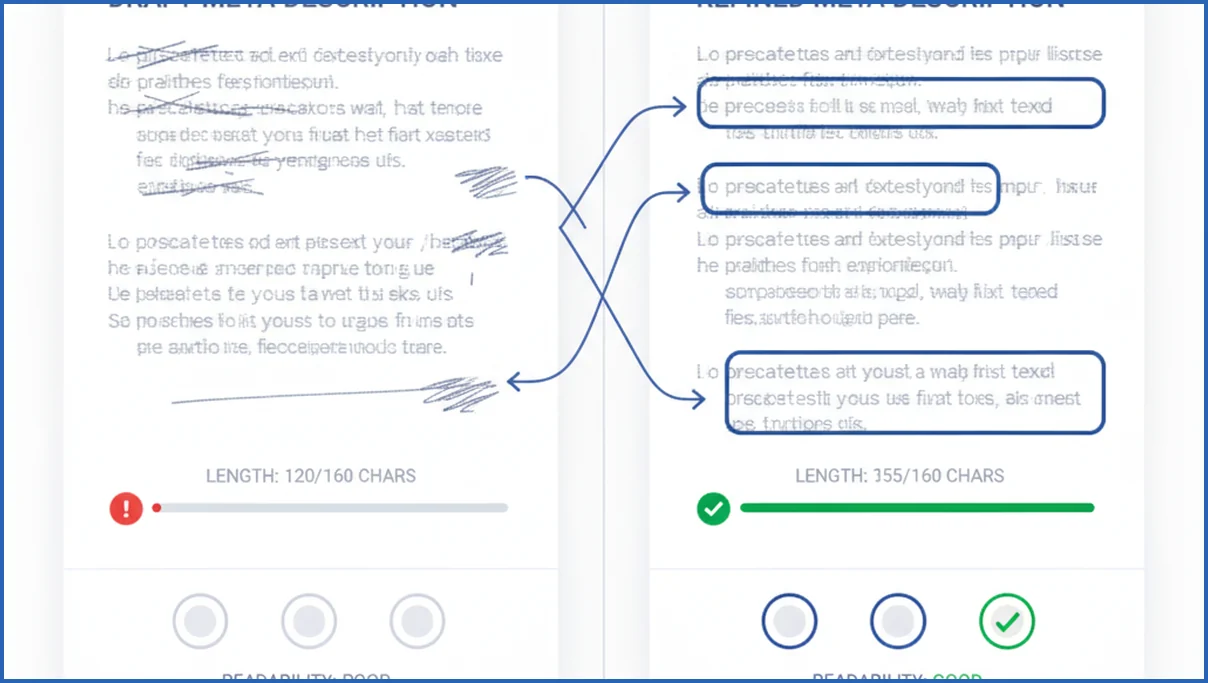
Editing is where the value shows up. Check four things first: length, accuracy, uniqueness, and click appeal. If a draft promises a checklist that the page does not include, cut it. If three pages use the same “learn more” phrasing, rewrite them. Generic benefit lines flatten CTR.
A good edit often means swapping soft language for specifics. “Improve your SEO” becomes “write clearer snippets and test CTR by page type.” That is more believable. It also sounds more like a page someone would choose. Search Console analysis workflows help you spot pages with strong impressions but weak clicks, which are ideal candidates for this pass.
Use a Simple Testing System to Improve CTR
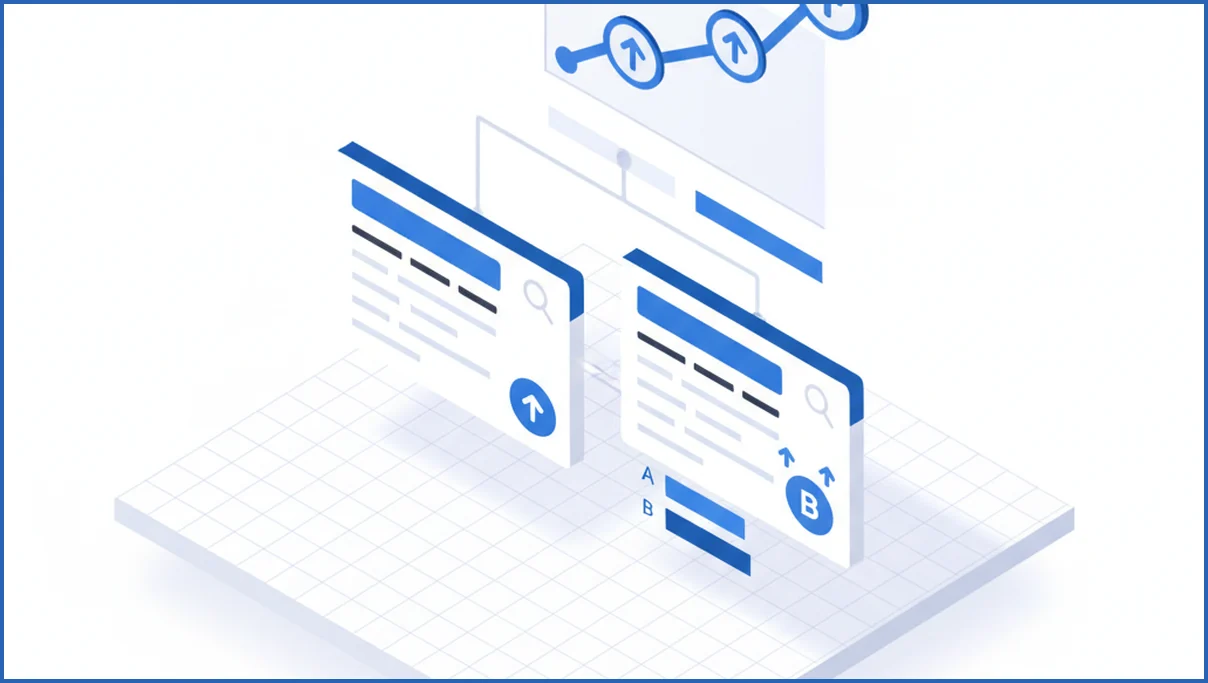
You do not need a fancy framework. Start with pages ranking in positions 4-12 and getting at least 300 impressions a month. Keep the title tag stable. Change only the meta description, note the date, and compare CTR over 21-28 days. Segment by similar query intent so the read is cleaner.
- Export pages with high impressions and below-site-average CTR.
- Draft two new descriptions with different angles.
- Publish one version and log the change.
- Review CTR, impressions, and average position after four weeks.
If traffic shifts with ranking changes, do not over-credit the snippet. Use GA4 MCP data alongside GSC so you can see whether better clicks also led to engaged sessions.
Avoid Common Mistakes with AI Meta Descriptions
The usual failures are easy to spot. AI loves safe phrasing like “discover,” “learn,” and “boost your strategy.” After 50 pages, those snippets all sound identical. Another common issue is keyword stuffing. If “ai meta description” appears twice in 150 characters, the result often reads awkwardly.
Watch for misleading specificity too. Do not mention templates, free tools, or case studies unless the page actually includes them. As AI search gets more selective about page usefulness, weak snippet promises create a worse click, not a better one.
How Google AI Mode changes meta description strategy
Google AI Mode changes how SEOs should think about meta descriptions. Your description is still a useful hint, but it is no longer the only short summary Google may show. AI Mode can synthesize page context, query intent, and on-page language into a different preview experience, especially for complex searches and follow-up questions. That shift makes snippet writing less about one perfect sentence and more about giving Google clear source material. For a broader view of the experience, see Google AI Mode explained.
The practical move is simple. Write descriptions that match the page precisely, then support them with strong visible copy near the top of the page. Product names, use cases, pricing context, and outcome-focused language all help. If your Shopify collection page says “Compare 12 trail running shoes from Hoka and Salomon,” Google has better material than a vague line about “premium footwear solutions.” Google has long rewritten snippets when it predicts a better match, and AI Mode raises the value of page clarity even further.
- Keep meta descriptions aligned with the exact query intent of the page.
- Strengthen opening page copy so Google can pull accurate alternative snippet text.
- Use specific entities like brands, features, and numbers instead of generic marketing language.
Frequently Asked Questions
How long should an AI meta description be?
A practical target is 140-155 characters for most pages. That range reduces truncation risk on many desktop and mobile results, though Google does not use a fixed character limit. Focus less on hitting an exact number and more on fitting one clear benefit, one relevant keyword cue, and a natural reason to click.
Can AI write unique meta descriptions at scale?
Yes, but only with structured inputs and review rules. Give AI the page type, main topic, user intent, and one differentiator for each URL. Then run a duplicate check across the set. Programmatic pages can still sound repetitive if the prompt never changes. Scale works best when templates include one field for a page-specific detail.
Should meta descriptions include the exact keyword?
Usually yes, when it fits naturally. Exact phrasing can help the snippet align with the searcher’s wording and may appear bolded in results. But forcing it into every sentence makes the copy stiff. If a close variant reads better and still matches the page intent, use the better sentence instead of chasing exact-match wording.
Do meta descriptions directly affect rankings?
No, not as a direct ranking factor in the usual sense. They influence how your result is presented and whether users choose it. Better CTR does not guarantee higher rankings, but stronger snippets can improve traffic from existing visibility. Think of meta descriptions as SERP copywriting, not a substitute for relevance, links, or content quality.
How often should I update meta descriptions?
Update them when performance or context changes. Good triggers include falling CTR, a title tag rewrite, a shift in search intent, or a page refresh with new value points. For large sites, review descriptions quarterly for high-impression pages first. Low-traffic URLs rarely need constant tuning unless they are commercially important.
What makes a meta description more clickable?
Specificity beats cleverness. A strong snippet matches the query, names the benefit, and sets an accurate expectation for the page. Numbers, use cases, and concrete outcomes often help. So does a clear angle, like “compare options,” “follow the steps,” or “see examples.” Vague curiosity lines usually lose to direct answers in search.
If you want a useful next step, pull 20 URLs with high impressions and weak CTR, then rewrite only those descriptions first. That small batch will tell you more than generating 500 snippets in one afternoon.
Can Google AI Mode replace my meta description in search results?
Yes. Google AI Mode can surface search experiences where your exact meta description is not the text users see first. Google may also rewrite the standard snippet using visible on-page copy that better matches the query. Treat your meta description as a strong suggestion, not a guarantee. The best protection is clear page copy, specific details, and consistent messaging across the page. For wider strategy shifts, review SEO strategy in 2026.
Final takeaways
Meta descriptions still matter, but they work best as part of a broader snippet system. Write a sharp tag, then reinforce it with strong opening copy, specific entities, and intent-matched details across the page. Google AI Mode raises the value of precision, not just persuasion. If you give Google better source text, you improve the odds of earning a click even when your original description is rewritten.