
Last updated: July 2026
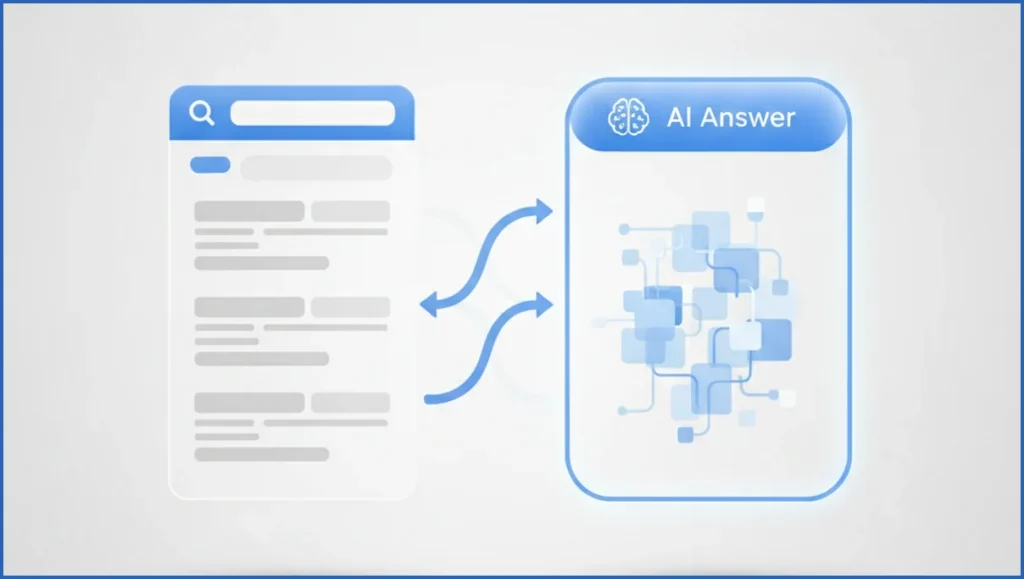
Google AI Mode pushes search further away from ten blue links and closer to an answer interface. That changes what earns visibility, what gets cited, and what deserves a click. If you still judge success by rank alone, your reporting will miss the real shift. SEO now needs to serve both classic retrieval and AI synthesis, with cleaner signals and tighter measurement.
TL;DR
- AI Mode shifts search from links to answers.
- Content needs stronger entities, clarity, and freshness.
- Clicks may drop, but qualified traffic can improve.
- Optimize for citations, not just blue-link rankings.
- Measure visibility across AI answers and traditional SERPs.
What Google AI Mode Means for SEO
AI Mode turns Google into more of a response engine. Instead of showing a ranked list first, it may assemble an answer from multiple pages, then surface supporting sources. That changes the reward structure. Pages do not just compete for position 3 versus position 5. They compete to be understood, trusted, and quoted.
For SEOs, this is an extension of the shift already visible in AI Overviews. If you need the broader context, Google AI Mode explained maps the product direction well. The practical takeaway is simple. Your page must help both the crawler and the model extract a precise claim, a useful step, or a verified fact.
How AI Mode Changes Search Intent and Clicks
Users will resolve more simple questions without visiting a site. That likely trims clicks for basic definitional queries. It does not kill SEO. It filters traffic. Visitors who still click often want proof, examples, pricing, comparisons, or implementation details that a summary cannot fully satisfy.
A query like “how to fix soft 404s” may get a decent answer in the interface. A query like “soft 404 audit checklist for Shopify collections” still needs a page with specifics. That is why answer engine optimization matters. You must target the follow-up need, not only the first question.
Content Signals Google May Favor in AI Mode
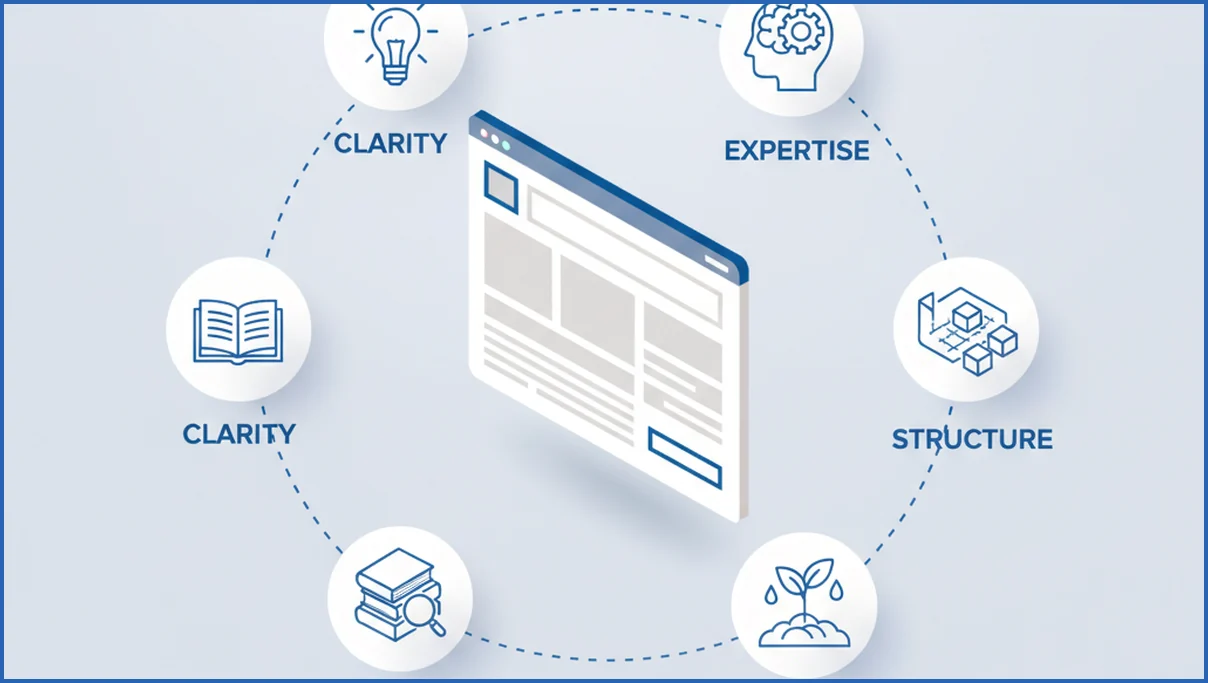
Expect AI Mode to favor pages with clear entities, strong headings, concise definitions, and evidence near the claim. Freshness matters most where facts drift fast, such as pricing, policy, product specs, or SERP features. Vague copy gets ignored because it is hard to quote.
A better page structure looks like this: a 40-word answer under the H2, a step list, one example, and one source-backed caveat. That pattern helps models extract a clean chunk. It also helps humans scan. On-page SEO with AI already follows this structure on many high-performing pages.
On-Page SEO Updates to Make Now
Start with pages ranking in positions 4 to 12 for high-intent queries. Those pages already have retrieval signals. Improve extractability next. Add short summary blocks, tighten H2 wording, surface original examples, and move the key answer above long scene-setting intros.
Use a repeatable workflow:
- Export queries and landing pages from GSC.
- Find pages with high impressions and weak CTR.
- Rewrite the first 120 words to answer the query faster.
- Add one comparison, one process, or one concrete number.
If you run this inside the Google Search Console MCP for Claude, you can flag weak pages in minutes instead of a manual spreadsheet pass.
Technical and Structured Data Priorities
AI systems still depend on boring technical basics. If Google cannot crawl, render, or index the right version, your content will not become a citation candidate. Fix canonicals, keep important copy in HTML, and avoid hiding core answers behind tabs, scripts, or login walls.
Schema helps with disambiguation, not magic rankings. Article, FAQ, Product, Organization, and author signals can clarify who published the page and what the page covers. For teams building automated checks, MCP servers for GSC and GA4 make it easier to connect crawl findings with traffic outcomes.

How to Measure Performance in an AI Search World
Rank tracking alone will under-report impact. You need to watch impressions, branded lift, assisted conversions, and landing-page quality. A page can lose raw clicks yet send better visitors, with lower bounce and higher conversion rate. That is not a failure. It is a traffic mix change.
Build a simple reporting layer that combines GSC query groups, GA4 engagement, and manual citation checks for priority terms. A lightweight pull might look like this:
metrics:
- ai_citation_presence
- organic_impressions
- ctr
- engaged_sessions
- conversion_rate
- assisted_revenue
For a more complete reporting workflow, this GSC analysis playbook is a useful model.
Frequently Asked Questions
Will Google AI Mode replace traditional search results?
Probably not in full. Google still needs standard results for navigation, commercial research, local packs, news, and many edge cases. Expect a blended experience instead. Some queries will trigger AI-heavy interfaces, while others stay closer to classic SERPs. The real change is distribution. More answers will sit between the query and your page.
Does Google AI Mode reduce organic click-through rates?
Yes, often for simple informational queries. If the answer is complete on the results page, fewer people need to click. That said, the remaining clicks can be stronger. Users who visit after reading an AI summary usually want details, examples, or validation. Measure conversion quality before you assume traffic loss equals business loss.
What type of content is best for AI Mode visibility?
Pages that answer one intent clearly tend to be easier to cite. Good candidates include product explainers, pricing pages, comparison pages, technical tutorials, glossaries with context, and expert Q&A formats. Strong formatting helps. Keep claims close to evidence, add updated facts, and make each section understandable without reading the whole page.
Should I rewrite existing pages for Google AI Mode SEO?
Do not rewrite everything. Start with pages that already earn impressions or sit just outside top positions. Those pages usually need clearer structure, tighter intros, fresher examples, and better internal linking. Preserve topical authority and existing backlinks. You are improving extractability and trust, not throwing away proven content.
Is schema markup important for AI Mode rankings?
Schema is useful, but it is not a shortcut. Think of it as a clarification layer. It helps search systems interpret page type, authorship, products, FAQs, and organizations. That can support better understanding and richer presentation. Still, weak content with perfect schema stays weak. Prioritize crawlable HTML, clear copy, and consistent page intent first.
How can I track citations in AI search results?
There is no perfect native report yet, so use a mixed method. Track a fixed keyword set weekly, record whether your domain appears in AI answers, and pair that with GSC and GA4 changes. Keep screenshots for major terms. Over time, citation presence plus branded search lift can show whether AI exposure is influencing demand.
What metrics matter most in an AI-first search landscape?
Start with impression share, citation presence, engaged sessions, conversion rate, and assisted conversions. Add page-level CTR and branded query growth if your audience has a long research cycle. Rankings still matter, but they are now one input. The better question is whether your pages are being selected, trusted, and visited by people ready to act.
Your next step is not a full site rewrite. Audit 20 high-impression pages, identify where the answer appears too late or too vaguely, and fix those first. AI Mode rewards pages that say something clear, prove it fast, and stay technically easy to parse.